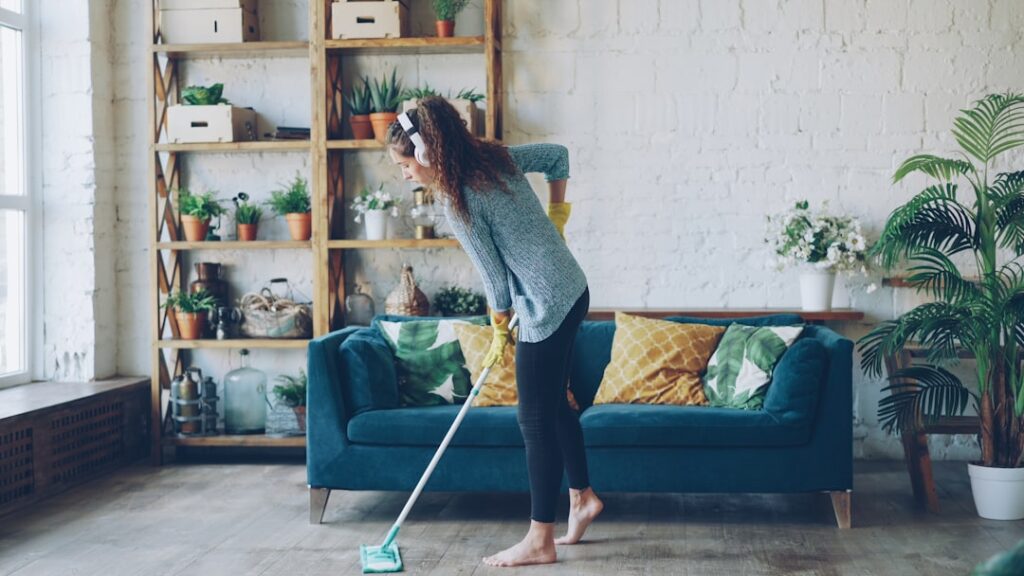
Most people who think they know how do you mop learned the wrong technique from a parent who learned it from someone else. The classic image of a sloshing bucket and a heavy string mop is the fastest path to streaky floors, damaged finishes, and a damp basement smell that lingers for hours. Modern flooring deserves modern technique: the right amount of moisture, the right cleaner for the surface, and a mopping pattern that picks up dirt instead of pushing it around. Get those three things right and the same job takes half the time with twice the result.
Start With a Clean Floor
Mopping a dirty floor turns the mop head into a mud spreader within five swipes. Vacuum or sweep first, every single time. A soft-bristle broom (Casabella, OXO) picks up hair and crumbs without scratching, while a vacuum with a hard-floor setting (Dyson V15, Shark Stratos) gets grit out of the bevels and grout lines that a broom misses.
Pay extra attention to baseboards, corners, and the area under cabinet toe-kicks where dust accumulates. Mopping over even a single grain of grit will leave a scratch trail across vinyl, hardwood, and laminate.
Pick the Right Mop for Your Floor
Five mop styles cover nearly every household need:
- Microfiber flat mop: Bona Premium Spray Mop, O-Cedar EasyWring, Swiffer WetJet. Best for hardwood, laminate, vinyl, and engineered floors. The microfiber fabric traps dirt instead of redistributing it.
- String or strip mop: Libman Wonder Mop, O-Cedar Quick Wring. Best for textured tile, concrete, and garage floors where grout lines and bumps need scrubbing.
- Sponge mop: Casabella Roll-O-Matic. Best for sealed concrete and vinyl in small spaces. Avoid on real hardwood.
- Spin mop: O-Cedar EasyWring, Casabella Spin. Best for ceramic tile and porcelain. The centrifugal wring control lets you precisely dial in moisture.
- Steam mop: Bissell PowerFresh, Shark Steam Pocket. Best for sealed ceramic tile and porcelain only. Never use on hardwood, laminate, or vinyl despite manufacturer claims to the contrary.
For most American homes with mixed flooring, a Bona Premium Spray Mop plus a Libman Wonder Mop for the tile bathroom covers 90% of cleaning needs.
Floor-Specific Cleaning Solutions
The wrong cleaner can dull a finish, void a warranty, or leave a film that attracts more dirt than it removed. Match the cleaner to the surface:
Sealed hardwood: Bona Hardwood Floor Cleaner ($7 per spray bottle), Method Squirt + Mop Wood Floor Cleaner. Never use vinegar (the acid etches polyurethane), Pine-Sol (oily film), or Murphy Oil Soap (modern poly finishes do not need oil).
Laminate and luxury vinyl: Bona for Vinyl, Pergo Hard Surface Floor Cleaner, or a few drops of Mr. Clean diluted at 1:32 (1/4 cup per gallon).
Ceramic and porcelain tile: Pine-Sol diluted at 1:64 (2 tablespoons per gallon), Method All-Purpose, or pH-neutral tile cleaner like Stone Pro Stone Care. Avoid acid-based cleaners on unglazed porcelain.
Natural stone (marble, travertine, limestone): use only stone-specific cleaners like Stonetech KlenzAll. Acidic cleaners etch calcite-based stones almost instantly.
Sealed concrete and garage floors: 1/4 cup Dawn dish soap per gallon of warm water for routine cleaning. OxiClean dissolved at 1 scoop per gallon for stubborn stains.
Dilution Ratios Matter
Most concentrated cleaners are overdosed by users. Manufacturer labels recommend specific ratios for a reason: too strong leaves residue that turns sticky and traps dirt. Common dilution numbers to memorize:
- Pine-Sol: 1/4 cup per gallon for tile, 1 tablespoon per gallon for sealed wood-friendly use
- Mr. Clean: 1/4 cup per gallon for general floors
- Murphy Oil Soap: 1/4 cup per gallon, oil-finished wood only
- Dish soap: 1 tablespoon per gallon as a mild degreaser
- Vinegar (for tile only): 1/2 cup per gallon, never on stone
Dump the bucket and refill with clean rinse water once it turns cloudy. Mopping with dirty water spreads more grime than it removes.
The Right Mopping Pattern
The figure-eight motion designers swear by works. Push the mop forward in a smooth arc, sweep it back along the same arc displaced sideways by the mop’s width, and continue across the floor. The pattern overlaps coverage and pushes dirt toward you as you back out of the room.
Start at the far corner and mop toward the doorway. Never mop yourself into a corner. For large areas, divide the floor mentally into 4-by-4 foot squares and finish each one before moving on.
Wring out the mop after every 10 to 15 feet of floor. A mop carrying too much water leaves streaks; a mop too dry just pushes dust around.
Moisture Control by Floor Type
The amount of water on the floor matters more than any other technique:
- Hardwood and laminate: damp, never wet. The mop should feel like a wrung-out wash cloth. Standing water destroys these floors within minutes.
- Vinyl plank (LVP): damp, but more forgiving than wood. Most LVP is waterproof but the locking joints can swell if water sits on them for an hour or more.
- Tile: can tolerate a wet mop. Grout absorbs water, so finish by drying with a clean microfiber towel for the best appearance.
- Concrete: can be flooded if there’s a drain. For interior concrete, treat it like tile.
Common Mistakes That Wreck Floors
Four habits cause most of the damage we see in cleaning service calls:
- Using too much soap. Residue dulls the finish, traps dirt, and creates the very streaks people complain about.
- Mopping with a dirty mop head. Run the microfiber pad through the washing machine after every use without fabric softener (which clogs the fibers).
- Saturating wood floors. A puddle the size of a quarter can lift the finish within an hour.
- Skipping the rinse step on tile. Soap film accumulates and eventually requires a deep clean to remove.
Two-Bucket Method for Heavy Cleaning
For floors that have not been mopped in weeks, the two-bucket method gets dramatically better results. One bucket holds the cleaning solution. The second bucket holds clean rinse water. Dip the mop in the cleaner, wring out, mop a section, dip the mop in the rinse bucket to release the dirt, wring out again, and return to the cleaner. The cleaning solution stays cleaner longer and the floor finishes cleaner overall.
Drying and Finishing
Open windows or run a fan to speed drying. Walking on a wet floor leaves shoe prints and tracks dirt right back where you started. For tile, a quick wipe with a dry microfiber after mopping removes any film and gives the floor a polished finish that reflects light noticeably better.
The right routine takes 20 to 30 minutes for an average 1,500 sq ft home and lasts a full week of regular use before needing a repeat. That is half the time of the wrong routine, and floors that look better between sessions.