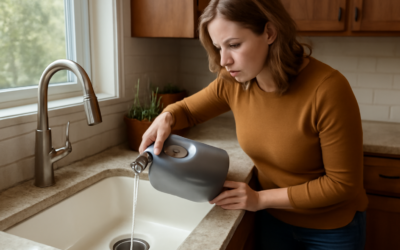
Most homeowners reach for a bottle of Drano when the bathroom sink is half-full and the plunger isn’t moving water. Understanding how does Draino work tells you when it will save your evening and when it will turn a $90 plumber visit into a $1,800 pipe replacement. The product is essentially a controlled chemical fire poured into a drain, and the same reactions that clear hair clogs can also melt plastic traps and damage older pipes.
The Chemistry in the Bottle
Standard Drano Max Gel is a mixture of sodium hydroxide (caustic soda, around 4-5%), sodium hypochlorite (bleach, around 1-2%), sodium chloride, and water. The thicker gel formulas add sodium silicate as a sticking agent so the chemicals cling to drain walls instead of washing past the clog.
Crystals and granular formulas use solid sodium hydroxide plus aluminum chips. When water hits the mixture, the aluminum reacts with the lye to release hydrogen gas and a lot of heat. That heat speeds up the breakdown of organic material.
What Actually Dissolves the Clog
Sodium hydroxide is a strong base. When it contacts the protein and fat that make up most bathroom and kitchen clogs (hair, soap scum, grease), it triggers a saponification reaction. Fats become soap. Proteins break apart into smaller, water-soluble fragments. The clog liquefies and washes down with hot water.
The bleach component oxidizes the dissolved material so it does not just resettle further down the line. Heat from the chemical reaction (Drano can reach 130-150°F in the pipe) accelerates everything.
What Drano Cannot Clear
Drano works on organic material. It does almost nothing on:
- Tree roots in sewer lines (use a root killer like Roebic K-77 instead)
- Mineral scale in old galvanized pipes (needs descaling)
- Toys, jewelry, and other solid objects (need a snake or pipe disassembly)
- Wipes (even “flushable” ones) lodged in the toilet trap
- Food debris stuck on a garbage disposal blade
Pouring Drano on these is the worst-case scenario: caustic liquid sitting in the pipe for hours doing nothing useful.
When Drano Helps and When It Hurts
Best use case: a slow bathroom sink or shower drain caused by hair and soap. Pour the recommended amount, wait 15-30 minutes, flush with hot water for 60 seconds. Two thirds of these clogs clear on the first try.
Worst case: a fully blocked drain. Drano sitting in standing water becomes a heat source against the pipe. PVC traps soften above 140°F; old chrome P-traps can corrode through in a single overnight exposure. If the drain is fully blocked and the chemical does not move, you have a serious cleanup ahead of you.
Pipe-by-Pipe Compatibility
Modern PVC and ABS pipes tolerate occasional Drano use, but repeated exposure softens fittings over time. Cast iron is most resistant. Galvanized steel pipes (common in homes built before 1960) are vulnerable; the lye attacks the zinc coating and accelerates corrosion.
Never use Drano in a toilet. Toilet traps are designed to hold water, so the chemical sits against the porcelain and rubber gaskets for hours. Drano-related toilet damage is one of the more common avoidable plumbing repair calls.
Safety Hazards You Cannot Ignore
Sodium hydroxide is one of the most dangerous chemicals in your house. Splashes on skin cause chemical burns within seconds. In the eyes, it can cause permanent blindness. The vapors irritate lungs at concentrations under 2 ppm.
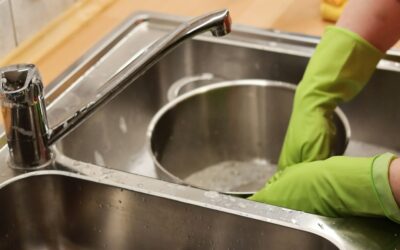
Wear nitrile gloves and safety glasses every time. Never mix Drano with any other drain cleaner; the bleach in Drano plus ammonia or acid in another cleaner releases toxic gas. Keep small children and pets away from the bathroom for at least an hour.
What to Do If Drano Splashes
Skin contact: flush with cool running water for 15-20 minutes minimum. Do not neutralize with vinegar; the heat from the neutralization reaction makes the burn worse. Eye contact: flush at an eyewash or shower for 20+ minutes and call poison control (1-800-222-1222) immediately.
If you accidentally inhale fumes, get to fresh air, and seek medical attention if you experience persistent coughing or shortness of breath. Always run the bathroom fan when using.
Drano Alternatives That Often Work Better
For most household clogs, mechanical methods clear faster and damage less. A $25 zip-it tool (the long plastic strip with barbs) pulls hair clogs out of bathroom drains in 30 seconds. A $40 hand snake handles deeper kitchen sink clogs without chemicals.
Enzyme drain cleaners like Bio-Clean or Drainbo use bacteria and enzymes to digest organic material slowly over 6-8 hours. They are pipe-safe, work in older galvanized lines, and can be used as monthly maintenance. Cost is around $20-$30 per quart.
The Boiling Water Trick
For a slow kitchen drain caused by grease, boil a gallon of water and pour it slowly down the drain in three stages. Wait 60 seconds between pours. The hot water remelts the grease and pushes it through. This is free, instant, and pipe-safe.
Do not use boiling water on PVC pipes that may be partially blocked; the water sits and softens the plastic. Pour gradually so the water keeps moving.
When to Call a Plumber
If the drain is fully blocked, multiple drains are slow at once, water is backing up into other fixtures, or you smell sewer gas, stop with the chemicals and call a plumber. A drain camera and snake service runs $150-$400 and identifies exactly what the problem is.
Knowing how does Draino work also tells you what it does not solve. For hair in a slow bathroom sink, it is a useful $10 fix. For anything more serious, the chemical is causing damage you do not see until the pipe fails. Use it sparingly, never on a fully blocked drain, and never as a maintenance product.