
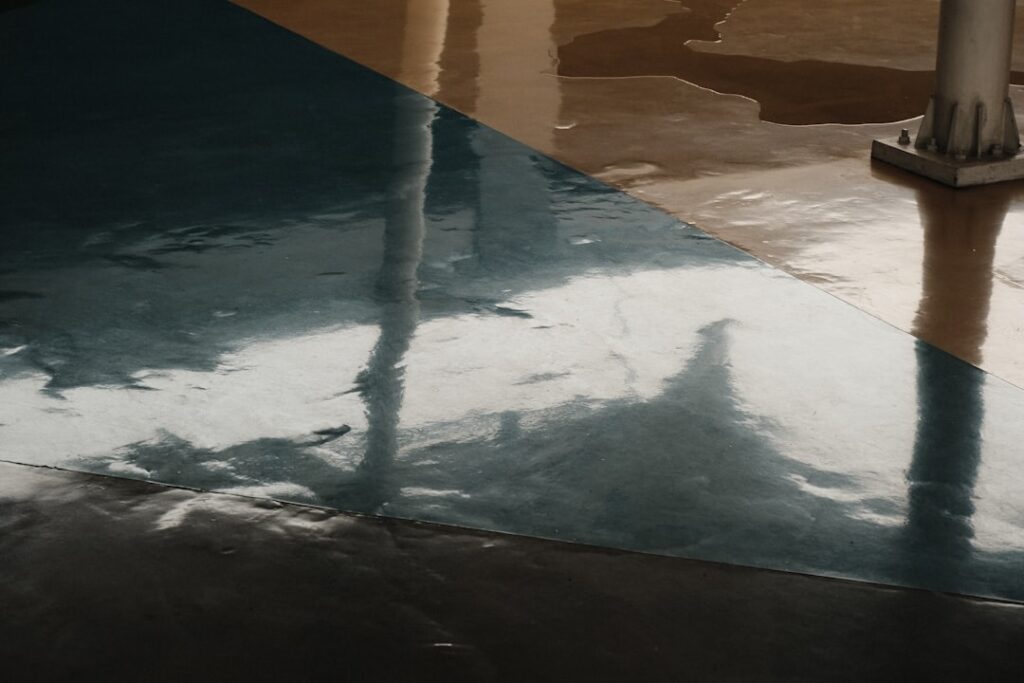
A properly installed 100 percent solids epoxy garage floor with a urethane topcoat can deliver 15 to 25 years of service before any visible wear, while a badly prepped epoxy job from a weekend kit can peel within 18 months. The question of how durable is epoxy flooring has a single honest answer: it depends almost entirely on surface prep, product selection, and the cure environment, not on the brand on the bucket. Knowing what drives long-term durability lets you specify a system that lasts and avoid the common failures that give epoxy a bad reputation.
- The Real Durability Numbers
- Chemical Resistance Specs
- Impact and Point Load Performance
- The Single Biggest Durability Factor: Prep
- Product Selection by Service Life
- Pros That Drive Adoption
- Honest Cons and Failure Modes
- Brand Spotlight: Polyaspartic Floor Systems by Penntek
- Climate and Cure Considerations
- Maintenance Routine for Maximum Life
- Who Should Choose Epoxy Flooring
The Real Durability Numbers
Quality 100 percent solids epoxy reaches compressive strength of 8,000 to 12,000 psi at 28 days of cure. Tensile strength runs 4,000 to 6,000 psi. Bond strength to properly prepared concrete typically exceeds the cohesive strength of the concrete itself, which means a destructive test pulls a chunk of concrete off the slab before the epoxy releases.
Abrasion resistance per ASTM C501 (Taber test) measures wear in grams of material loss per 1,000 cycles. Premium epoxy systems with H-22 wheel readings of 0.05 to 0.12 grams per 1,000 cycles outperform vinyl, sheet linoleum, and even some ceramic tile glazes. With a urethane topcoat, abrasion loss drops further to 0.02 to 0.05 grams per 1,000 cycles.
Chemical Resistance Specs
Epoxy floors handle most household and automotive chemicals without staining or surface degradation. Resistance categories include:
- Gasoline, motor oil, brake fluid: full resistance
- Hydraulic fluids, antifreeze: full resistance
- Dilute acids and bases (pH 3 to 11): full resistance
- Concentrated acids: surface etching after 24 hours of exposure
- Solvents (lacquer thinner, acetone): may soften surface, recover after evaporation
- Hot tire pickup: solved with proper hot-tire-resistant formulations
For workshop and industrial settings, novolac epoxy formulations resist even more aggressive chemicals. Standard residential garage products handle the everyday driveway chemistry without issue.
Impact and Point Load Performance
A properly installed epoxy floor handles vehicle traffic up to 8,000 to 10,000 pounds per axle in residential applications. Industrial-grade systems with troweled aggregate buildups handle forklift traffic up to 20,000 pounds per axle. Dropped hand tools, cast-iron pans, and even small dropped engines typically leave no impact damage on a 3/16 inch (180 mil) commercial-grade buildup.
Thinner DIY epoxy at 10 to 15 mils total thickness is more vulnerable. A dropped wrench from waist height can chip the coating and expose bare concrete, starting a peel that grows over time.
The Single Biggest Durability Factor: Prep
Concrete surface profile (CSP) per the International Concrete Repair Institute is the make-or-break detail. For 100 percent solids epoxy, the slab must be diamond-ground or shot-blasted to CSP 2 to 3. For thicker aggregate buildups, CSP 3 to 4 is required.
Etching with muriatic acid (the most common DIY prep method) reaches roughly CSP 1, which is inadequate for serious epoxy adhesion. Almost every DIY epoxy failure traces back to acid-etch-only prep. Diamond grinding with a rental grinder from Sunbelt or United Rentals costs $200 to $400 for a 500 square foot garage and produces a CSP 3 profile that bonds correctly.
Moisture content matters too. Concrete must test below 4 percent on a Tramex moisture meter or below 3 to 5 pounds per 1,000 square feet per 24 hours via ASTM F1869 calcium chloride. Slabs with chronic moisture from below need a moisture-mitigation primer like Sherwin-Williams ArmorSeal 33 or Sika MB before epoxy.
Product Selection by Service Life
Big-box DIY kits like Rust-Oleum EpoxyShield Garage are 50 to 60 percent solids two-part epoxy at 5 to 10 mil applied thickness. Honest service life is 3 to 7 years in light residential garages. Pricing is $0.50 to $1.00 per square foot in materials.
Professional 100 percent solids epoxy primers like Sherwin-Williams ArmorSeal 1000HS, Polyurea-Polyaspartic systems from Penntek and Sika, and elite commercial brands like Stonhard and Tnemec deliver 15 to 25 year service life with proper prep. Pricing runs $3 to $8 per square foot installed for systems with decorative flakes or quartz aggregate.
Polyaspartic and polyurea topcoats over epoxy primers extend service life and provide UV stability that pure epoxy lacks. Pure epoxy yellows under direct UV exposure, while polyaspartic stays color-stable for 15 to 20 years.
Pros That Drive Adoption
Seamless construction eliminates joints where contaminants can collect. Easy cleanup with a hose, a deck brush, and a mild detergent handles routine grime. Chemical resistance protects the concrete substrate from staining and pitting. Decorative options including color flakes, quartz aggregate, and metallic pigments allow design customization that few flooring categories match.
Cost-to-life ratio is favorable. A professionally installed epoxy floor at $4 to $7 per square foot delivers 15 to 25 years of service, which is $0.20 to $0.50 per square foot per year. That is competitive with hardwood, tile, and premium LVP on a lifecycle basis.
Honest Cons and Failure Modes
UV instability of pure epoxy turns clear topcoats amber within 2 to 4 years in sun-exposed garages. Solve with a polyaspartic or aliphatic urethane topcoat at the end of the buildup.
Slippery when wet, especially in glossy formulations. Add aluminum oxide non-slip aggregate to the topcoat in entries and bath areas. Or specify color flakes or quartz broadcast for surface texture.
Hot tire pickup is a classic failure mode where soft epoxy lifts off the concrete in tire footprint areas. Use hot-tire-rated formulations and ensure full cure (typically 7 days at 75 degrees Fahrenheit) before driving on the surface.
Repair appearance is visible. Spot repairs in an epoxy floor stand out from the surrounding cured surface because color and gloss differ slightly. Plan for full-floor topcoat refresh every 8 to 12 years to even out appearance.
Brand Spotlight: Polyaspartic Floor Systems by Penntek
Penntek’s polyaspartic system is widely used by residential garage flooring contractors across the U.S. The single-day install process applies a moisture-tolerant polyaspartic primer at 6 to 8 mils, broadcasts decorative flakes to refusal, then applies a clear polyaspartic topcoat. Total system thickness is 20 to 25 mils. Service life is 15 to 20 years in residential garage applications, with the surface walkable in 2 to 4 hours and ready for vehicles in 24 hours. Pricing typically runs $5 to $8 per square foot installed.
Climate and Cure Considerations
Epoxy cures correctly between 55 and 90 degrees Fahrenheit. Cold winter garages can stop cure entirely. Use winter-grade fast-set products or rent a 30,000 BTU propane heater to bring slab temperature above 60 degrees Fahrenheit for 24 hours before, during, and after installation. Humidity above 85 percent can cause amine blush, a sticky white film on the surface that ruins the topcoat.
Maintenance Routine for Maximum Life
Sweep daily to remove abrasive grit. Hose monthly to flush salt and road debris. Use a deck brush and mild detergent (no degreasers or solvent-based cleaners) for annual deep cleaning. Address any chips immediately with a touch-up kit from the original installer. Plan a full topcoat refresh at year 10 to 15 to maintain visual consistency and extend the underlying floor system for another decade.
Who Should Choose Epoxy Flooring
Pick a professional 100 percent solids epoxy system with polyaspartic topcoat if you want a 15 to 25 year garage, workshop, or commercial floor that handles chemicals, vehicles, and heavy point loads. Skip DIY etch-and-paint kits if longevity matters, because the prep step controls the outcome more than the product. Invest in diamond grinding, moisture testing, and a professional installer for any space where the floor must perform for a decade or more. Epoxy is one of the most durable flooring categories available, but only when the system is specified and prepped correctly.


