
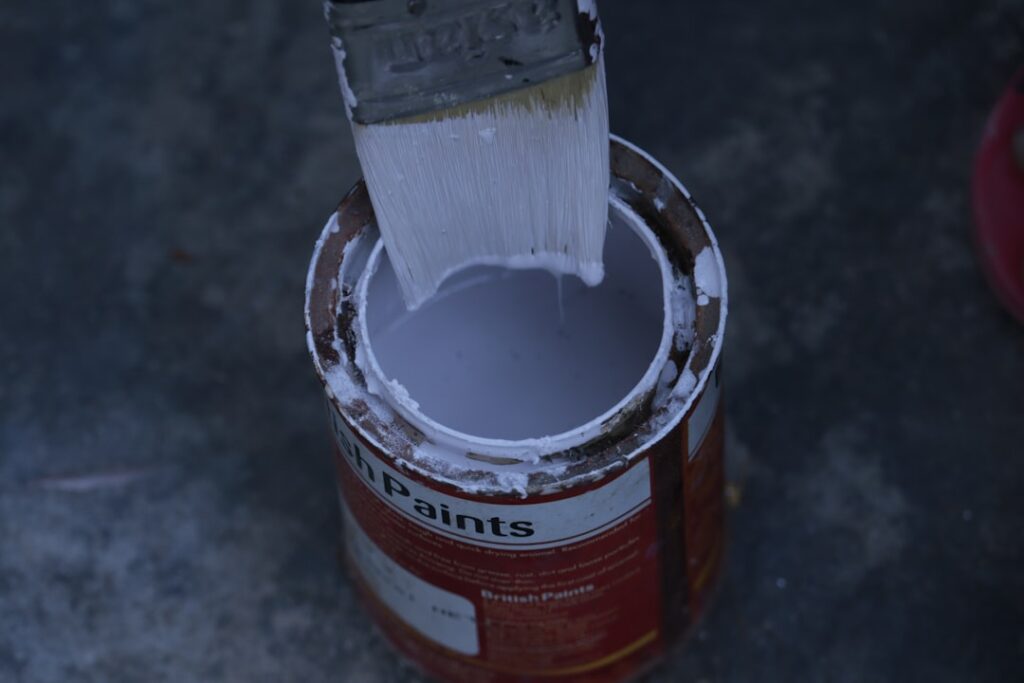
That half-full can in the basement might still be perfectly good, or it might be a lumpy, sour-smelling mess. Understanding how long does paint last after opened saves you money on touch-ups and keeps you from ruining a wall with paint that has quietly gone bad. The answer depends heavily on the type of paint and, more than anything, on how you stored it after that first use. Sealed and kept cool, leftover paint can outlast the room you painted with it.
Part of our Paint & Walls guide — explore the full guide →
- Shelf Life by Paint Type
- Why Storage Matters More Than Time
- How to Store Paint the Right Way
- Signs Your Paint Has Gone Bad
- Can You Save Separated or Skinned Paint?
- Testing Before a Big Job
- Why Leftover Paint Is Worth Keeping
- How Much Paint to Keep
- Does Paint Type Change How It Stores?
- Disposing of Old Paint Responsibly
Shelf Life by Paint Type
Once you break the factory seal, air and contaminants start the clock. Different paint chemistries hold up for very different lengths of time after opening, assuming reasonable storage.
- Latex and acrylic: 2 to 10 years if properly sealed.
- Oil-based (alkyd): up to 15 years, since it resists the bacteria that spoil latex.
- Chalk paint: 1 to 3 years.
- Milk paint (mixed): only 1 to 2 weeks, since it is a powder mixed with water.
- Spray paint: 2 to 3 years, limited by the propellant and clogging nozzle.
Unopened cans last even longer, often the full range above from the manufacture date. The date stamped on the bottom of the can tells you when it was made.
Why Storage Matters More Than Time
A can stored well can last a decade, while the same paint left with a loose lid may spoil in a year. Two enemies ruin leftover paint: air and temperature swings. Air dries and skins the paint, while freezing and thawing breaks the emulsion that holds latex together.
The goal is an airtight seal and a stable, moderate temperature. Paint that has been through even one freeze cycle often turns stringy or clumpy and cannot be recovered. That is why a garage or unheated shed is one of the worst places to keep it in most climates.
How to Store Paint the Right Way
A few minutes of care when you close the can extends its life for years. Follow these steps every time you finish a job.
- Wipe paint out of the rim groove so the lid can seat fully.
- Place plastic wrap over the opening, then tap the lid down with a rubber mallet, not a hammer that dents the rim.
- Store the can upside down for a short period to create an airtight seal at the lid, then set it upright for long-term storage.
- Keep it in a climate-controlled space between 60 and 80 degrees, never below freezing.
- Label the lid with the room, color name, and date.
For small amounts of touch-up paint, transfer the leftovers to a clean glass jar filled to the top. Less air space means less oxidation and a much longer usable life.
Signs Your Paint Has Gone Bad
Before you brush old paint onto a wall, open the can and inspect it. Bad paint usually announces itself clearly through smell, texture, and appearance.
- Sour or rancid smell: bacteria have grown in water-based paint. This is unfixable, toss it.
- Thick skin on top: normal. Peel it off and check the paint below.
- Lumps that will not stir smooth: the paint has partially cured or frozen.
- Separation with a clear layer: often normal, stir thoroughly and reassess.
- Mold or a chunky, cottage-cheese texture: discard it.
A sour smell is the clearest death sentence. That odor comes from microbial growth, and no amount of stirring will bring the paint back.
Can You Save Separated or Skinned Paint?
Not all imperfect paint is ruined. A skin on top and pigment settled at the bottom are both normal after months in storage. Peel off any skin in one piece, then stir the paint slowly and thoroughly with a paint stick or a drill mixer until it is uniform in color and texture.
If it stirs back to a smooth, creamy consistency with no lumps and no off smell, it is fine to use. Slightly thick latex can be thinned with a small amount of water, no more than about half a cup per gallon, mixed in gradually. If lumps persist or the smell is sour, the can is done.
Testing Before a Big Job
When leftover paint looks and smells okay but you are still unsure, do a test patch. Stir it well, then brush a small area on scrap cardboard or an inconspicuous spot and let it dry fully.
Good paint dries smooth and even to its normal sheen. Bad paint dries gritty, streaky, or fails to level out. This quick test is worth the fifteen minutes when the alternative is repainting an entire wall.
Why Leftover Paint Is Worth Keeping
Before you toss a half-full can, consider how useful properly stored paint really is. Keeping a small amount of every color you use saves money and headaches down the road, since matching an existing wall color years later is difficult even with a computer scan.
Leftover paint covers scuffs, nail holes, and scratches with an exact match no store can guarantee. It touches up trim and doors that take daily abuse. A quart of the original color is far cheaper and faster than repainting a whole wall just to hide one mark. That is why the smartest move is not tossing leftovers but storing a manageable amount well and labeling it clearly for the future.
How Much Paint to Keep
You do not need to hoard gallons. A modest, well-sealed amount of each color handles years of touch-ups without cluttering your storage space.
- Keep roughly a quart of each wall color for future touch-ups.
- Transfer small leftovers into clean glass jars filled to the top to minimize air.
- Label every container with the room, brand, color name, color code, and sheen.
- Snap a phone photo of the original can’s label so you always have the formula.
That color code and sheen are the details people forget, and they are exactly what a paint store needs to mix a fresh batch if your stored paint eventually spoils. Recording them turns a can of leftovers into a reliable long-term resource.
Does Paint Type Change How It Stores?
The chemistry of your paint has a lot to do with how gracefully it ages in the can. Water-based latex and acrylic paints are the most vulnerable, because the water content supports the bacterial growth that produces that telltale sour smell, and the emulsion breaks permanently if it freezes.
Oil-based paint is far more forgiving in storage, often lasting up to 15 years after opening, since it contains no water for bacteria to colonize and does not suffer the same freeze damage. Specialty finishes fall at the short end: chalk paint lasts only a year or two, and any powder-based product like true milk paint must be used within days of mixing. Knowing which category your leftover paint belongs to tells you roughly how much runway you have and how carefully you need to guard it against temperature swings.
Disposing of Old Paint Responsibly
When paint truly is spent, do not pour it down the drain or toss a liquid can in the trash. Let latex paint dry out completely, either by leaving the lid off or mixing in a hardener or cat litter, then the dried can goes in regular household waste in most areas. Oil-based paint is considered hazardous waste and must go to a designated drop-off site. Many communities and paint retailers offer free recycling through programs like PaintCare, which keeps usable paint out of landfills and gives your properly stored leftovers a second life on someone else’s wall.


