Flooring is one of the largest expenses in any home renovation, and the range of costs is enormous. A basic vinyl floor can cost under $2 per square foot while premium hardwood or natural stone can exceed $20 per square foot before installation. Understanding what drives these costs and how they add up across a full project helps you budget accurately, choose the right material, and avoid surprises.
- Flooring Cost by Material Type
- Hardwood Flooring
- Engineered Wood Flooring
- Laminate Flooring
- Vinyl Flooring (LVT/LVP)
- Tile Flooring (Ceramic and Porcelain)
- Natural Stone Flooring
- Carpet Flooring
- Concrete Flooring
- Epoxy Flooring
- Rubber Flooring
- Bamboo Flooring
- Installation Labor Cost Factors
- Whole-House Flooring Cost Estimates
- Budget-Friendly Whole House (1,500 Sq Ft)
- Mid-Range Whole House (1,500 Sq Ft)
- Premium Whole House (1,500 Sq Ft)
- Luxury Whole House (1,500 Sq Ft)
- How to Budget for Your Flooring Project
- Ways to Save on Flooring Costs
- Frequently Asked Questions
- What is the cheapest flooring to install?
- What is the most expensive flooring?
- How much does it cost to floor a 1,000 sq ft house?
- Is it cheaper to do flooring yourself?
- Final Thoughts
This guide breaks down flooring costs by material type, explains installation labor rates, and provides whole-house estimates so you can plan your project with confidence, whether you are renovating a single room or an entire home.
Flooring Cost by Material Type
Hardwood Flooring
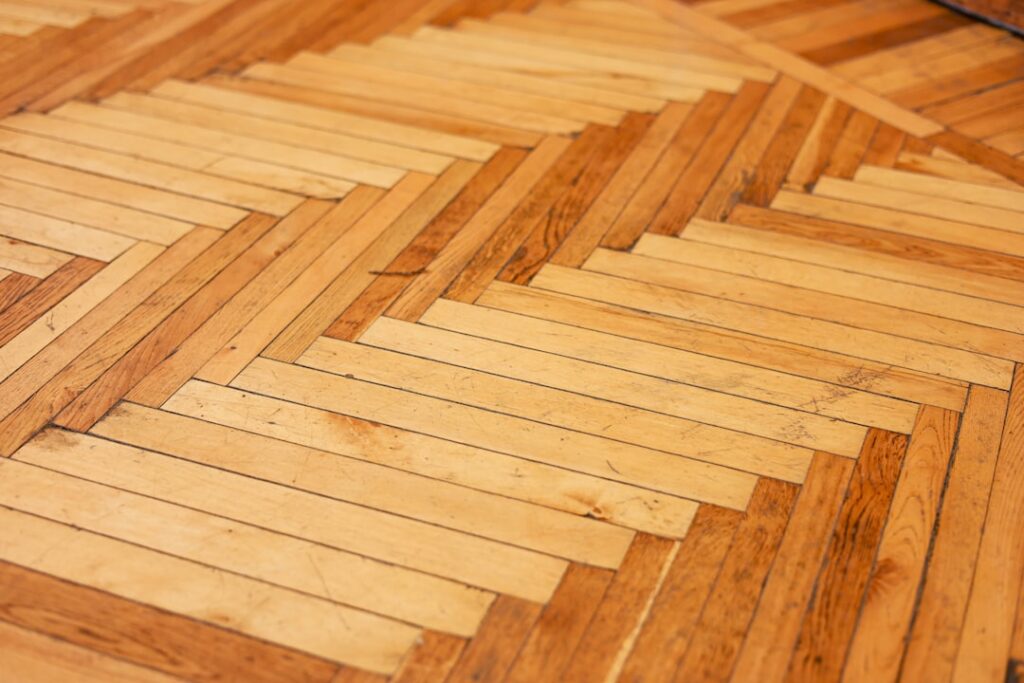
Hardwood flooring remains the gold standard for residential flooring, and its cost reflects that status. Solid hardwood materials range from $4 to $12 per square foot for common domestic species like red oak, white oak, and hickory. Exotic species like Brazilian cherry, tigerwood, and acacia push material costs to $7 to $15 per square foot or more.
Professional installation of hardwood runs $3 to $8 per square foot for nail-down installation over a plywood subfloor. Sanding and finishing a new hardwood floor adds $2 to $5 per square foot. Pre-finished hardwood eliminates the finishing step but costs slightly more per square foot for the material. Total installed cost for solid hardwood typically falls between $8 and $18 per square foot.
Engineered Wood Flooring
Engineered wood flooring offers the beauty of real wood with better dimensional stability and the option for floating installation. Material costs range from $3 to $10 per square foot for common species and constructions. Premium engineered products with thick veneer layers and European oak or walnut veneer can reach $12 to $18 per square foot.
Installation costs are typically lower than solid hardwood because floating and glue-down methods are faster than nail-down. Professional installation runs $2 to $6 per square foot. Total installed costs range from $6 to $16 per square foot, making engineered wood a slightly more affordable alternative to solid hardwood in most cases.
Laminate Flooring
Laminate flooring provides the look of wood or stone at a fraction of the cost. Material costs range from $1 to $5 per square foot, with most quality products falling in the $2 to $4 range. Budget laminates under $1.50 per square foot tend to look artificial and have thin wear layers that show damage quickly. Mid-range laminates at $2.50 to $4 offer significantly better realism and durability.
Professional installation of laminate costs $1.50 to $3 per square foot. Laminate is one of the most DIY-friendly flooring materials, with click-lock systems that most homeowners can handle with minimal tools. Total installed costs range from $3 to $8 per square foot professionally, or $1.50 to $5 per square foot for DIY.
Vinyl Flooring (LVT/LVP)
Vinyl flooring in luxury vinyl plank and tile formats has become one of the best-selling flooring categories. Material costs range from $1.50 to $7 per square foot. Budget vinyl at $1.50 to $3 is functional but basic. Mid-range products at $3 to $5 offer good realism with rigid cores and attached pads. Premium vinyl at $5 to $7 features the most convincing designs and thickest wear layers.
Installation costs run $1.50 to $4 per square foot for professional work. Click-lock vinyl is highly DIY-friendly. Total installed costs range from $3 to $10 per square foot professionally, or $2 to $7 for DIY installation.
Tile Flooring (Ceramic and Porcelain)
Tile flooring spans an enormous price range. Basic ceramic tile starts at $0.50 to $3 per square foot. Standard porcelain tile runs $2 to $8 per square foot. Decorative, large-format, and designer porcelain tiles can cost $8 to $20 per square foot or more. Handmade and imported encaustic tiles reach $15 to $30 per square foot.
Tile installation is one of the most labor-intensive flooring projects, driving installation costs to $4 to $10 per square foot. The labor cost includes surface preparation, thinset application, tile setting, grouting, and sealing. Complex patterns, large-format tiles, and mosaic designs increase labor costs further. Total installed costs range from $5 to $25 per square foot depending on the tile and pattern.
Natural Stone Flooring
Natural stone flooring including marble, granite, travertine, slate, and limestone ranges from $5 to $40 per square foot for materials alone. Travertine and slate fall at the lower end at $5 to $15 per square foot. Granite runs $7 to $20. Common marbles like Carrara cost $5 to $15, while premium marbles like Calacatta reach $20 to $60.
Installation of natural stone is the most expensive, running $8 to $15 per square foot for labor. The heavy weight, precise cutting requirements, and need for specialized setting materials drive the higher labor costs. Total installed costs range from $13 to $55 per square foot.
Carpet Flooring
Carpet flooring remains popular for bedrooms and living rooms where softness and warmth are priorities. Material costs range from $1 to $8 per square foot. Budget polyester carpet starts at $1 to $2. Mid-range nylon carpet runs $3 to $5. Premium wool and high-end nylon carpets cost $5 to $8 or more per square foot. Carpet padding adds $0.50 to $1.50 per square foot.
Professional carpet installation costs $1 to $3 per square foot including stretching and seaming. Total installed costs with padding range from $3 to $12 per square foot, making carpet one of the most affordable flooring options on a per-square-foot basis.
Concrete Flooring
Concrete flooring covers a wide range from basic polished concrete to decorative stained and stamped designs. Polishing an existing concrete slab costs $2 to $6 per square foot. Staining adds $2 to $4 per square foot. Stamped and decorative concrete overlays run $8 to $18 per square foot. A new poured concrete slab costs $4 to $8 per square foot before finishing.
Epoxy Flooring
Epoxy flooring is applied over concrete and ranges from $3 to $12 per square foot installed. Basic single-color epoxy coatings start at $3 to $5. Metallic and flake epoxy systems with decorative effects run $6 to $12. Professional application is recommended because surface preparation and application technique significantly affect durability and appearance.
Rubber Flooring
Rubber flooring for gyms, playrooms, and commercial spaces costs $2 to $10 per square foot for materials. Interlocking rubber tiles for home gyms run $2 to $5. Commercial-grade rolled rubber costs $4 to $8. Specialty rubber with designs or colors ranges from $6 to $10. Installation costs $1 to $3 per square foot.
Bamboo Flooring
Bamboo flooring ranges from $2 to $8 per square foot for materials. Horizontal and vertical bamboo is at the lower end at $2 to $4. Strand-woven bamboo, which is significantly harder and more durable, runs $4 to $8. Installation costs mirror hardwood at $3 to $6 per square foot. Total installed costs range from $5 to $14 per square foot.
Installation Labor Cost Factors
Geographic Variation
Labor rates vary significantly by region. Flooring installation in major metropolitan areas like New York, San Francisco, and Los Angeles costs 30 to 50 percent more than in rural areas and smaller cities. The national average provides a useful benchmark, but get local quotes for accurate budgeting.
Subfloor Preparation
Subfloor preparation is often the hidden cost that catches homeowners by surprise. Leveling a concrete slab costs $1 to $3 per square foot. Repairing or replacing damaged plywood subfloor costs $2 to $5 per square foot. Installing cement backer board for tile costs $1 to $2 per square foot. Moisture mitigation on concrete adds $1.50 to $3 per square foot.
Old Flooring Removal
Removing existing flooring before installation adds cost. Carpet removal costs $0.50 to $1.50 per square foot. Vinyl removal costs $1 to $2 per square foot. Tile removal is the most expensive at $2 to $5 per square foot due to the labor involved in chipping tile and cleaning the substrate. Hardwood removal costs $1.50 to $3 per square foot.
Complexity and Layout
Simple rectangular rooms are the most economical to install. Complex room shapes, diagonal or herringbone patterns, lots of doorways and transitions, and areas around stairs and built-in cabinetry increase labor time and cost. Expect a 15 to 30 percent premium for complex layouts compared to straightforward installations.
Whole-House Flooring Cost Estimates
Budget-Friendly Whole House (1,500 Sq Ft)
A budget-oriented renovation using laminate or vinyl throughout a 1,500-square-foot home costs approximately $5,000 to $10,000 for materials and $3,000 to $5,000 for professional installation, totaling $8,000 to $15,000. Using carpet in bedrooms and vinyl or laminate in living areas and kitchens brings the material cost down slightly while providing appropriate performance in each room.
Mid-Range Whole House (1,500 Sq Ft)
A mid-range renovation mixing engineered hardwood in living areas, tile in bathrooms, and carpet in bedrooms costs approximately $8,000 to $15,000 for materials and $5,000 to $9,000 for installation, totaling $13,000 to $24,000. This combination provides good aesthetics and durability with appropriate materials in each room.
Premium Whole House (1,500 Sq Ft)
A premium renovation using solid hardwood in main areas, natural stone or designer tile in bathrooms, and premium carpet in bedrooms costs approximately $15,000 to $30,000 for materials and $8,000 to $15,000 for installation, totaling $23,000 to $45,000. At this level, material quality, design selection, and installation craftsmanship are all at their highest.
Luxury Whole House (1,500 Sq Ft)
A luxury renovation featuring wide-plank European oak or walnut hardwood, marble in bathrooms and entryways, and wool carpet in bedrooms can easily reach $30,000 to $60,000 for materials and $15,000 to $25,000 for installation, totaling $45,000 to $85,000 or more. At this level, every detail is specified and executed to the highest standard.
How to Budget for Your Flooring Project
Measure Accurately
Measure each room carefully and calculate the total square footage. Add 10 to 15 percent for waste, cuts, and future repairs. For patterned installations like herringbone or diagonal layouts, add 15 to 20 percent. Having the precise square footage before you shop prevents both over-ordering and under-ordering, which can result in wasted money or mismatched dye lots when you need more material.
Get Multiple Quotes
Obtain at least three installation quotes from different contractors. Compare the quotes carefully, ensuring each includes the same scope of work: old flooring removal, subfloor prep, material installation, trim and transitions, and cleanup. The lowest quote is not always the best value; check references, reviews, and licensing for each contractor.
Plan for Hidden Costs
Budget an additional 10 to 20 percent beyond your estimated total for unexpected costs. Subfloor problems, moisture issues, structural repairs, and material overage are common surprises that can push a project over budget. Having a contingency fund prevents these surprises from derailing the project.
Consider Long-Term Value
The cheapest flooring upfront is not always the most economical over time. A $3 per square foot vinyl floor that lasts 10 years costs more over 30 years than a $10 per square foot hardwood floor that lasts 50-plus years with refinishing. Factor in the expected lifespan, maintenance costs, and whether the flooring can be refinished or must be replaced entirely.
Ways to Save on Flooring Costs
Shop clearance and closeout inventory at flooring retailers. End-of-line products are discounted 20 to 50 percent and are identical in quality to current lines. Buy during seasonal sales, particularly Black Friday, Memorial Day, and Labor Day weekends when flooring retailers run their deepest promotions.
DIY installation saves $1.50 to $5 per square foot in labor costs depending on the material. Click-lock vinyl and laminate are the most accessible for DIY. Hardwood and tile require more skill and specialized tools but are still within reach for experienced DIYers.
Mix materials strategically. Use premium flooring in high-visibility main areas and more affordable options in bedrooms, closets, and utility spaces. This approach delivers the visual impact where it matters most while keeping the total budget manageable.
Negotiate with your contractor. Large projects covering multiple rooms or an entire house often qualify for volume discounts of 10 to 20 percent on both materials and labor. Flexibility on timing can also help: contractors may offer better rates during their slower seasons, typically late fall through winter.
Frequently Asked Questions
What is the cheapest flooring to install?
Sheet vinyl and budget laminate are the cheapest flooring options at $2 to $5 per square foot fully installed. Carpet with padding runs $3 to $6 per square foot installed. DIY click-lock vinyl or laminate is the absolute cheapest option at $1.50 to $4 per square foot for materials only.
What is the most expensive flooring?
Premium natural stone like Calacatta marble and rare exotic hardwoods are the most expensive residential flooring options, reaching $30 to $60 per square foot for materials alone and $50 to $80 per square foot fully installed. Custom specialty flooring designs can exceed even these prices.
How much does it cost to floor a 1,000 sq ft house?
Using mid-range materials with professional installation, expect to pay $8,000 to $16,000 for 1,000 square feet. Budget options bring this down to $5,000 to $10,000. Premium options push it to $15,000 to $30,000 or more.
Is it cheaper to do flooring yourself?
Yes. DIY installation saves 30 to 50 percent of the total project cost by eliminating labor charges. The savings are most significant with click-lock vinyl and laminate, which require minimal tools and skill. Tile and hardwood DIY saves the most money in absolute terms but requires significantly more skill and time.
Final Thoughts
Flooring costs are highly variable, but armed with the per-square-foot ranges in this guide, you can estimate your project budget accurately before ever visiting a showroom. Define your priorities, whether that is maximum durability, the most beautiful appearance, the lowest upfront cost, or the best long-term value, and choose the material and quality tier that aligns with both your goals and your budget.
Prefer to explore on your own?
See how new flooring looks in your actual room in seconds — free, no signup.
Try the free Floor Studio →