A well-designed flower bed transforms an ordinary yard into a vibrant, inviting outdoor space. Whether you are building your first garden bed or redesigning an existing one, this guide covers layout planning, flower selection, soil preparation, edging materials, and year-round maintenance. Follow these steps to create a flower bed that looks stunning from spring through fall in 2026.
- Planning Your Flower Bed
- Flower Bed Design Ideas
- Best Flowers by Season
- Soil Preparation
- Edging Materials & Ideas
- Step-by-Step Planting Guide
- Mulching & Weed Control
- Seasonal Maintenance Schedule
- How to Make a Flower Bed From Layout to Watering: Marking, Slopes and Easy Irrigation
- Frequently Asked Questions
Planning Your Flower Bed
Choose the Right Location
Most flowering plants need at least 6 hours of direct sunlight per day. Observe your yard at different times to identify sun exposure patterns. South-facing beds get the most sun, while north-facing beds stay shadier. East-facing beds get gentle morning sun, which is ideal for plants that wilt in afternoon heat.
Determine Size & Shape
Start small if you are a beginner—a 4-foot by 8-foot bed is manageable and provides enough room for 15–25 plants. For established gardeners, beds can stretch 6–12 feet deep and as long as your yard allows. Curved edges look more natural than straight lines and create visual interest.
Set a Budget
| Expense | Small Bed (32 sq ft) | Medium Bed (72 sq ft) | Large Bed (150 sq ft) |
|---|---|---|---|
| Soil amendments | $25–$40 | $50–$80 | $100–$160 |
| Plants (annuals) | $40–$75 | $90–$170 | $180–$350 |
| Plants (perennials) | $60–$120 | $135–$270 | $270–$540 |
| Mulch | $15–$25 | $30–$50 | $60–$100 |
| Edging | $20–$50 | $40–$100 | $80–$200 |
| Total | $100–$310 | $210–$670 | $410–$1,350 |
Perennials cost more upfront but return every year, saving money over 3–5 years compared to replanting annuals each season.
Flower Bed Design Ideas
Layered Border Bed
Place tall plants (3–5 feet) at the back, medium plants (1–3 feet) in the middle, and low-growing plants (under 12 inches) at the front. This creates depth and ensures every plant is visible. Best against fences, walls, or property lines.
Island Bed
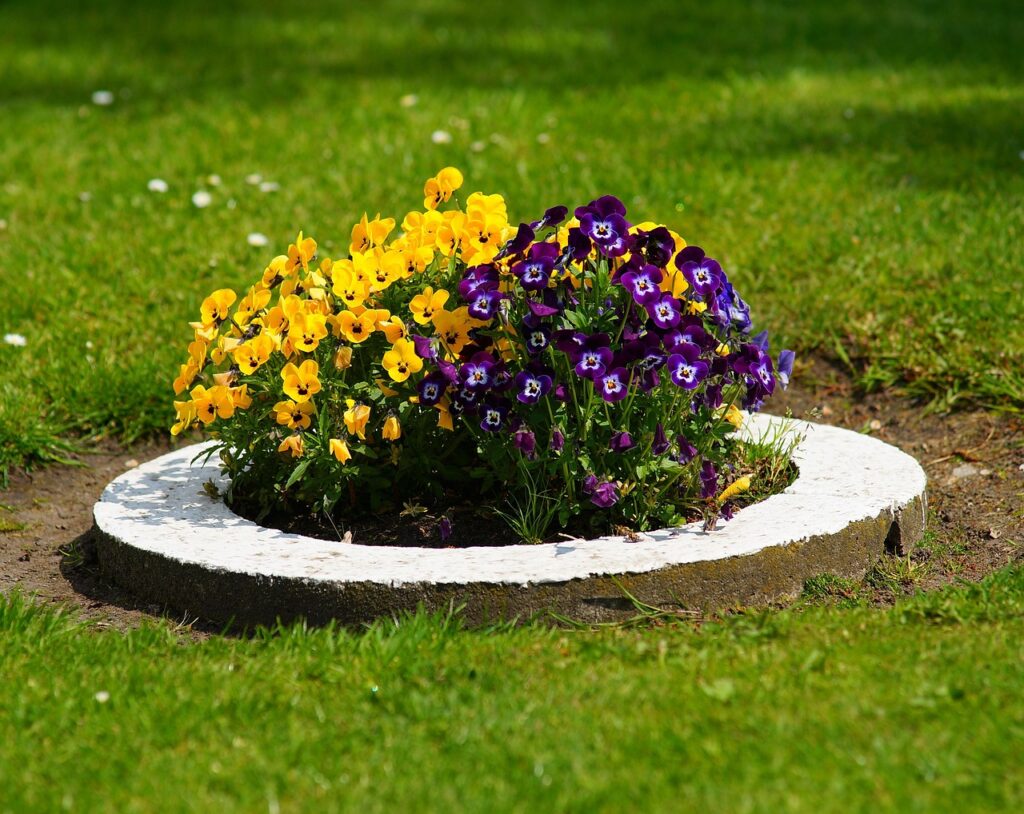
A freestanding bed visible from all sides. Place the tallest plants in the center and graduate down to the edges. Oval and kidney shapes look the most natural. Island beds work well in the middle of large lawns or at the intersection of garden paths.
Cottage Garden Style
A relaxed, informal design that mixes flowers, herbs, and even vegetables in an abundant, overflowing look. Use a mix of heights, colors, and textures planted closely together. Roses, lavender, foxglove, delphiniums, and daisies are classic cottage garden choices.
Modern Minimalist
Clean lines, limited color palette (two to three colors), and structured spacing. Ornamental grasses, lavender, and allium create a contemporary look. Pair with stone or steel edging for a polished finish.
Pollinator Garden
Designed to attract bees, butterflies, and hummingbirds. Include native wildflowers, coneflowers, black-eyed Susans, bee balm, and milkweed. Avoid pesticides and provide a shallow water source.
Best Flowers by Season
| Season | Annuals | Perennials | Bloom Color |
|---|---|---|---|
| Early Spring | Pansies, snapdragons | Crocuses, daffodils, tulips | Yellow, purple, white |
| Late Spring | Petunias, marigolds | Irises, peonies, columbine | Pink, purple, orange |
| Summer | Zinnias, cosmos, sunflowers | Coneflowers, daylilies, lavender | Red, yellow, purple |
| Late Summer | Celosia, lantana | Black-eyed Susans, phlox | Orange, gold, pink |
| Fall | Chrysanthemums, ornamental kale | Asters, sedums, Japanese anemones | Burgundy, gold, white |
For continuous color, plant a mix of early, mid, and late-season bloomers. This ensures something is always flowering from April through October.
Best Flowers by Hardiness Zone
| USDA Zone | Winter Temp | Reliable Perennials |
|---|---|---|
| 3–4 | -40°F to -20°F | Siberian iris, hosta, daylily, peony |
| 5–6 | -20°F to 0°F | Coneflower, lavender, black-eyed Susan, bee balm |
| 7–8 | 0°F to 20°F | Roses, salvia, agapanthus, lantana |
| 9–10 | 20°F to 40°F | Bougainvillea, hibiscus, bird of paradise, plumeria |
Soil Preparation
Good soil is the foundation of a successful flower bed. Most flowers prefer loamy, well-draining soil with a pH between 6.0 and 7.0.
- Test your soil – Use a $12–$20 home test kit or send a sample to your local extension office ($15–$25) for a detailed analysis of pH, nutrients, and organic matter.
- Remove existing vegetation – Strip away grass and weeds with a flat shovel or smother them under cardboard and mulch for 6–8 weeks (lasagna method).
- Loosen the soil – Dig or till to a depth of 12–15 inches. Break up compacted clay and remove large rocks.
- Amend the soil – Mix in 2–4 inches of compost, aged manure, or peat moss. For clay soil, add perlite or coarse sand to improve drainage. For sandy soil, add compost to improve water retention.
- Level and rake – Create a smooth, slightly crowned surface so water flows away from the center rather than pooling.
If you are building a flower bed adjacent to your home, protect the foundation and any outdoor tile flooring from soil and water runoff by grading the bed to slope away from the structure.
Edging Materials & Ideas
| Material | Cost per Linear Foot | Lifespan | Style | Difficulty |
|---|---|---|---|---|
| Natural stone | $5–$15 | 20+ years | Classic, rustic | Moderate |
| Brick | $3–$8 | 15–20 years | Traditional | Moderate |
| Steel edging | $4–$10 | 20+ years | Modern, clean lines | Easy |
| Plastic edging | $1–$3 | 5–10 years | Basic, utilitarian | Easy |
| Wood (cedar/redwood) | $2–$6 | 8–15 years | Cottage, natural | Easy |
| Poured concrete | $8–$20 | 25+ years | Formal, permanent | Hard |
| Trench edge (no material) | Free | Needs annual maintenance | Clean, minimal | Easy |
Steel edging is the best all-around choice for most homeowners. It creates crisp, permanent lines, bends easily for curves, and requires zero maintenance. Install it by driving the stakes into the ground with a rubber mallet.
Step-by-Step Planting Guide
- Lay out your plants – Before planting, set the pots on the soil in their intended positions. Step back and adjust spacing and arrangement. This saves rework.
- Spacing – Follow the spacing recommendations on each plant tag. As a general rule: small plants 6–8 inches apart, medium plants 12–18 inches apart, large plants 24–36 inches apart.
- Dig the hole – Make each hole twice as wide and the same depth as the root ball. Wider holes encourage roots to spread outward.
- Remove from pot – Gently squeeze the sides of the pot and slide the plant out. If roots are circling, score the root ball with a knife to encourage outward growth.
- Plant at the right depth – The top of the root ball should be level with the surrounding soil. Planting too deep causes crown rot; too shallow exposes roots.
- Backfill and firm – Fill around the root ball with soil and press gently to eliminate air pockets. Do not pack tightly.
- Water deeply – Soak the entire bed until water pools briefly on the surface, then let it absorb. This settles the soil and hydrates the roots.
- Apply mulch – Spread 2–3 inches of mulch around (not touching) the plant stems.
Mulching & Weed Control
Mulch serves four critical functions: it retains soil moisture, suppresses weeds, regulates soil temperature, and adds organic matter as it decomposes.
- Shredded hardwood mulch – The most popular choice. Stays in place, decomposes slowly, and enriches the soil. $30–$45 per cubic yard.
- Pine straw – Lightweight, slightly acidic (good for azaleas and blueberries). $5–$8 per bale.
- Cocoa hull mulch – Attractive chocolate color with a pleasant scent. Toxic to dogs—avoid if you have pets. $8–$12 per bag.
- Rubber mulch – Permanent and weed-proof but does not improve soil. Best for pathways, not flower beds.
Apply 2–3 inches of mulch and replenish annually in spring. Keep mulch 1–2 inches away from plant stems to prevent rot and disease.
For weed prevention, lay landscape fabric under the mulch in new beds. Cut X-shaped slits for each plant. This blocks 90% of weeds while allowing water and air through. Clean tools after working in flower beds—a pressure washer on a low setting makes quick work of muddy shovels and wheelbarrows.
Seasonal Maintenance Schedule
| Season | Tasks |
|---|---|
| Early Spring (March–April) | Remove winter mulch, prune dead stems, divide overgrown perennials, apply slow-release fertilizer, edge beds |
| Late Spring (May) | Plant annuals after last frost, stake tall plants, begin regular watering schedule |
| Summer (June–August) | Water 1–1.5 inches per week, deadhead spent blooms, fertilize annuals monthly, watch for pests |
| Fall (September–October) | Plant spring-blooming bulbs, cut back spent perennials, add compost, apply winter mulch in cold zones |
| Winter (November–February) | Plan next year’s design, order seeds, clean and sharpen tools, protect tender plants with burlap wraps |
How to Make a Flower Bed From Layout to Watering: Marking, Slopes and Easy Irrigation
Choosing plants is the fun part, but the steps that come before planting decide how much work the bed will be for years. Learning how to make a flower bed with a smart outline, a plan for sloped ground and a simple watering setup saves hours of hand watering and reshaping later. These steps fit any style, from a small border to a large island bed.
Mark the Outline Before You Dig
Lay a garden hose or rope on the lawn to sketch the shape, then look at it from the places you actually see the yard: the kitchen window, the front walk and the patio. Smooth, wide curves are easier to mow around than tight wiggles. Once you like the shape, trace it with marking paint or a line of flour. Keep the bed deep enough front to back for at least three layers of plants, and leave a strip you can step on, or add stepping stones, if the bed is wider than you can reach from the edge. Before any deep digging, edging trench or post, call 811 a few days ahead to have buried utility lines marked.
Building on a Slope
On a gentle slope, plant across the grade rather than up and down it, and use mulch heavily to hold soil in place. On a steeper slope, build low terraces with stone, timber or block so each level is nearly flat. Even a few short steps of retaining edge stop rain from washing soil and mulch onto the lawn. Plant deep-rooted perennials and groundcovers along the lower edge of each terrace to knit the soil together.
Set Up Soaker Hose or Drip Before Mulching
Installing irrigation before you mulch is far easier than threading it in later. Snake a soaker hose through the bed so it passes within a few inches of each plant, or run drip tubing with emitters at each plant group. Connect it to a hose bib with a backflow preventer and a simple battery timer, then cover the lines with mulch. Watering at the soil level keeps foliage dry, which reduces leaf disease, and a timer set for early morning means the bed gets a deep soak even when you are away.
Consider a Fall Start
Building in autumn gives you a head start. Prepare the soil, add compost and mulch, and plant spring bulbs and hardy perennials while the soil is still warm. Roots establish over winter, and by spring the bed fills in faster than one planted from scratch in May. Wear gloves when working with compost and soil amendments, and lift heavy bags with your legs rather than your back.
Knowing how to make a flower bed from the outline up means less weeding, less watering and a garden that looks settled by its first full season.
Frequently Asked Questions
How deep should a flower bed be?
Prepare the soil to a depth of 12–15 inches for most flowers. Raised beds should be at least 8–12 inches tall. Deeper soil allows roots to spread freely and access moisture during dry spells.
How do I keep weeds out of my flower bed?
Use a three-layer defense: landscape fabric on the soil surface, 2–3 inches of mulch on top, and hand-pulling any weeds that break through before they go to seed. Pre-emergent herbicides applied in early spring prevent weed seeds from germinating.
What is the easiest flower to grow in a flower bed?
Marigolds, zinnias, and petunias are the easiest annuals. Black-eyed Susans, daylilies, and hostas are the easiest perennials. All are low-maintenance, pest-resistant, and widely available at garden centers.
How often should I water a flower bed?
Most flower beds need 1–1.5 inches of water per week, including rainfall. Water deeply 2–3 times per week rather than lightly every day. Deep watering encourages deeper root growth, which makes plants more drought-resistant.
Can I build a flower bed over grass?
Yes. The easiest method is the “lasagna” or “sheet mulch” technique: lay overlapping cardboard directly on the grass, add 4–6 inches of compost and topsoil on top, and plant into the new soil. The cardboard smothers the grass, which decomposes over 2–3 months. No digging required.
How do I make my flower bed look fuller?
Plant in odd-numbered groups (3, 5, or 7 of the same variety) rather than single plants. Fill gaps with low-growing annuals like alyssum, creeping phlox, or lobelia. Adding ornamental grasses or foliage plants between flowering groups creates texture even when nothing is blooming.
Last updated: March 2026