Homeowners routinely spend $800 on acoustic foam and then wonder why they can still hear the television next door. The honest answer to how much does it cost to soundproof a room depends on what you are trying to stop and how that sound travels, because blocking noise and treating echo are two different jobs with very different price tags. A typical 12 x 12-foot bedroom runs anywhere from about $500 for targeted DIY fixes to $6,000 to $15,000 for a professionally decoupled room. This guide breaks down the costs by surface, explains what actually moves the needle, and shows where to spend first.
Part of our Roofing guide — explore the full guide →
- How Much Does It Cost to Soundproof a Room on Average?
- Soundproofing vs. Acoustic Treatment: Why It Changes the Price
- Wall Soundproofing Costs
- Ceiling and Floor Soundproofing Costs
- Door and Window Costs
- Hidden Costs and Flanking Paths
- Cost by Room Type
- DIY vs. Professional Installation
- Soundproofing Cost FAQ
- How to Spend Smart
How Much Does It Cost to Soundproof a Room on Average?
Most homeowners land between $2,000 and $6,000 for a single bedroom or home office, which usually covers improved walls on one or two sides, a solid-core door with seals, and some window work. Per square foot of wall or ceiling surface, professional soundproofing generally costs $10 to $30, depending on the method.
| Project Level | Typical Cost (12 x 12 room) | What It Includes |
|---|---|---|
| Basic DIY | $300 to $1,000 | Door seals, window inserts, caulking gaps, rugs |
| Moderate | $2,000 to $6,000 | Added drywall with damping compound, solid door, outlet sealing |
| Full decoupled | $6,000 to $15,000+ | Resilient clips and channel, new insulation, isolated ceiling, floor underlayment |
| Studio-grade | $20,000 to $60,000+ | Room-within-a-room, floated floor, dedicated HVAC |
Labor usually makes up 40 to 60 percent of the total. Drywall crews typically charge $50 to $100 per hour, and finishing extra layers adds time because each coat needs to dry.
Soundproofing vs. Acoustic Treatment: Why It Changes the Price
Soundproofing reduces how much sound passes through a wall, floor, or ceiling. Acoustic treatment, such as foam or fabric panels, reduces echo inside the room. Panels are affordable and useful in a home theater or podcast corner, but they add almost nothing to sound isolation. If your goal is to stop a neighbor’s voices or keep a drum kit from waking the house, your money needs to go into mass, damping, decoupling, and airtightness.
Wall performance is measured by STC (Sound Transmission Class). A standard interior wall with single 1/2-inch drywall on wood studs rates around STC 33 to 35, where normal speech is clearly understood through it. Reaching STC 50 to 55 makes loud speech barely audible, and that jump is where most of the budget goes. Floor-ceiling assemblies also carry an IIC (Impact Insulation Class) rating for footsteps.
Wall Soundproofing Costs
Walls are usually the first and largest line item. Here are the common methods and what they cost per square foot installed:
- Add a second drywall layer with damping compound: $4 to $9 per sq ft. A viscoelastic compound between layers, roughly $15 to $25 per tube with two tubes per 4 x 8 sheet, can add 10 or more STC points over a single layer.
- Soundproof drywall panels: $50 to $90 per sheet versus about $15 for standard drywall. Easier than two layers but usually not better.
- Resilient sound clips and hat channel: $8 to $15 per sq ft including new drywall. This decouples the drywall from the studs and is one of the most effective upgrades.
- Staggered or double-stud wall: $15 to $30 per sq ft when built new or during a gut remodel.
- Mineral wool insulation in cavities: $1.50 to $3 per sq ft. Helps modestly on its own, significantly when combined with decoupling.
For a single 12-foot wall with an 8-foot ceiling, that translates to roughly $400 to $900 for added drywall with damping, or $800 to $1,500 for a clip-and-channel system with fresh insulation.
Ceiling and Floor Soundproofing Costs
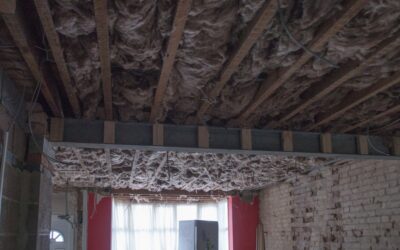
Footsteps from upstairs are one of the hardest noise problems to fix, because impact sound travels directly through the framing. Treating the ceiling from below with resilient clips, hat channel, insulation, and two layers of drywall costs about $10 to $20 per sq ft, so a 144 sq ft ceiling comes in near $1,500 to $3,000. Recessed lights must be airtight or boxed, which can add $50 to $150 per fixture.
Treating the floor above is often more effective for impact noise. A dense acoustic underlayment such as cork, rubber, or felt beneath new flooring costs $0.75 to $3 per sq ft for the material. Pair it with a floating floor like engineered wood, laminate, or luxury vinyl plank and you can meaningfully raise the IIC rating. Thick carpet with a quality 8-pound rebond pad remains the cheapest way to cut footfall noise, at roughly $3 to $7 per sq ft installed. In condos, check the HOA’s minimum IIC requirement before choosing a hard floor.
Door and Window Costs
Doors and windows are the weakest points in almost every room, and fixing them delivers the most improvement per dollar. A hollow-core interior door rates around STC 20, so even a perfect wall is undermined by it.
- Weatherstripping and an automatic door bottom: $50 to $250. Closing a 1/2-inch gap under a door often produces a noticeable difference by itself.
- Solid-core door swap: $250 to $700 installed.
- Acoustic door (STC 40 to 50): $1,500 to $4,000 installed.
- Acoustic window inserts: $400 to $1,200 per window. They mount inside the existing frame and create an air gap.
- Laminated or dual-pane replacement windows: $700 to $2,000 per window installed.
Hidden Costs and Flanking Paths
Sound behaves like water: it finds every gap. Electrical outlets, HVAC ducts, gaps along baseboards, and shared joists all create flanking paths that let noise bypass your expensive new wall. Budget for these small but essential items:
- Putty pads for outlets and switch boxes: $5 to $10 each
- Acoustic sealant along drywall perimeters: $15 to $25 per tube
- Lined ductwork or a sound maze for supply vents: $150 to $600
- Electrical box relocation or back-to-back box offset: $100 to $300 per box
- Paint, trim reinstallation, and outlet extenders: $200 to $800 per room
Also expect to lose floor space. Clip-and-channel systems add about 1.5 to 2 inches to each treated wall, and a room-within-a-room can cost 6 inches or more per side. Door jambs and window returns may need extending, adding trim carpentry costs.
Cost by Room Type
The purpose of the room largely determines the right target:
- Bedroom next to a noisy hallway or street: $1,500 to $4,000. Focus on the door, window inserts, and the one shared wall.
- Home office for video calls: $800 to $3,000. Seal the door, treat echo with panels, and add a second drywall layer on the loudest wall.
- Home theater: $5,000 to $20,000. Decoupled walls and ceiling, acoustic door, plus treatment panels for sound quality.
- Music practice or drum room: $10,000 to $40,000+. Low-frequency sound demands mass and full decoupling.
- Nursery: $600 to $2,500. Door seals, heavy curtains, and a solid-core door handle most of it.
DIY vs. Professional Installation
You can realistically handle door seals, window inserts, outlet putty pads, acoustic caulking, rugs, and bookshelves on shared walls yourself. Adding a second drywall layer with damping compound is also DIY-friendly if you are comfortable hanging and finishing drywall, and it can save $1,000 or more on a single room.
Decoupling systems are less forgiving. A single screw that goes through the hat channel into a stud can short-circuit the whole assembly and waste the investment. For clip-and-channel ceilings, double-stud walls, or any project that involves moving electrical boxes, altering ductwork, or modifying load-bearing framing, hire a licensed contractor who has installed acoustic assemblies before. Electrical changes should be done by a licensed electrician, and any structural changes should involve a permit. Ask installers for the tested STC rating of the assembly they propose rather than vague promises of a quieter room.
Soundproofing Cost FAQ
Does acoustic foam soundproof a room?
No. Foam panels absorb reflections inside the room and improve clarity for recording or listening, but they are too light to block sound traveling through walls. Spending $300 on foam typically changes transmission by only a point or two of STC, while the same money spent on door seals and gap sealing often makes a far bigger difference.
How much does it cost to soundproof a shared apartment wall?
Renters can use removable options such as heavy bookcases filled with books, dense moving blankets, and door sweeps for $100 to $500. Owners who can alter the wall usually pay $800 to $2,000 for a second drywall layer with damping compound on a 12-foot wall, including finishing and paint.
Is soundproofing a room worth the money?
It is usually worth it when noise affects sleep, work, or the use of a space you already own. Targeted fixes to doors, windows, and one problem wall deliver most of the benefit at a fraction of full-room pricing, so start small and escalate only if needed.
How long does professional soundproofing take?
Door and window upgrades take a day. Adding drywall layers to one or two walls typically takes three to five days including taping, mudding, and drying time, while full decoupled rooms can take one to three weeks.
How to Spend Smart
Work from cheapest and most effective to most expensive. Start with airtightness: seal the door, fix gaps, and treat windows. Live with the result for a week. If noise is still a problem, identify the specific wall or ceiling it comes through and upgrade that surface only, rather than treating all six sides of the room. When you finally ask a contractor how much does it cost to soundproof a room, bring a clear description of the noise source, its type, and when it happens. That information lets them quote the right assembly instead of the most expensive one.