Most plug-in heaters sold in the US are built around the same ceiling: 1500 watts, the most a standard 15-amp household outlet can comfortably supply for hours at a time. So how much electricity does a space heater use? On its high setting, a typical unit draws about 1.5 kilowatt-hours (kWh) for every hour it runs at full power, and roughly 0.75 kWh per hour on a 750-watt low setting.
That is the nameplate answer to how much electricity does a space heater use. Real-world use is usually lower, because a heater with a working thermostat cycles off once the room reaches the set temperature and only kicks back on as heat leaks away. In a small, well-sealed bedroom, a 1500-watt heater might run at full power only 40 to 60 percent of the time. In a drafty garage or a room with single-pane windows, it may never shut off at all.
- How Much Electricity Does a Space Heater Use on Each Setting?
- The Watts to kWh Formula, Step by Step
- Daily and Monthly kWh Examples
- Why Thermostat Cycling Changes Real Use
- How to Measure Your Own Heater's Use
- Ways to Reduce Space Heater Energy Use
- Safety and Electrical Load Considerations
- When a Space Heater Is the Wrong Tool
- Frequently Asked Questions
- How much electricity does a room heater use per hour?
- Do space heaters use a lot of energy?
- How many kWh does a space heater use overnight?
- Does a ceramic heater use less electricity than an oil-filled one?
- Can I tell how much wattage my space heater uses without the label?
- Is it safe to plug a space heater into a power strip?
Once you understand watts, kilowatt-hours and duty cycle, you can estimate the room heater energy consumption for any model, any setting and any schedule with a pencil and a sticky note. The dollar side of the equation is a separate calculation; here the focus stays on energy use itself.
How Much Electricity Does a Space Heater Use on Each Setting?
Electric resistance heaters convert nearly every watt they pull from the wall into heat. That makes the math unusually clean. The wattage printed on the label (or on the cord tag) is the rate of energy use while the heating element is energized.
- Low (about 750 W): 0.75 kWh per hour of full-power operation
- Medium (often 900 to 1000 W on three-setting models): 0.9 to 1.0 kWh per hour
- High (1500 W): 1.5 kWh per hour
- Fan-only mode: usually 20 to 50 W, which is close to negligible
Some compact personal heaters run at 200 to 500 watts, and oil-filled radiators often offer 600, 900 and 1500-watt steps. Ceramic, coil, infrared and oil-filled designs all follow the same rule: wattage times hours equals energy. The type changes how the heat feels and how fast a room warms up, not how efficiently electricity turns into heat.
When people ask how much wattage does a space heater use, the honest answer is “whatever the label says while the element is on, and zero while the thermostat has it paused.” The pause time is where most of the variation lives.
The Watts to kWh Formula, Step by Step
Your utility bills you in kilowatt-hours, so the conversion is the only formula you need:
Watts × hours ÷ 1000 = kWh
- Find the wattage. Check the rating plate on the back or bottom of the heater. If it lists amps instead, multiply amps by 120 volts (a 12.5-amp heater is about 1500 W).
- Pick the setting you actually use. If you leave it on high all evening, use 1500. If you toggle to low after warm-up, split the hours between settings.
- Estimate hours of operation. Count the hours the heater is switched on, then multiply by a duty-cycle estimate if it has a thermostat (0.5 is a reasonable starting guess for a closed, average room).
- Divide by 1000. That turns watt-hours into kilowatt-hours.
Example: a 1500-watt heater switched on for 6 hours with a 50 percent duty cycle uses 1500 × 6 × 0.5 ÷ 1000 = 4.5 kWh. Without a thermostat, or in a room that never warms up, it would use the full 9 kWh.
Daily and Monthly kWh Examples
Here is how the electric heater energy consumption stacks up across common routines. These assume the heater runs at full power for the listed hours; adjust down for thermostat cycling.
| Routine | 750 W (low) | 1500 W (high) |
|---|---|---|
| 1 hour | 0.75 kWh | 1.5 kWh |
| 4 hours per evening | 3 kWh/day | 6 kWh/day |
| 8 hours overnight | 6 kWh/day | 12 kWh/day |
| 8 hours daily for 30 days | 180 kWh/month | 360 kWh/month |
| 24 hours continuous for 30 days | 540 kWh/month | 1,080 kWh/month |
For perspective, many American homes use somewhere around 800 to 1,000 kWh in an entire month. One heater left on high around the clock can match or exceed that on its own, which explains the winter bill surprise many people get after running a heater in a cold basement office. On the other hand, an hour or two of spot heating in a home office adds only a few kWh a day.
So do space heaters use a lot of energy? Per hour, yes. A single 1500-watt unit pulls more power than a refrigerator, a TV and a laptop combined. Over a month, it depends entirely on how many hours it runs and how often the thermostat lets it rest.
Why Thermostat Cycling Changes Real Use
A heater with a built-in thermostat behaves like a tiny furnace. It runs at full wattage until the sensor reads the target temperature, shuts the element off, and restarts when the room cools a degree or two. The share of time spent running is the duty cycle, and it is shaped by several factors:
- Room size: a 120 sq ft bedroom reaches temperature far faster than a 400 sq ft open den.
- Insulation and air sealing: leaky windows, an uninsulated exterior wall or a gap under the door all force longer run times.
- Outdoor temperature: the colder it is outside, the faster heat escapes and the more often the heater cycles on.
- Setpoint: every extra degree on the dial lengthens run time. Asking for 72°F in a room where the central system holds 62°F makes the heater work hard.
- Door position: a closed door keeps the warmth where the heater is, while an open doorway lets it bleed into the rest of the house.
Older heaters with only a high/low switch and no thermostat run continuously at whatever setting you choose, which is why a space heater with thermostat control is worth looking for if you plan to use one regularly. Digital thermostats tend to hold temperature more precisely than the old bimetal dials, which reduces overshoot and wasted run time.
How to Measure Your Own Heater’s Use
Estimates are useful, but measuring takes the guesswork out. A plug-in electricity usage monitor sits between the outlet and the heater cord and records kWh over hours or days. Run the heater on your normal schedule for a few days, then read the total. That number already includes duty cycle, setting changes and the effect of the weather.
A few practical tips for measuring:
- Choose a monitor rated for at least 15 amps and 1800 W so it can handle a heater continuously.
- Measure for at least three days to smooth out a single unusually cold or mild night.
- Note outdoor temperatures, since a mild week will understate midwinter use.
- If the monitor or the plug feels hot to the touch, unplug it and stop using it.
Many smart meters and utility apps also show hourly household use. Switching the heater on during a quiet period and watching the hourly jump gives a quick confirmation of how much energy do space heaters use in your specific room.
Ways to Reduce Space Heater Energy Use
Because every resistance heater is essentially 100 percent efficient at turning electricity into heat, the savings come from running it less, not from finding a more “efficient” heating element. A few habits make a real difference:
- Heat the person, not the house. Place the heater in the room you occupy, close the door, and lower the central thermostat a few degrees.
- Use low after warm-up. Start on high to take the chill off, then drop to 750 W to maintain.
- Set a timer. Many models have shut-off timers. Use them to avoid heating an empty room.
- Seal drafts. A door sweep, window film or a draft snake under the door shortens run time noticeably.
- Add insulation underfoot. Cold floors pull heat out of a room. An area rug over tile or concrete helps the space feel warmer at a lower setpoint.
- Pick the right size. A rough rule is about 10 watts per square foot for a room with standard ceilings, so a 1500-watt heater suits roughly 150 sq ft as primary heat. Oversizing does not save energy, and undersizing means the heater never cycles off.
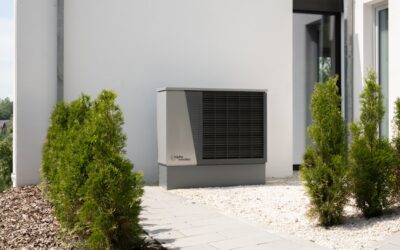
Heat pumps are the main exception to the “all electric heat is equal” rule. A heat pump can deliver two to three units of heat per unit of electricity in moderate weather, so it uses far less power than a resistance space heater for the same warmth. Portable heaters still make sense for spot heating a single room for a few hours.
Safety and Electrical Load Considerations
A 1500-watt heater draws about 12.5 amps, which is most of a typical 15-amp circuit. That load affects both energy use and safety:
- Plug directly into a wall outlet. Never use an extension cord or power strip; they can overheat under a continuous heater load.
- Keep 3 feet of clearance from bedding, curtains, furniture, paper and anything else that can burn.
- Choose a listed heater marked by a recognized testing lab, with tip-over and overheat shut-off.
- Never leave it running unattended or while sleeping unless the manufacturer’s label specifically allows it.
- Do not share the circuit with another heavy load like a hair dryer, microwave or second heater. A tripping breaker is a warning sign, not a nuisance.
- Watch for warm plugs or outlets. A plug that feels hot, or a faceplate that is discolored, points to a loose or worn receptacle.
If an outlet feels warm or scorched, stop using it. Before anyone removes the cover plate, turn off the breaker and confirm power is off with a non-contact voltage tester. Replacing a worn receptacle is a modest repair, but adding a new outlet or a dedicated heater circuit is work for a licensed electrician, who can confirm wire gauge and breaker size match the load. Bathrooms, kitchens, garages and basements also call for GFCI protection, and many heaters are not rated for damp locations at all.
When a Space Heater Is the Wrong Tool
Knowing how much electricity does a space heater use in your room is useful mainly because it tells you when to stop relying on one. If your monthly estimate lands in the hundreds of kWh because a heater runs all day in a room that never warms up, the problem is usually the room. Missing insulation, a failing window or a duct that does not reach the space can all leave a room cold. A heating contractor can check airflow and duct balance, and an energy audit can pinpoint air leaks. Fixing the cause is often cheaper over a few winters than paying for many hours of resistance heat.
Likewise, if you are tempted to run a heater in a bathroom, a damp basement or a garage workshop full of solvents, look for equipment rated for that environment, or ask an electrician about a hardwired heater on its own protected circuit.
Frequently Asked Questions
How much electricity does a room heater use per hour?
A typical 1500-watt room heater uses 1.5 kWh per hour on high and about 0.75 kWh per hour on a 750-watt low setting, less if a thermostat cycles it off.
Do space heaters use a lot of energy?
Per hour they use more than most household appliances. Over a month, total use depends on hours of operation and how often the thermostat lets the heater rest.
How many kWh does a space heater use overnight?
Eight hours on high at full power is 12 kWh. With a thermostat holding a closed bedroom, actual use is often closer to 5 to 8 kWh.
Does a ceramic heater use less electricity than an oil-filled one?
Not at the same wattage. Both convert electricity to heat at nearly 100 percent; they differ in how quickly they warm a room and how long the heat lingers.
Can I tell how much wattage my space heater uses without the label?
Use a plug-in electricity usage monitor. It shows live watts and total kWh, which also captures thermostat cycling.
Is it safe to plug a space heater into a power strip?
No. Plug it directly into a wall outlet. Power strips and extension cords can overheat under a continuous heater load.