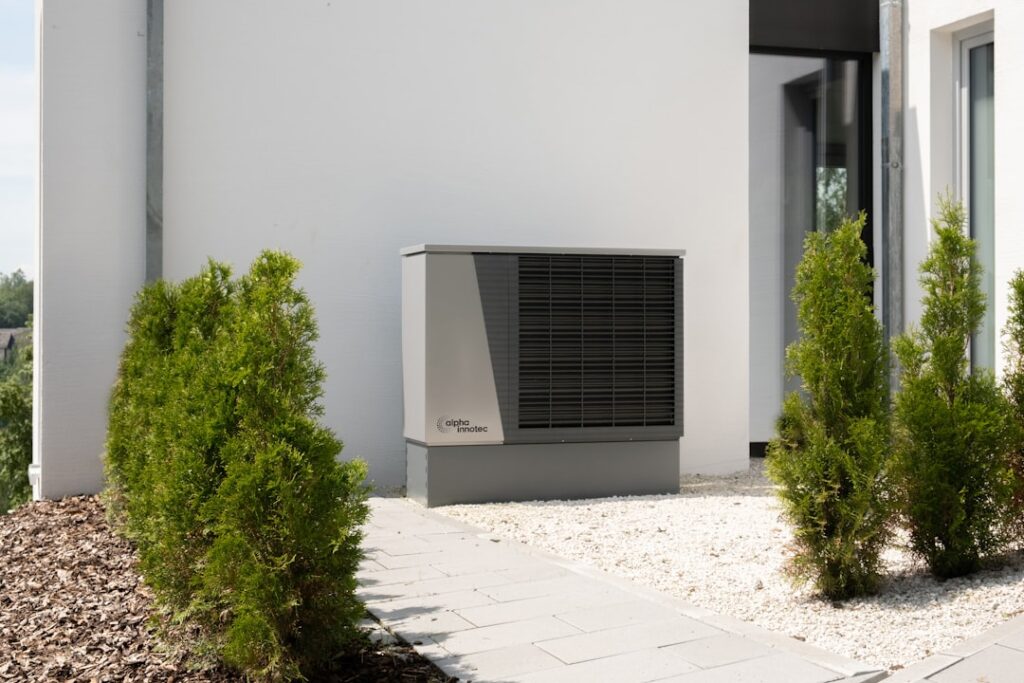
Before you switch off gas or oil heat, the question that decides everything is how much electricity does a heat pump use, because a heat pump replaces both your furnace and your air conditioner with a single electric appliance and your power bill has to absorb the load. The short answer is that a typical whole-home heat pump draws somewhere between 3,000 and 8,000 watts while running and consumes roughly 900 to 3,600 kilowatt-hours per month in the depths of winter, but the real number depends on your climate, your home, and the unit’s efficiency. Let me put concrete figures on it so you can estimate your own bill instead of guessing.
- Watts, Tons, and What "Running" Means
- Turning Watts Into Kilowatt-Hours
- What Efficiency Ratings Tell You
- Putting a Dollar Figure on It
- What Drives Your Number Up or Down
- How to Cut Heat Pump Electricity Use
- Heat Pump Versus Furnace and Resistance Heat
- Reading Your Bill and Metering Actual Use
- Sizing, Time-of-Use Rates, and Real Bills
Watts, Tons, and What “Running” Means
Heat pump size is measured in tons, where one ton equals 12,000 BTU. A common 3-ton system serving a 1,800-square-foot home draws about 3,500 watts in cooling and can pull 4,000 to 7,000 watts in heating when the auxiliary electric strips kick in. A smaller 2-ton unit might draw 2,500 to 3,500 watts, while a large 5-ton system can reach 8,000 watts or more under heavy load.
The key insight is that modern inverter-driven heat pumps rarely run flat out. They modulate, ramping the compressor up and down to match demand, so on a mild day the unit might sip 1,000 to 1,500 watts and on a bitter night it climbs toward its maximum. That variability is why a single wattage number never tells the whole story.
Turning Watts Into Kilowatt-Hours
Your utility bills you in kilowatt-hours, which is simply watts times hours divided by 1,000. A 3,500-watt heat pump running a full hour uses 3.5 kWh. In practice it does not run continuously, so the honest way to estimate is by daily runtime.
- Mild shoulder season: a heat pump might run 6 to 8 hours a day at partial load, using 10 to 20 kWh daily.
- Cold winter day: the same unit may run 12 to 18 hours at higher output, using 30 to 60 kWh daily.
- Peak cooling day: summer runtime commonly lands around 20 to 40 kWh.
Add those up and a typical home lands near 900 to 3,600 kWh in a heating month, with the low end in mild climates and the high end where winters are long and auxiliary heat runs often.
What Efficiency Ratings Tell You
Two numbers predict consumption more than any other: SEER2 for cooling and HSPF2 for heating. SEER2 measures seasonal cooling efficiency, and the higher it is, the fewer watt-hours you burn per BTU removed. Current federal minimums start at 14.3 SEER2, while premium units reach the low 20s. HSPF2 does the same for heating; minimums sit near 7.5, and cold-climate models push past 9 or 10.
There is also COP, the coefficient of performance, which is the most intuitive figure. A COP of 3 means the heat pump delivers three units of heat for every unit of electricity, an effective 300 percent efficiency that no gas furnace can match. That leverage is exactly why heat pumps use so much less energy than resistance heat: they move heat rather than create it.
Putting a Dollar Figure on It
Cost equals kWh times your electric rate. The national average residential rate hovers around 16 to 17 cents per kWh, though it ranges from under 12 cents in some states to over 30 cents in others. Multiply your monthly consumption by that rate to get the bill.
At 16 cents per kWh, a mild-climate home using 900 kWh in a heating month pays about $144, while a cold-climate home burning 3,000 kWh pays roughly $480. Averaged across a full year, many households find a heat pump costs $80 to $200 per month, often less than the combined gas-and-air-conditioning bills it replaces, because the cooling season efficiency is excellent and heat pumps beat resistance and often oil heat on operating cost.
What Drives Your Number Up or Down
Climate is the biggest lever. Below about 25°F to 35°F, a standard heat pump loses capacity and leans on electric backup strips, which are pure resistance heat at a COP of 1 and gulp power. Cold-climate hyper-heat models push efficient operation down to -5°F or lower and dramatically cut that auxiliary reliance.
Your home matters just as much. A leaky, poorly insulated house makes the heat pump run longer for the same comfort. Thermostat behavior, duct leakage, and dirty coils all add consumption. A heat pump in a tight, well-insulated home with clean coils and sealed ducts can use a third less electricity than the identical unit in a drafty house.
How to Cut Heat Pump Electricity Use
You have real control over the bill. Start with the envelope: air-sealing and adding attic insulation to R-49 or better shortens runtime more than any thermostat trick. Keep the outdoor and indoor coils clean, since a fouled coil can raise consumption 10 to 30 percent, and change filters every one to three months.
- Set it and leave it. Big setbacks force the electric strips to catch up; modest, steady settings often use less on a heat pump.
- Manage auxiliary heat. Watch for the “emergency heat” or “aux” light and address anything that triggers it needlessly.
- Seal ducts, which commonly leak 20 to 30 percent of conditioned air in older homes.
- Right-size the unit; an oversized heat pump short-cycles and wastes energy.
So how much electricity does a heat pump use in the end? Plan on roughly 900 to 3,600 kWh a month in heating season for an average home, translating to something like $100 to $500 depending on your climate and rate. Tighten the envelope, keep the coils clean, and choose a high-SEER2, high-HSPF2 unit, and you will land at the friendly end of that range.
Heat Pump Versus Furnace and Resistance Heat
The reason heat pumps win on operating cost comes down to that coefficient of performance. A pure electric resistance heater, a baseboard, a space heater, or the auxiliary strips in an air handler, runs at a COP of 1, meaning every watt in produces exactly one watt of heat. A heat pump with a COP of 3 delivers three times the heat for the same electricity, so it typically uses one-third to one-half the power of resistance heat for the same comfort.
Against a gas furnace, the comparison depends on local fuel prices. A modern condensing gas furnace at 95 percent efficiency is cheap to run where gas is inexpensive, but a heat pump often beats oil and propane on operating cost and matches or beats gas in mild climates. Where a heat pump really pulls ahead is that it also provides your cooling, so you are comparing one efficient appliance against a separate furnace plus air conditioner, and its summer efficiency is excellent.
Reading Your Bill and Metering Actual Use
Rather than rely on estimates, you can measure your own heat pump’s draw and settle the question for your home. The simplest method is to read your electric meter before and after a cold day, or use your utility’s online usage portal, which many now break down hour by hour so you can see the heating spikes.
For a precise picture, a plug-in or panel-clamp energy monitor, devices in the $50 to $200 range, tracks the heat pump circuit directly and reports kWh in real time. That data reveals whether your auxiliary strips are running more than they should, which is the single biggest hidden cost on many bills. If you see the emergency-heat or aux indicator lighting up on mild days, something is triggering resistance heat unnecessarily, and fixing it, a thermostat setting, a refrigerant charge issue, or a dirty coil, can shave a meaningful chunk off your winter electricity use.
Sizing, Time-of-Use Rates, and Real Bills
Two more factors quietly shape what you actually pay. The first is sizing. An oversized heat pump short-cycles, snapping on and off without running long enough to dehumidify or reach steady efficiency, which wastes energy and wears the compressor. An undersized unit runs constantly and leans on the electric strips in cold weather. A proper Manual J load calculation, rather than a rule-of-thumb guess, gets the tonnage right and is worth insisting on when you buy a new system.
The second is your rate structure. Many utilities now charge time-of-use rates, with electricity costing far more during late-afternoon peak hours than overnight. On such a plan, pre-heating or pre-cooling the house during cheap hours and easing off during the expensive peak can cut the bill noticeably without hurting comfort, and a smart thermostat can automate it. Combine right-sizing, smart scheduling, and a tight, well-insulated home, and a heat pump that looks like a big electrical load on paper turns out to be one of the cheapest ways to heat and cool a house across the whole year.