The single biggest line item on most utility bills is heating and cooling, and the difference between a smart thermostat setting and a careless one can easily run $400 to $900 per year for an average US household. The Department of Energy estimates you save roughly 1 percent on your annual heating bill for every 1 degree F you set back over an 8-hour period. After auditing dozens of homes for energy efficiency, here is a complete temperature playbook by season, room, and life situation.
- Energy Star's Baseline Recommendations
- The 8-Hour Setback Rule
- Smart Thermostats Worth Installing
- Heat Pump Thermostat Settings Are Different
- Room-by-Room Variation
- Humidity Settings Matter Too
- Seasonal Switchover and Maintenance
- Common Mistakes That Waste Energy
- Zoning Systems for Multi-Story Homes
- Vacation and Travel Settings
Energy Star’s Baseline Recommendations
The Energy Star program and Department of Energy publish these benchmark settings as the cheapest comfort-to-cost balance for most US homes:
- Winter, awake and home: 68 degrees F
- Winter, asleep or away: 60 to 65 degrees F (7 to 10 degrees lower)
- Summer, awake and home: 78 degrees F
- Summer, asleep or away: 82 to 85 degrees F
These numbers strike most people as too aggressive on first read. The trick is the gradual setback — adjust 1 degree at a time over a couple of weeks and your body acclimates. Most people who start at 72 winter and 68 summer can drift to the recommended settings within a month and barely notice.
The 8-Hour Setback Rule
The Department of Energy specifically calls out the 8-hour rule: setbacks shorter than 8 hours waste energy because the system works harder to recover. A programmable thermostat that runs 8 to 10 hours of overnight setback plus 8 hours of away-from-home setback is dramatically more efficient than holding a constant temperature.
The old myth — that holding a constant temperature is cheaper than letting it drift — is wrong for any home with reasonable insulation. The conduction loss through walls is proportional to the indoor-outdoor temperature difference, so a 5 degree setback for 8 hours genuinely saves about 8 percent on heat for that window.
Smart Thermostats Worth Installing
Programmable thermostats save 8 to 15 percent annually. Smart learning thermostats add another 5 to 10 percent. The current top picks:
- Ecobee Smart Thermostat Premium ($249): Remote sensors balance temperature across rooms, built-in air quality monitor
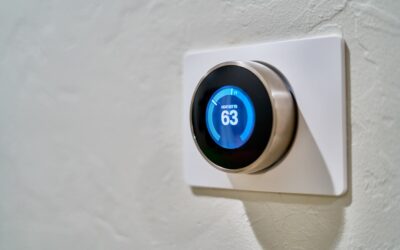
- Google Nest Learning 4th Gen ($280): Self-programming after about a week, slim profile, works with most HVAC systems
- Honeywell Home T9 ($199): Geofencing plus room sensors, simpler interface for non-tech users
- Amazon Smart Thermostat ($80): Budget option using Honeywell hardware, no remote sensors but the basics work
Most utilities offer $50 to $100 rebates on smart thermostat purchases — check your provider’s website before buying.
Heat Pump Thermostat Settings Are Different
Heat pump owners cannot use the same setback rules as gas furnace or electric resistance owners. Heat pumps lose efficiency in cold weather, and a large setback forces the auxiliary electric heat strips on for recovery — which costs more than the setback saves. For heat pumps:
- Limit setbacks to 2 to 4 degrees F at most
- Use “smart recovery” mode if your thermostat supports it — the system pre-heats gradually so the strips never engage
- Hold steady when outdoor temperatures drop below 30 degrees F
Modern cold-climate heat pumps (Mitsubishi Hyper-Heat, Daikin Aurora) tolerate slightly more setback but still benefit from steady operation.
Room-by-Room Variation
A single thermostat reading rarely matches every room in the house. Common imbalances:
- Bedrooms: Best at 60 to 67 degrees F for sleep per Cleveland Clinic — cooler than the rest of the house
- Bathrooms: Add a heated towel rail or radiant floor instead of cranking the main thermostat
- Home office: 68 to 72 degrees F during work hours, then setback when you log off
- Garage and basement: 50 to 55 degrees F is fine if not actively used
Multi-sensor smart thermostats like the Ecobee solve uneven temperatures by averaging readings across rooms, so the system runs to satisfy the bedroom in the morning instead of just the hallway where the thermostat hangs.
Humidity Settings Matter Too
Comfort is not just temperature. Indoor relative humidity belongs at 30 to 50 percent. Too dry in winter (below 30 percent) and you get static shocks, dry sinuses, and shrinking hardwood. Too humid in summer (above 50 percent) and 78 degrees F feels like 84.
Whole-home humidifiers (Aprilaire 600M, $250) and dehumidifiers (Aprilaire E080, $1,400) integrate with most smart thermostats. For partial solutions, a console humidifier from Honeywell or Vornado ($120 to $200) handles one floor in dry winter months.
Seasonal Switchover and Maintenance
Every spring and fall, audit your thermostat setting and schedule. Replace the batteries in battery-powered thermostats (most low-battery icons appear far too late). Change the HVAC filter — a clogged filter forces the system to run longer to hit the same temperature, wiping out any savings from the smart setting. MERV 8 filters (about $5 each) get changed every 90 days, MERV 11 every 60 days.
Common Mistakes That Waste Energy
Three habits that cancel out a good thermostat setting:
- Cranking the temperature far past your target (“if I set it to 80 it will heat faster”) — the system heats at the same rate regardless of target
- Closing supply registers in unused rooms — modern HVAC systems are balanced to specific airflow, and closing vents raises duct pressure and lowers efficiency
- Placing the thermostat on an exterior wall or near a kitchen — the false reading triggers cycling
Get the thermostat on an interior wall, run your setbacks, and let the system do its job.
Zoning Systems for Multi-Story Homes
Single-zone heating and cooling cannot satisfy a two-story home with bedrooms upstairs. The upper floor runs 4 to 8 degrees warmer than the main level in summer, and the basement runs colder year-round. A zoning system with separate dampers and thermostats per floor solves this — typical installs run $1,800 to $4,500 for a two-zone retrofit. Ductless mini-splits (Mitsubishi MZ-FH series, Daikin LV series) also serve as supplemental zoning, $3,500 to $6,500 per indoor head installed. Either approach pays back in comfort and energy savings over 7 to 12 years.
Vacation and Travel Settings
When leaving home for more than 24 hours, set your thermostat to vacation mode. In winter, no lower than 55 degrees F to prevent frozen pipes. In summer, no higher than 85 degrees F to protect wood floors, leather furniture, and electronics from heat damage. Modern smart thermostats let you geofence and ramp the temperature up before you arrive home, so the system uses minimal energy while you are gone but the house is comfortable when you walk in the door.