A pallet of the cheapest bags can end up costing more than a small ready-mix delivery once you count every trip and every bag. Still, for fence posts, footings and small slabs, bagged concrete is the practical choice. So how much is a bag of concrete? A standard 80 lb bag of general-purpose mix typically runs in the range of about $5 to $8 at home centers, with 40, 50 and 60 lb bags costing proportionally less. Fast-setting, high-strength and specialty mixes usually cost 30 to 80 percent more per bag.
The smarter number to compare is cost per cubic foot, because bag sizes yield very different volumes. An 80 lb bag makes about 0.6 cubic feet of concrete, so it takes 45 bags to fill a single cubic yard. Prices vary by region, store and season, so treat every figure here as a general range and check local shelves before you buy.
How Much Is a Bag of Concrete by Size
Bag size affects both price and yield. Smaller bags cost a little more per cubic foot but are far easier to lift, carry and mix by hand.
| Bag size | Approx. yield | Bags per cubic yard | General price range (standard mix) |
|---|---|---|---|
| 40 lb | 0.30 cu ft | 90 | About $3 to $5 |
| 50 lb | 0.375 cu ft | 72 | About $4 to $6 |
| 60 lb | 0.45 cu ft | 60 | About $4 to $7 |
| 80 lb | 0.60 cu ft | 45 | About $5 to $8 |
Two 40 lb bags equal one 80 lb bag in yield. If the two smaller bags cost noticeably more, you are paying a convenience premium for lighter loads. For many DIYers, that premium is worth it, especially when carrying bags across a yard or up steps.
Price by Mix Type
Bagged concrete comes in several formulations. Choosing the right one matters more than saving a dollar per bag.
Standard or General-Purpose Concrete
Standard mix reaches around 4,000 psi after full cure and is suited to slabs, steps, footings and post holes. It is the least expensive per bag and sets over several hours, giving you time to finish the surface.
Fast-Setting Concrete
Fast-setting mixes are designed to be poured dry into a post hole and soaked with water, setting in roughly 20 to 40 minutes. They typically cost more per bag than standard mix. They save time on fence and mailbox posts but are not ideal for slabs, where you need working time to screed and float.
High-Strength Concrete
High-strength mixes reach 5,000 psi or more and often include extra cement or additives. They suit driveway aprons, heavy-load pads and structural repairs, and they usually sit in the upper middle of the price range.
Crack-Resistant and Fiber-Reinforced Mixes
These include synthetic fibers that reduce shrinkage cracks. They cost more than standard mix and are popular for thin slabs and walkways where wire mesh is awkward to place.
Mortar and Sand Mixes
Mortar mix (sand plus cement and lime) is for laying brick, block and stone. Sand mix, sometimes called topping mix, has no coarse stone and works for patching and thin overlays under 2 inches. Both are usually priced similar to or slightly above standard concrete per bag, but they are not substitutes for concrete in footings or slabs.
Cost per Cubic Foot and per Cubic Yard
To compare apples to apples, divide the bag price by its yield. A standard 80 lb bag at the middle of its range works out to roughly $10 to $12 per cubic foot. Multiply by 27 and a cubic yard of bagged concrete lands somewhere around $250 to $350 for standard mix, and more for specialty mixes.
Once you know how much is a bag of concrete in your area, multiply it out before assuming bags are the cheap option. Ready-mix concrete delivered by truck is generally priced per cubic yard, often well below the bagged equivalent for the material alone. The catch is the short-load fee: many suppliers add a substantial surcharge for orders under a minimum, commonly 3 to 5 cubic yards. That fee is why bags win for small jobs.
The Bag vs Ready-Mix Crossover Point
As a rule of thumb, bagged concrete makes sense up to about 1 cubic yard (45 bags of 80 lb). Between 1 and 2 cubic yards is a gray zone where you should price both options. Above 2 cubic yards, ready-mix or a towable mixer trailer from a local supplier usually wins on cost, labor and quality.
Labor tips the balance as much as money. Mixing 45 bags by hand means lifting 3,600 pounds of dry mix, plus water, and you need to finish placing it before the first batches start to set. For anything over about 15 to 20 bags, a rented or purchased cement mixer makes the job far more manageable. A small electric drum mixer handles one or two 80 lb bags per batch and keeps the consistency even, which improves final strength.
Worked Examples
Fence Posts
A typical 4×4 post in a 10 inch wide, 30 inch deep hole needs about 1.1 cubic feet of concrete after subtracting the post, which is roughly two 60 lb bags or just under two 80 lb bags. For 20 posts, plan on about 36 to 40 bags of 80 lb mix.
A Small Slab
A 4 x 4 foot slab for an AC pad or trash can area at 4 inches deep is 5.3 cubic feet. That takes 9 bags of 80 lb mix (5.3 divided by 0.6), so buy 10 to allow for waste and form bulges.
A Patio Section
A 10 x 10 foot patio at 4 inches thick is 33.3 cubic feet, or 1.23 cubic yards. That is 56 bags of 80 lb mix. At this size, compare prices on ready-mix and mixer-trailer rentals before committing to bags.
Other Costs to Budget
- Forms and stakes: lumber or reusable forms for slab edges.
- Base material: 4 inches of compacted gravel under slabs.
- Reinforcement: wire mesh or rebar for slabs and footings.
- Tools: wheelbarrow, mixing hoe, screed board, float, edger and groover.
- Mixer rental or purchase: worthwhile above about 15 bags.
- Curing supplies: plastic sheeting or curing compound to slow moisture loss.
Buying Tips
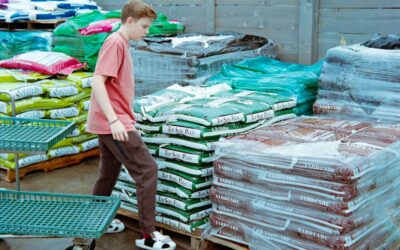
Shelf price aside, how much is a bag of concrete worth if it has been stored badly? Very little. Inspect bags before buying. A bag that feels hard or lumpy has absorbed moisture and partly hydrated, which weakens the final concrete. Store bags off the ground on a pallet and covered with plastic. Buying by the pallet sometimes earns a small discount, and many stores will deliver a full pallet for a fee, which saves your truck suspension and your back. An 80 lb bag pallet usually holds around 40 to 42 bags, enough for a bit under a cubic yard.
Troubleshooting Common Problems
- Too much water: soupy concrete is easier to pour but weaker and more prone to cracking. Follow the bag’s water ratio and add water gradually.
- Cold joints: mixing too slowly lets earlier batches set before the next ones arrive. Work with a helper or a mixer for continuous placement.
- Surface dusting: finishing while bleed water sits on the surface weakens the top layer. Wait until the sheen disappears before final troweling.
- Cracking: cut control joints at intervals of about 2 to 3 times the slab thickness in feet (8 to 12 feet for a 4 inch slab) and keep the slab damp for the first several days.
Safety When Mixing Concrete
Wet concrete is highly alkaline and can cause chemical burns on skin and eyes. Wear waterproof gloves, long sleeves, long pants, and safety glasses or goggles, and keep wet mix out of boots. If it gets on your skin, rinse promptly with clean water. Dry cement dust contains crystalline silica, so open bags slowly, mix outdoors or in a well-ventilated area, and wear an N95 or better respirator when pouring dry mix. Never mix concrete additives or cleaners together, and follow each product label. Lift heavy bags with your legs, or choose smaller bags to reduce strain.
When to Call a Pro
Hire a concrete contractor for driveways, large patios, structural footings, retaining walls, or any pour over about 2 cubic yards. Check whether your town requires a permit for new slabs or footings, and call 811 before digging post holes or footings. A pro can coordinate ready-mix delivery, place reinforcement correctly and finish a large surface before it sets, which is hard to manage with bags and a small crew.
Frequently Asked Questions
How many 80 lb bags of concrete make a yard?
About 45 bags. Each 80 lb bag yields roughly 0.6 cubic feet, and a cubic yard is 27 cubic feet.
Is it cheaper to buy bags or ready-mix concrete?
Bags are usually cheaper for jobs under about 1 cubic yard. Above roughly 2 cubic yards, ready-mix is typically cheaper even with delivery and short-load fees.
Is fast-setting concrete worth the extra cost?
For fence and mailbox posts, yes, because it saves mixing and waiting time. For slabs, standard mix is better because it gives you time to finish the surface.
Can I use mortar mix instead of concrete?
No. Mortar lacks coarse aggregate and is made for bonding masonry units. Use concrete mix for footings, posts and slabs.
How long does bagged concrete last on the shelf?
Sealed bags stored dry often stay usable for several months. Once a bag absorbs moisture and forms hard lumps, it should not be used for structural work.