The single biggest factor in epoxy floor performance, lifespan, and price is thickness. How thick is epoxy flooring depends entirely on the system you’re installing — thin coatings start at 5 to 10 mils (a mil is one one-thousandth of an inch) while self-leveling industrial systems reach 250 mils (1/4 inch) or thicker. Getting the wrong thickness for the application means premature failure, and most epoxy disappointments trace back to a homeowner buying a 12 mil garage kit when the application needed 40 mils. This guide walks through the full thickness range and what each tier is actually for.
Part of our Epoxy, Concrete & Garage Floors guide — explore the full guide →
- The Mil Measurement Explained
- Thin-Mil Coatings: 5 to 16 Mils
- Mid-Build Systems: 20 to 60 Mils
- High-Build and Self-Leveling: 80 to 250 Mils
- Thickness Recommendations by Application
- Why Thickness Matters Beyond Durability
- Substrate Prep at Each Thickness Tier
- Moisture Considerations
- Pros of Thicker Epoxy
- Cons of Going Too Thick
- The Buy Decision
The Mil Measurement Explained
One mil equals 0.001 inch, or roughly the thickness of a sheet of paper. A 10 mil coating is 0.010 inches thick. A 40 mil coating is 0.040 inches — about the thickness of a credit card. A 250 mil self-leveling floor is 1/4 inch thick. The thickness comes from the resin and any aggregate (sand or quartz) broadcast into the system.
Manufacturers and contractors specify total system thickness including the primer, base coat, broadcast layer (if any), and topcoat. Marketing materials sometimes quote just the topcoat, which is misleading. Always confirm total system thickness in writing on any bid.

Thin-Mil Coatings: 5 to 16 Mils
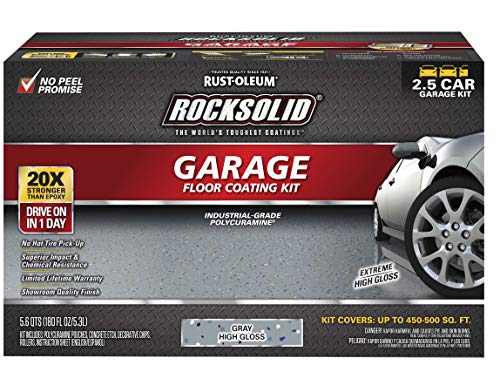
The DIY garage epoxy kits sold at Home Depot, Lowe’s, and Rust-Oleum products fall into this category. Total dry film thickness after the kit cures sits between 5 mil (water-based) and 16 mil (100 percent solids two-part). Pricing for DIY kits runs $80 to $250 for a typical 250 square foot garage.
Lifespan is the catch. Thin-mil DIY coatings on a properly prepped garage floor typically last 3 to 7 years before showing wear, peeling, or yellowing. They work fine for casual garage use but are not what professionals install in commercial spaces. Pro-grade thin-mil at $3 to $5 per square foot installed gives similar thickness but better resin chemistry and 7 to 12-year lifespan.
Mid-Build Systems: 20 to 60 Mils
The workhorse of commercial epoxy. A typical retail, warehouse, or manufacturing floor uses 20 to 40 mil epoxy at $5 to $9 per square foot installed. Decorative chip systems with broadcast vinyl flakes add visual texture and slip resistance in the same thickness range, running $5 to $10 per square foot.
The 40 to 60 mil range is where double-broadcast quartz aggregate floors live. These systems get a base coat, two layers of broadcast aggregate, and resin coats between for total thickness of 50 to 60 mils. They handle wheeled traffic, dropped tools, and moderate chemical exposure for 15 to 25 years.
High-Build and Self-Leveling: 80 to 250 Mils
Industrial floors that take forklift impacts, chemical spills, and thermal shock need high-build or self-leveling epoxy systems. 80 to 125 mil systems are common in food production, automotive manufacturing, and pharmaceutical facilities. Pricing runs $7 to $14 per square foot installed.
Self-leveling epoxy at 125 to 250 mils provides a perfectly flat finish that hides minor substrate irregularities. These systems pour like thick syrup and self-level to a glass-smooth finish. The thickness handles serious abuse and lasts 20 to 40 years in industrial service.
Thickness Recommendations by Application
- Residential garage (light use): 16-25 mils, $3-5 / sq ft
- Residential garage (heavy use): 25-40 mils with broadcast aggregate, $5-8 / sq ft
- Commercial retail: 20-40 mils, $5-9 / sq ft
- Warehouse and light industrial: 30-50 mils, $6-10 / sq ft
- Manufacturing and food production: 60-125 mils, $8-14 / sq ft
- Heavy industrial and chemical: 125-250 mils self-leveling, $10-18 / sq ft
Why Thickness Matters Beyond Durability
Thicker epoxy systems also provide better chemical resistance, more substrate crack-bridging capability, and longer wear life under abrasive traffic. A 12 mil garage coating won’t bridge a 1/16-inch substrate crack — the crack telegraphs through and grows. A 40 mil system will bridge that same crack. A 125 mil self-leveling floor handles substrate movement that would destroy thinner systems.
Thickness also affects how much abuse the floor takes before reaching the substrate. Once epoxy wears through to the concrete, the floor is failed — you must grind everything off and start over. Thicker systems give more usable life before that point.
Substrate Prep at Each Thickness Tier
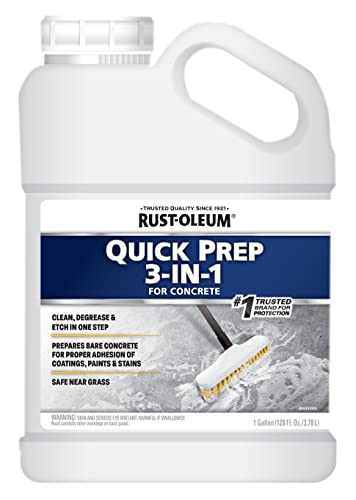
Thin-mil DIY coatings demand CSP 2-3 (concrete surface profile) achieved through etching or light grinding. Pro-grade mid-build at 20 to 40 mils needs CSP 3-5 through shot blasting or diamond grinding. High-build at 60-plus mils requires CSP 5-7. Self-leveling systems at 125 to 250 mils need CSP 7-9 for proper mechanical bond.
Skipping substrate prep is the #1 reason epoxy floors fail. Acid etching alone doesn’t produce the surface profile needed for anything beyond the cheapest DIY kits.
Moisture Considerations
Epoxy systems have moisture vapor transmission tolerance limits. Most products fail at 5 lbs per 1,000 sq ft per 24 hours (calcium chloride per ASTM F1869) or 85 percent relative humidity (ASTM F2170 in-situ probe). Older slabs and below-grade installations often exceed these limits.
The solution is either a moisture mitigation primer (Ardex MC Rapid, Mapei Mapeshield, Stonhard MoistureBlock) at $1.50 to $3 per square foot added cost, or selecting a urethane cement system that tolerates much higher moisture without failure.
Pros of Thicker Epoxy
- Longer service life with each thickness tier
- Better crack-bridging capability over moving substrates
- Improved chemical resistance for industrial applications
- Higher impact resistance for dropped tools and equipment
- More substrate flexibility tolerance
Cons of Going Too Thick
- Substantially higher upfront cost
- Longer cure times (some self-leveling systems need 7 to 14 days before full traffic)
- Raises finished floor elevation — affects door swings and transitions to adjacent flooring
- Overkill for many residential applications
- Requires more aggressive substrate prep that costs more
The Buy Decision
For a typical residential garage, 16 to 25 mils handles 90 percent of homeowner use cases at $3 to $5 per square foot. For shops, garages used as workspaces, or homes with multiple vehicles, step up to 25 to 40 mils with broadcast aggregate. For commercial and industrial projects, match the system to the specific abuse and chemical exposure the floor will see. Get three bids, verify total system thickness in writing on each, and confirm substrate prep methodology before signing.