Two epoxy floors can look identical on day one and yet one cracks within a year while the other survives forklift traffic for a decade. The difference almost always comes down to one overlooked spec. Epoxy flooring thickness — measured in mils for thin coatings and in fractions of an inch for heavy systems — determines how much abuse your floor can absorb, how well it bridges cracks, and ultimately whether you got value for your money. Matching thickness to your actual use is the single most important decision in any epoxy project.
Part of our Epoxy, Concrete & Garage Floors guide — explore the full guide →
- How Epoxy Thickness Is Measured
- Thin Roller-Applied Coatings (Under 20 Mils)
- Self-Leveling Systems (1/16″ to 1/8″)
- Mortar Systems (1/4″ and Up)
- How Thickness Affects Durability
- Matching Thickness to Your Project
- Don’t Forget the Topcoat
- Why More Coats Build More Thickness
- Common Thickness Mistakes
- The Bottom Line
How Epoxy Thickness Is Measured
Thin epoxy coatings are measured in mils, where one mil equals one-thousandth of an inch (0.001″). A typical sheet of paper is about 4 mils. Most homeowners are shocked to learn that a “thick” garage epoxy might be only 10 to 20 mils — thinner than a credit card.
Heavier systems jump to a different scale entirely, measured in fractions of an inch. A self-leveling floor runs 1/16″ to 1/8″, and industrial mortar systems can reach 1/4″ or more. Understanding which scale a quote uses prevents you from comparing apples to oranges.

Thin Roller-Applied Coatings (Under 20 Mils)
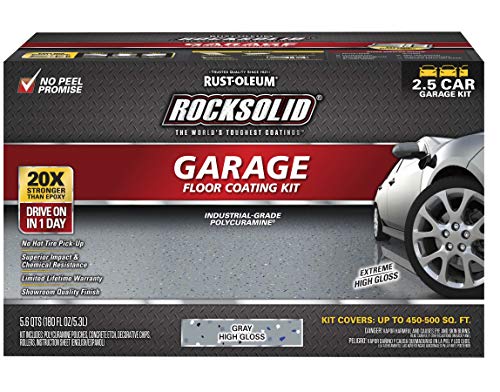
The least expensive option is a roller-applied epoxy coat, the kind sold in big-box DIY kits. Applied in one or two coats, these typically build to 2 to 12 mils dry. They seal concrete, add a glossy finish, and resist mild chemicals.
- Best for: Light residential garages, basements, hobby rooms.
- Durability: Decent for foot traffic and the occasional car, but prone to hot-tire pickup and chipping under impact.
- Cost: The cheapest route, often $1 to $3 per square foot DIY.
The honest limitation is longevity. A 2-mil DIY kit is essentially a paint-grade coating, and it will not match the lifespan of the thicker professional systems people assume they are buying.
Self-Leveling Systems (1/16″ to 1/8″)
Self-leveling epoxy is poured rather than rolled, flowing out to create a smooth, seamless surface that hides minor subfloor imperfections. At 40 to 125 mils (roughly 1/16″ to 1/8″), this is the workhorse of quality residential and light commercial floors.
The added thickness brings real durability. These floors resist impact, abrasion, and chemicals far better than thin coats, and they bridge small surface cracks. Showrooms, kitchens, garages with serious use, and basements all benefit from a self-leveling build.
Mortar Systems (1/4″ and Up)
For the harshest environments, epoxy mortar systems blend resin with sand or aggregate to build a thick, dense floor 1/4″ or thicker. These are the floors you find in warehouses, manufacturing plants, commercial kitchens, and loading docks.
At this thickness the floor becomes nearly bombproof — it withstands forklifts, dropped tools, thermal shock, and aggressive chemicals. Mortar systems can also rebuild damaged or sloped concrete because they are troweled on like a true mortar. The trade-off is cost and the need for professional installation.
How Thickness Affects Durability
More mils generally means more durability, but the relationship is not linear — it depends on the type of stress.
- Abrasion and traffic: Thicker coats simply have more material to wear through, extending service life.
- Impact resistance: Thin coatings crack or chip under dropped objects; thick systems absorb the blow.
- Crack bridging: Self-leveling and mortar systems span hairline subfloor cracks that would telegraph straight through a thin coat.
- Chemical resistance: Greater thickness means more time before a corrosive spill reaches the concrete.
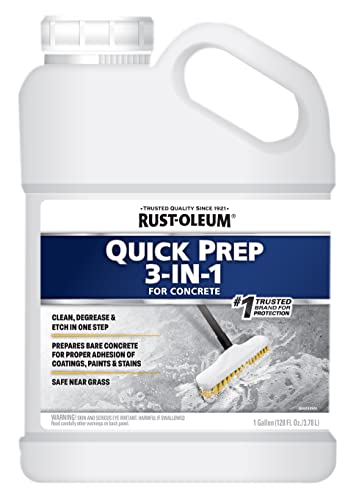
That said, thickness cannot fix bad prep. Even a 1/4″ mortar floor will fail if it is laid over unprofiled, contaminated, or moisture-laden concrete.
Matching Thickness to Your Project
Choose by use, not by price alone. A rarely used home garage may be perfectly served by a quality self-leveling coat at 1/16″. A working garage where you wrench on vehicles, drop tools, and park hot tires deserves at least a robust self-leveling system. A commercial kitchen or industrial space needs a mortar build to survive.
A reliable rule: when in doubt, go one step thicker than you think you need. The incremental material cost is small compared with the labor of grinding off and redoing a floor that failed because it was too thin.
Don’t Forget the Topcoat
Thickness is not only about the base layer. A clear polyurethane or polyaspartic topcoat adds sacrificial wear thickness, UV stability, and scratch resistance. On any quality floor, this topcoat is what you actually walk on and what takes the daily abuse, protecting the colored epoxy beneath.
Skipping the topcoat to save money shortens the life of the whole system, no matter how thick the base coat is.
Why More Coats Build More Thickness
Thickness is not just about the product you buy; it is also about how many layers go down. A professional system is usually built up from several distinct coats — a primer that bonds to the concrete, a base or body coat that provides the bulk and color, optional decorative flakes or quartz, and one or more clear topcoats. Each layer adds mils, and a multi-coat system reaches a far greater total thickness than a single DIY pour.
This is why a “thick” floor and a “thin” floor can use the same base resin yet perform completely differently. The thicker floor simply has more layers and more total material standing between your traffic and the concrete. When comparing quotes, ask how many coats are included and what total dry thickness the finished system reaches, not just the brand of resin.
Common Thickness Mistakes
The most frequent error homeowners make is assuming a glossy big-box kit equals a thick commercial floor. Those kits are often just a few mils once cured — closer to a paint than a true epoxy build — and they wear through quickly in a working garage. The fix is to match the system to the use and budget for the thickness the space actually demands.
- Under-spec’ing the floor: Choosing a thin coat for a high-abuse space, then watching it chip and fail early.
- Skipping the topcoat: Leaving the colored layer exposed instead of adding sacrificial clear wear thickness.
- Ignoring concrete prep: Even the thickest system delaminates over unprofiled, contaminated, or damp slabs.
Avoid these and your thickness investment actually pays off in years of service.
The Bottom Line
Epoxy flooring thickness is the spec that quietly decides whether your floor lasts two years or twenty. Thin roller coats suit light, low-budget jobs; self-leveling systems cover the majority of serious residential and commercial needs; and mortar systems handle industrial punishment. Pair the right thickness with proper concrete prep and a durable topcoat, and you will have a floor that earns every dollar you spent on it.