Learning how to clean a shag area rug is different from cleaning a low-pile rug, and getting it wrong is how people ruin an expensive piece. Those long, loose fibers, sometimes two inches or more, trap dust, crumbs, pet hair, and dander deep down where a normal vacuum pass never reaches, and they tangle and mat if you clean them too aggressively. Over years of caring for rugs I have learned that the secret is gentleness and patience: suction instead of scrubbing, blotting instead of rubbing, and letting the rug dry completely flat. Do it right and a shag rug stays soft, fluffy, and clean for a decade.
This guide walks through the full routine, from the quick weekly maintenance that prevents most problems, to safe vacuuming technique, spot cleaning spills, deep cleaning by hand, deshedding, and proper drying. It also flags the differences between wool and synthetic shag, since they tolerate moisture very differently, and closes with the mistakes that do the most damage. Follow the steps in order and you can keep almost any shag rug looking new without a professional.
Start by Shaking and Beating It Out
Before any vacuum touches the rug, take it outside and get the loose debris out mechanically. For a small or medium shag rug, drape it over a sturdy railing, deck rail, or clothesline and give it a firm shake, then beat it with a broom handle or an old-fashioned rug beater. You will be surprised how much grit, sand, and dust falls out that a vacuum would never pull from deep in the pile. This one step removes the abrasive particles that otherwise grind against the fibers and wear the rug down.
Do this in a spot where the dust cloud will not blow back onto anything clean, and beat both sides. Flip the rug over and work the back too, because gravity pulls fine grit down to the foundation where it does the most damage. For large area rugs that are too heavy to hang, drape them over a couple of patio chairs or lay them face down on a clean driveway and walk on the back while beating it. Aim to shake a shag rug out this way every few weeks, more often in a busy or pet-filled home.
Vacuum the Right Way, With Suction Only
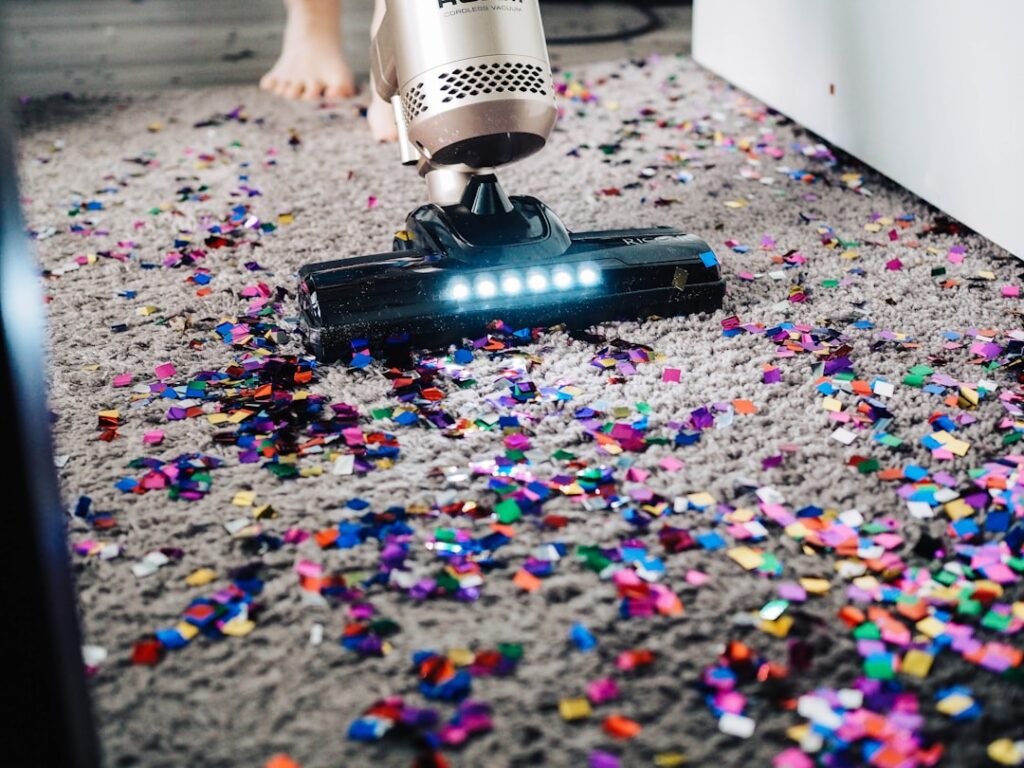
Vacuuming is the core of how to clean a shag area rug, but the single most important rule is to never run a beater bar or rotating brush roll over shag. Those spinning brushes grab the long fibers, pull them loose, fray the pile, and can chew a shag rug apart. Switch your vacuum to bare-floor mode, which stops the brush roll, or better yet use the suction-only hose attachment. A canister vacuum with a plain upholstery or floor nozzle is ideal for shag.
Work slowly and use the flat suction nozzle to draw dust up through the pile without agitating it. Go over the rug from several directions to reach debris hiding between the strands, and take your time, because suction needs contact time to pull grit from deep in a long pile. Vacuum the back of the rug periodically too, which loosens embedded dirt so it can migrate down and out. For general upkeep, a light suction-only vacuum once a week keeps a shag rug from ever getting deeply soiled in the first place.
Spot Clean Spills Immediately
Spills are where shag rugs are won or lost, and speed matters more than technique. The moment something spills, blot it, never rub. Rubbing pushes the liquid deeper into the pile and foundation and tangles the fibers into a matted knot that is very hard to fix. Press a clean white cloth or paper towel straight down onto the spill and lift, repeating with fresh cloth until no more transfers. Work from the outside of the spill inward so you do not spread it.
Once you have blotted up as much liquid as possible, mix a mild cleaning solution: a teaspoon of clear dish soap or a capful of gentle carpet shampoo in a cup of cool water. Dip a cloth, wring it nearly dry, and dab the stain, then blot again with a clean damp cloth to rinse, and finish by blotting dry. Avoid soaking the area. For wool shag, test any solution on an inconspicuous corner first and keep moisture minimal, because wool is sensitive to alkaline cleaners and prolonged wetness. Always let the spot dry fully before walking on it.
Deep Clean by Hand When It Needs It
Once or twice a year, or after a big mess, a shag rug benefits from a full hand wash, assuming it is a washable synthetic. Take it outdoors or into a large tub or on a clean patio. Mix cool water with a small amount of gentle rug shampoo, dip a soft sponge or soft-bristle brush, and work it lightly over the pile in the direction of the fibers, never scrubbing hard in circles. Let the solution sit a few minutes to lift the soil, then rinse thoroughly with a hose or clean water until the water runs clear and no suds remain.
Rinsing completely is critical, because leftover soap residue attracts dirt and leaves the rug feeling stiff. After rinsing, press out as much water as you can. Wool shag is the exception here: real wool should not be soaked or machine washed at home, as it can felt, shrink, and lose its structure. For a genuine wool shag that needs deep cleaning, do light surface cleaning only and send it to a professional for anything serious. Always check the rug’s care label first, since some shags are dry-clean-only regardless of fiber.
Deshedding and Removing Pet Hair
Shag rugs shed some fiber when new, and they are magnets for pet hair that suction alone will not fully release. To deshed a new rug, vacuum with suction only over several weeks and the loose fibers taper off naturally. Do not pull at loose strands sticking up, because tugging can unravel a tuft. Instead, snip any long stray loops level with the pile using scissors rather than yanking them out.
For pet hair woven into the fibers, a few tools work where the vacuum falls short. A rubber-bristled pet hair brush or a simple rubber squeegee dragged across the pile balls the hair up so you can lift it away. Rubber gloves rubbed over the surface do the same thing through static. A fabric or lint roller handles fine surface hair on shorter shags. Go gently and in the direction of the pile, then follow with a suction-only vacuum pass to collect the loosened hair. Doing this weekly in a pet home keeps the shag from becoming a felted mat.
Drying the Rug Flat and Fully
How you dry a shag rug determines whether it stays flat or ends up wavy, stiff, or mildewed. After any wet cleaning, get as much water out as possible first. For smaller rugs, roll the rug in a clean dry towel and press, or lay it over a rail so water drains. Never wring or twist a shag rug, which crushes and tangles the pile. Then lay it out flat to dry, ideally outdoors in the shade or in a well-ventilated room with a fan running.
Dry it flat rather than hanging, because hanging a heavy wet rug stretches the backing and distorts the shape. Direct sun can fade colors and, on some synthetics, damage the fibers, so shade with airflow is best. Make sure both the pile and the foundation are bone dry before you put the rug back down, which for a deep shag can take a full day or two. Putting a still-damp rug back on the floor traps moisture against the backing and the flooring beneath, breeding mildew and that musty smell. Once dry, fluff the pile by hand or with a wide-tooth rug rake to restore loft.
Wool vs. Synthetic Shag and Cleaning Frequency
Fiber type changes the rules. Synthetic shags in polyester, polypropylene, or nylon are the forgiving ones: they tolerate water, gentle shampoo, and hand washing, and they dry without felting. These are the rugs you can deep clean at home with the wet method above. Wool shag is a natural fiber that is luxurious and durable but reactive to moisture and harsh cleaners. Wool can felt, shrink, and lose dye if oversaturated, so keep it to dry maintenance, prompt blotting of spills, and professional cleaning for anything deep.
As for frequency, a light suction-only vacuum once a week and a good shake-out every few weeks handles routine upkeep for any shag. Spot clean spills the instant they happen. Plan a full deep clean once or twice a year for a synthetic rug in a busy household, less often for a lightly used one. Professional cleaning every 12 to 18 months is a smart move for valuable wool shags or heavily soiled rugs, since pros have the equipment to rinse and dry a deep pile thoroughly without over-wetting it.
Mistakes to Avoid
A handful of errors cause nearly all shag rug damage, so knowing how to clean a shag area rug is as much about what not to do. Never use a beater bar or brush roll, which shreds and pulls the pile. Never scrub or rub a stain, which mats the fibers and drives soil deeper. Never oversaturate the rug, especially wool, because trapped moisture breeds mildew and can rot the backing. And never wring, twist, or hang a wet shag to dry, all of which distort its shape.
A few more to keep in mind: do not use hot water or harsh, high-alkaline cleaners that can set stains and strip color, and always test any cleaner on a hidden corner first. Do not put the rug back down until it is completely dry through the foundation. And do not ignore routine maintenance, because a shag rug that is shaken and lightly vacuumed regularly almost never needs an aggressive rescue. Treat the long fibers gently, keep moisture controlled, and your shag rug stays plush, colorful, and inviting for many years.