
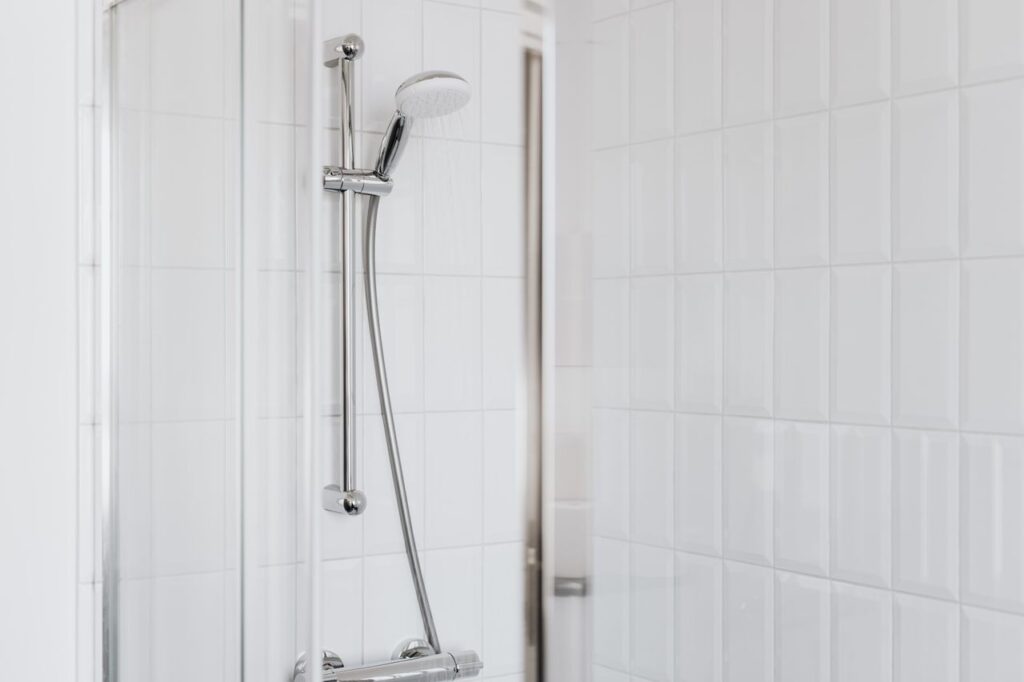
Soap scum is not soap and water residue. It is calcium and magnesium from your tap water bonded to fatty acids in bar soap, and once it cures past about 90 days it will not surrender to dish detergent alone. Knowing how to clean shower walls starts with matching the cleaner to the deposit type and the wall material, because the wrong product can etch tile glaze, fog fiberglass, or strip the silicone caulk along the corners. This guide walks through the cleaners that actually work, the application techniques pros use, and the maintenance schedule that keeps a shower looking installed yesterday.
Part of our Bathroom Remodeling & Flooring guide — explore the full guide →
Identify Your Wall Material First
Ceramic and porcelain tile take the most aggressive cleaners. You can use acidic descalers, oxygen bleach, and even diluted muriatic acid in extreme cases. Natural stone, including marble, travertine, and slate, will etch the second an acidic cleaner touches it. Fiberglass and acrylic shower surrounds scratch easily and lose gloss under abrasive powders. Glass doors handle nearly anything but scratch from steel wool.
Check the label of every cleaner before it touches stone. Anything with citric acid, vinegar, hydrochloric acid, or sulfamic acid is off limits on marble or travertine. Stick to pH-neutral stone-safe cleaners like Granite Gold Shower Cleaner or Stone Care International Stone & Tile Cleaner on those surfaces.


The Best Cleaners for Soap Scum
For tile and glass, the workhorse is a sprayer filled with a 50/50 mix of warm white vinegar and Dawn Platinum dish soap. Apply, let it sit for 15 to 20 minutes, and scrub with a stiff nylon brush. The acetic acid breaks the mineral bond and the surfactant lifts the fatty acid film. For commercial-strength scrubbing, CLR Bath & Kitchen, Scrub Free Soap Scum Remover, and Bar Keepers Friend Soft Cleanser handle the worst buildup.
Magic Eraser pads (melamine foam) lift surface soap scum from fiberglass and acrylic without scratching when used wet and with light pressure. They are essentially fine abrasives, so do not use them on natural stone or polished chrome fixtures. Replace the pad as soon as it starts to crumble or it leaves white residue behind.
Hard Water Stains and Mineral Deposits
White crusty buildup along the shower head, faucet, and lower walls is calcium carbonate. Vinegar will soften it but rarely removes it cleanly on the first pass. CLR or Lime-A-Way work faster on tile. For a tougher hand on glass shower doors, try Bring It On Cleaner or Bio-Clean Hard Water Stain Remover. Both contain non-acidic mineral abrasives that polish off stains without etching.
For shower heads, fill a freezer bag with white vinegar, slip it over the head until submerged, and rubber band it in place overnight. By morning the deposits dissolve and a soft brush clears the nozzle holes. The same method works on detachable handheld units soaked in a bowl.
Mold and Mildew on Grout
Black or pink staining in grout lines is microbial, not mineral. The fix is a fungicide rather than a descaler. Oxygen bleach (sodium percarbonate, sold as OxiClean) applied as a paste and left for 30 to 60 minutes lifts most mildew without the lung-burning fumes of chlorine bleach. For stubborn black mold, a 1 to 4 dilution of household chlorine bleach in water, applied with a small paint brush directly to the grout, kills it on contact.
Mold returns within 6 months if you do not address the cause: trapped moisture. Run the bathroom fan for 20 minutes after every shower and replace the silicone caulk at the wall-to-floor and corner joints if it has turned gray or pulled away. A 6 dollar tube of GE Silicone 2+ Kitchen and Bath caulk and a half-hour of work eliminates the main mold-harbor in most showers.
Tools That Make the Job Faster
A powered scrubber pays for itself by the third use. The Rubbermaid Reveal Power Scrubber (around 30 dollars) handles general work, while the Sonic Scrubber and the OxiTrust Cordless Spin Scrubber (60 to 90 dollars) tackle grout lines and tight corners. Pair them with the right brush head:
- Stiff nylon for tile and grout
- Soft white nylon for fiberglass and acrylic
- Microfiber pad for glass doors and final wipe-down
- Detail brush head for corners and around fixtures
A long-handled squeegee like the OXO Good Grips All-Purpose Squeegee, used after every shower, prevents 80 percent of the buildup that creates this whole problem. Squeegeeing takes about 60 seconds and adds years between deep cleanings.
Step-by-Step Deep Clean
Block out about 90 minutes for a thorough deep clean. Open the window, run the fan, and wear gloves.
- Rinse the walls with the hottest water from the shower for 2 minutes to soften deposits
- Spray the entire shower with a soap scum cleaner from bottom to top to prevent streaks
- Wait 15 to 20 minutes while the cleaner works
- Scrub with a powered or hand brush in small sections, top to bottom
- Rinse with warm water and squeegee dry
- Apply a grout cleaner paste, wait 30 minutes, scrub, and rinse
- Polish glass doors with vinegar-water spray and a microfiber cloth
- Apply a barrier product like Rain-X Original Glass Treatment to the doors to slow future buildup
Weekly and Monthly Maintenance
The best deep clean is the one you never have to do. Squeegee glass doors after every shower. Once a week, spray a daily shower spray like Method Daily Shower or Clean Shower (Arm & Hammer) on the walls. These contain mild surfactants that prevent the soap-mineral bond from forming.
Once a month, do a 20 minute scrub with vinegar-Dawn mix. Once or twice a year, do the full deep clean above. Stay on that schedule and you will never face the cured 2-year scum layer that takes hours of muriatic acid to chip off. Knowing how to clean shower walls is mostly about staying ahead of the buildup, not beating it back after it has won.


