How to Clean Vinyl Plank Flooring: The Complete Guide
Vinyl plank flooring is one of the easiest floors to maintain, but that does not mean you can clean it with just anything. Using the wrong products or methods can dull the finish, cause warping, or even void your warranty. This guide covers exactly how to clean vinyl plank flooring with daily, weekly, and monthly routines, plus a stain removal chart and a list of products you should never use.
- How to Clean Vinyl Plank Flooring: The Complete Guide
- Vinyl Plank Cleaning Schedule at a Glance
- Daily Cleaning: Dust Mop or Sweep
- Weekly Cleaning: Damp Mop
- Monthly Deep Cleaning
- Stain Removal Chart for Vinyl Plank Flooring
- Products to Use on Vinyl Plank Flooring
- Products to Avoid on Vinyl Plank Flooring
- Protecting Vinyl Plank from Scratches
- Under-Rug Discoloration Warning
- Can You Use a Robot Vacuum on Vinyl Plank?
- Frequently Asked Questions About Cleaning Vinyl Plank
- Can I use a steam mop on vinyl plank flooring?
- What is the best homemade cleaner for vinyl plank?
- How do I get scuff marks off vinyl plank flooring?
- Will vinegar damage vinyl plank flooring?
- How often should I mop vinyl plank flooring?
- Can I use bleach on vinyl plank flooring?
- Why is my vinyl plank flooring hazy after mopping?
Whether you have luxury vinyl plank (LVP), WPC, or SPC vinyl, these cleaning methods apply to all vinyl plank flooring types.
Vinyl Plank Cleaning Schedule at a Glance
| Frequency | Task | Tools Needed | Time |
|---|---|---|---|
| Daily | Dust mop or sweep | Microfiber dust mop or soft broom | 5 – 10 min |
| Weekly | Damp mop | Flat mop, vinyl-safe cleaner | 15 – 20 min |
| Monthly | Deep clean | Vinyl floor cleaner concentrate, soft brush | 30 – 45 min |
| As needed | Stain removal | Specific stain treatment (see chart below) | Varies |
Daily Cleaning: Dust Mop or Sweep
The single most important thing you can do for your vinyl plank floor is to remove loose dirt, dust, and grit every day. These tiny particles act like sandpaper under foot traffic, gradually scratching the wear layer and dulling the finish.
How to Do It
- Use a microfiber dust mop for the best results. Microfiber traps particles instead of pushing them around
- A soft-bristle broom works as an alternative, but avoid stiff bristles that can scratch
- A stick vacuum on the hard floor setting (with the beater bar turned off) is another option
- Focus on high-traffic areas: entryways, kitchens, and hallways
- Shake out or wash the mop pad after each use
Tip: Place doormats at every exterior door and area rugs in high-traffic zones to reduce the amount of grit that reaches your floor.
Weekly Cleaning: Damp Mop
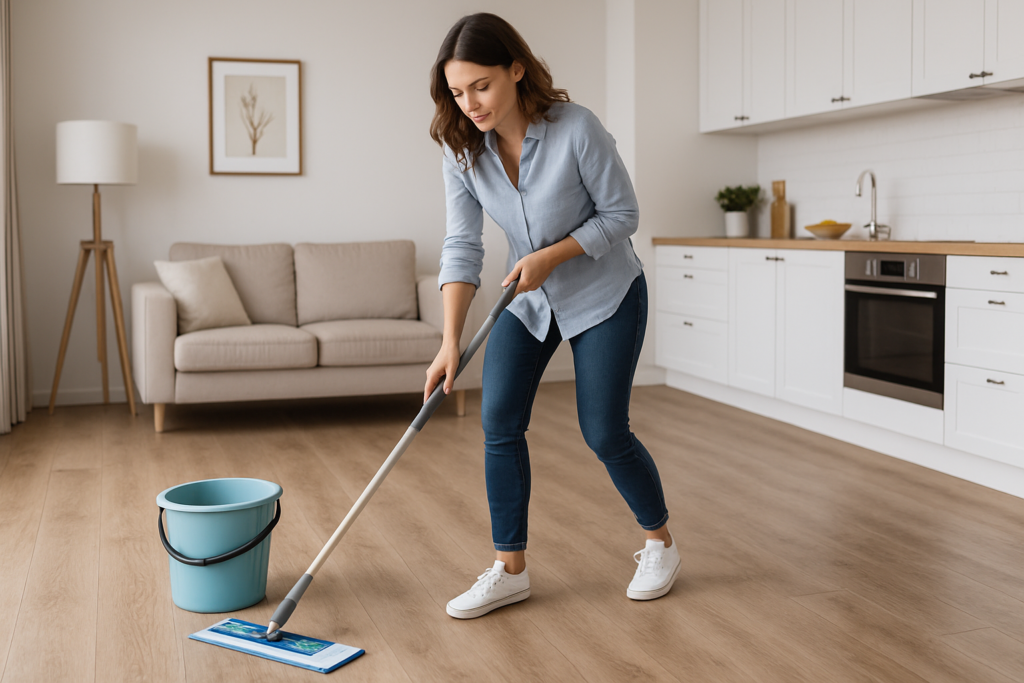
Once a week, damp mop your vinyl plank floor to remove the grime, spills, and sticky residue that dry sweeping misses. The key word here is damp, not wet. Excessive water can seep between plank seams and cause swelling, warping, or mold growth underneath.
How to Do It
- Sweep or dust mop first to remove loose debris
- Fill a bucket with warm water and a small amount of vinyl-safe floor cleaner (such as Rejuvenate Luxury Vinyl Floor Cleaner)
- Dip your mop, then wring it out thoroughly. The mop should be barely damp
- Mop in the direction of the planks, working in sections
- Do not allow water to pool on the surface. Wipe up excess immediately
- Allow the floor to air dry or go over it with a dry microfiber pad
Alternative: Spray-and-Mop Method
Many homeowners prefer a spray mop system, which provides better moisture control. Spray a light mist of cleaner directly onto a small section of floor, then wipe with a microfiber mop pad. This method prevents over-wetting and is faster for routine cleaning.
For more detailed cleaning instructions, see our guides on how to clean vinyl plank flooring and how to clean luxury vinyl plank.
Monthly Deep Cleaning
Once a month, give your vinyl plank floor a more thorough cleaning to address buildup in textured areas, along edges, and in high-traffic zones.
How to Do It
- Sweep and vacuum thoroughly, including edges and corners
- Mix a vinyl floor cleaner concentrate according to label directions (slightly stronger than your weekly dilution)
- Apply the solution in sections using a flat mop or soft cloth
- For textured vinyl, use a soft-bristle brush to gently scrub the surface and release trapped dirt from the embossing
- Wipe the floor with clean water to remove any cleaner residue
- Dry the floor with a clean microfiber cloth or towel
Do not use a steam mop for deep cleaning. The heat from steam mops can reach 200 degrees Fahrenheit or higher, which can soften vinyl, break adhesive bonds, cause warping, and permanently damage the wear layer.
Stain Removal Chart for Vinyl Plank Flooring
| Stain Type | Removal Method | Notes |
|---|---|---|
| Scuff marks | Rub with a tennis ball or Magic Eraser | Test Magic Eraser in hidden area first |
| Food and drink spills | Wipe immediately, then damp mop | Do not let spills sit |
| Grease and oil | Dish soap and warm water | Rinse thoroughly to prevent residue |
| Ink and marker | Rubbing alcohol on a soft cloth | Dab, do not rub aggressively |
| Wine and juice | Baking soda paste, let sit 5 minutes | Wipe clean, then damp mop |
| Crayon | WD-40 on a cloth, then clean with soap | Remove WD-40 residue completely |
| Hair dye | Rubbing alcohol or acetone (sparingly) | Test in hidden area; acetone can damage some finishes |
| Adhesive residue | Mineral spirits or Goo Gone | Clean area with soap and water after |
| Rust | Lemon juice or oxalic acid cleaner | Do not let sit longer than 10 minutes |
| Pet urine | Enzyme-based pet cleaner | Address quickly to prevent odor in seams |
Products to Use on Vinyl Plank Flooring
- Rejuvenate Luxury Vinyl Floor Cleaner: Purpose-built for vinyl, pH-balanced, streak-free
- Bona Hard-Surface Floor Cleaner: Safe for vinyl and other hard surfaces
- Zep Neutral pH Floor Cleaner: Affordable concentrate option
- Dish soap (tiny amount): A few drops in warm water works in a pinch
- Rubbing alcohol: Effective spot treatment for ink and tough stains
Products to Avoid on Vinyl Plank Flooring
- Steam mops: Heat damages the vinyl and adhesive
- Abrasive scrubbers: Steel wool, scouring pads, and stiff brushes scratch the wear layer
- Bleach: Can discolor and degrade the vinyl surface
- Ammonia-based cleaners: Break down the vinyl over time
- Wax and polish: Creates buildup and a hazy, slippery surface
- Acetone (in excess): Can dissolve the wear layer; use sparingly for stain removal only
- “Mop and Shine” products: Leave a sticky residue that attracts dirt
Protecting Vinyl Plank from Scratches
Preventing damage is just as important as cleaning. Follow these tips to keep your LVP flooring looking new:
- Felt pads: Apply to the bottom of all furniture legs and replace every 6 months
- Furniture coasters: Use wide, flat coasters under heavy furniture to distribute weight
- No dragging: Always lift furniture when moving it; never drag across vinyl
- Pet nails: Keep pet claws trimmed to reduce scratching
- Doormats: Place at all entrances to catch grit before it reaches the floor
- Chair mats: Use office chair mats on vinyl flooring to prevent roller damage
Under-Rug Discoloration Warning
This is a common issue that catches many vinyl plank owners off guard. Rubber-backed rugs and mats can cause a chemical reaction with vinyl flooring, leading to permanent yellow or brown discoloration underneath the rug.
How to Prevent Under-Rug Discoloration
- Never use rubber-backed or latex-backed rugs directly on vinyl
- Choose rugs with a colorfast, non-staining backing
- Use a vinyl-safe rug pad between the rug and the floor
- Move rugs periodically to allow even light exposure
- Check for discoloration every few months by lifting a corner of the rug
Once discoloration occurs, it is usually permanent and cannot be cleaned away. Prevention is the only solution.
Can You Use a Robot Vacuum on Vinyl Plank?
Yes, robot vacuums are generally safe for vinyl plank flooring and can be a great way to automate daily dust removal. Look for models with soft rubber brushes rather than stiff bristle rollers. Avoid models that use excessive water during mopping mode.
Frequently Asked Questions About Cleaning Vinyl Plank
Can I use a steam mop on vinyl plank flooring?
No. Steam mops produce heat and moisture that can warp vinyl planks, delaminate the layers, and break down the adhesive. Most vinyl flooring manufacturers explicitly warn against steam mopping in their warranty terms.
What is the best homemade cleaner for vinyl plank?
A simple solution of one gallon of warm water with a few drops of dish soap works well for routine cleaning. Avoid vinegar-heavy recipes, which are unnecessarily acidic for vinyl. For tough stains, add a tablespoon of rubbing alcohol.
How do I get scuff marks off vinyl plank flooring?
Rub the scuff mark with a clean tennis ball or a slightly damp Magic Eraser. For stubborn scuffs, apply a small amount of rubbing alcohol to a soft cloth and gently rub the mark. Always test in an inconspicuous area first.
Will vinegar damage vinyl plank flooring?
Diluted vinegar (one cup per gallon of water) is unlikely to cause immediate damage, but it is not the best choice for regular use. Over time, the acidity can dull the wear layer. Purpose-made vinyl floor cleaners are a safer and more effective option.
How often should I mop vinyl plank flooring?
Damp mop once a week for general maintenance. High-traffic areas like kitchens may benefit from mopping twice a week. Deep clean once a month. Always sweep or dust mop daily to prevent grit buildup.
Can I use bleach on vinyl plank flooring?
Bleach is not recommended for vinyl plank flooring. It can discolor the surface and degrade the wear layer over time. If you need to disinfect, use a vinyl-safe disinfectant or a diluted rubbing alcohol solution instead.
Why is my vinyl plank flooring hazy after mopping?
Haze is usually caused by cleaner residue buildup from using too much product or not rinsing properly. To fix it, mop the floor with plain warm water and a clean microfiber mop. Going forward, use less cleaner and wring your mop more thoroughly.
Prefer to explore on your own?
See how new flooring looks in your actual room in seconds — free, no signup.
Try the free Floor Studio →