Mold on fabric is not just ugly, it is a living colony eating the cellulose in cotton, the sizing on polyester blends, and the latex backing on upholstery. Knowing how to get mold out of fabric matters because every day you wait, the hyphae push deeper into the weave and release more spores into your indoor air. After handling hundreds of water-damage cleanups from burst pipes to flooded basements, I have settled on a short list of methods that actually kill the colony and lift the stain rather than just masking it.
- Identify What You Are Dealing With
- Safety First
- Method 1: White Vinegar Soak
- Method 2: Borax Paste
- Method 3: Hydrogen Peroxide for White Fabrics
- Method 4: Oxygen Bleach Wash
- Method 5: Chlorine Bleach (Last Resort)
- Upholstery and Non-Washable Items
- Outdoor Cushions and Canvas
- Preventing Mold From Coming Back
- When to Throw It Out
Identify What You Are Dealing With
Surface mildew is the gray or white fuzzy growth you see on shower curtains and damp cotton left in a hamper. It scrubs off fairly easily and rarely leaves a permanent stain. True mold, especially Aspergillus, Cladosporium, and Stachybotrys, shows up as green, black, or pinkish spots with a musty basement smell and bleeds pigment into the fibers. Both respond to the same basic treatment, but heavy black mold on structural fabric like insulation-faced vapor barriers means the item should be discarded, not cleaned.
Before any treatment, take the fabric outside. Brush the dry mold off with a stiff bristle brush over concrete or grass. Doing this indoors just relocates spores into your HVAC system.
Safety First
Wear an N95 mask, nitrile gloves, and safety glasses. Open windows and run a fan blowing outward. Never mix bleach with ammonia or vinegar, the reaction releases chloramine and chlorine gas respectively, both of which cause lung damage in small bathrooms. If the moldy area is larger than 10 square feet or spans multiple items, call a remediation contractor, because surface cleaning cannot address mold that has already pushed into drywall or framing behind the fabric.
Method 1: White Vinegar Soak
Distilled white vinegar kills 82 percent of mold species according to studies from the Good Housekeeping Institute, and it is safe on almost every washable fabric. For cotton, linen, denim, and synthetic blends, fill a sink or bucket with 1 gallon of hot water and 1 cup of vinegar. Submerge the fabric and let it soak for 1 hour. Agitate every 15 minutes to push solution through the fibers. Wring out, then run through a normal wash cycle with regular detergent plus another cup of vinegar in the fabric softener dispenser.
Dry the item in direct sunlight if possible. UV light kills residual spores and bleaches out faint remaining stains. Two hours of afternoon sun does more than a tumble dryer for mold recovery.
Method 2: Borax Paste
Borax, sold as 20 Mule Team at most grocery stores for about $6 a box, is a natural fungicide that works on mold vinegar alone cannot finish. Dissolve half a cup of borax in 2 cups of hot water, then brush the solution directly onto the stain. Let it sit 30 minutes, rub gently with a soft brush, and launder as usual. This is my first choice for upholstery covers, curtains, and heavy canvas where soaking is impractical.
Method 3: Hydrogen Peroxide for White Fabrics
For white or colorfast light fabrics, 3 percent hydrogen peroxide from the drugstore removes both the mold and the stain. Spray undiluted peroxide on the moldy area, let bubble for 10 minutes, then blot with a clean cloth. Repeat once if needed, then rinse with cold water and launder. Always spot test on an inside seam first because peroxide bleaches some dyes, especially reds and deep blues.
Method 4: Oxygen Bleach Wash
OxiClean, Nellie’s, and similar sodium percarbonate products are safer for colored fabrics than chlorine bleach. Dissolve 1 scoop per gallon of warm water, soak the fabric for 4 to 6 hours or overnight for heavy mold, then run through a hot wash. This works well on tablecloths, bed sheets, and kids’ clothes where chlorine would fade prints. Budget about $12 for a bucket that treats 30 loads.
Method 5: Chlorine Bleach (Last Resort)
Only use chlorine bleach on pure white cotton or polyester without spandex. Mix 3/4 cup of bleach per gallon of water, soak no longer than 15 minutes, then run a full wash cycle. Bleach destroys the cellulose in cotton over repeated use, so reserve this for items you are willing to sacrifice if the mold loses. Never use it on wool, silk, leather, or anything with elastane in the blend because the fibers weaken within a single exposure.
Upholstery and Non-Washable Items
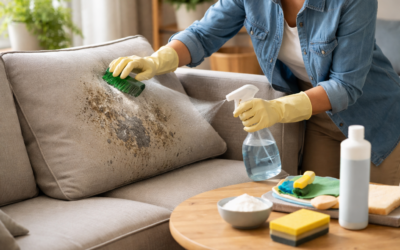
Couches, car interiors, and dry-clean-only pieces need a spray-and-extract approach. Mix 1 cup of vinegar, 1 cup of water, and 1 teaspoon of dish soap in a spray bottle. Mist the moldy fabric until damp, not soaked. Scrub with a soft brush, then extract moisture with a wet-dry vacuum or clean towels. Follow with a fan or dehumidifier until fully dry within 24 hours. Leftover moisture is how mold comes back within a week.
For leather and suede, skip vinegar. Wipe with a cloth dampened in a 50-50 mix of rubbing alcohol and water, then condition with a leather-specific product after drying.
Outdoor Cushions and Canvas
Patio cushions, boat covers, and tent fabric handle stronger treatment because they are built for UV and moisture. Mix 1 cup of borax, 1 cup of white vinegar, and 1 gallon of hot water. Scrub with a stiff brush, let the solution sit 30 minutes, then pressure wash with a 40-degree tip held 12 inches from the fabric. Re-waterproof afterwards with a silicone-based product like 303 Fabric Guard, which runs about $20 a quart and restores DWR coating lost during cleaning.
Preventing Mold From Coming Back
- Keep indoor humidity between 30 and 50 percent using a dehumidifier
- Never store damp towels or workout clothes longer than 12 hours
- Wash shower curtains every 30 days
- Store seasonal fabric in breathable cotton bags, never plastic bins
- Use silica gel packets, about 10 per storage container, to absorb trapped moisture
- Air out closets monthly by opening doors and running a fan for 2 hours
When to Throw It Out
Some items cannot be saved. Toss anything that still smells musty after two full treatments, fabrics with black mold spots larger than 3 inches, any foam-backed upholstery with visible growth on the foam, and baby or children’s items where you cannot guarantee 100 percent kill. The cost of a new pillow or curtain is less than the medical bills from persistent mold exposure, especially for anyone with asthma or compromised immunity.