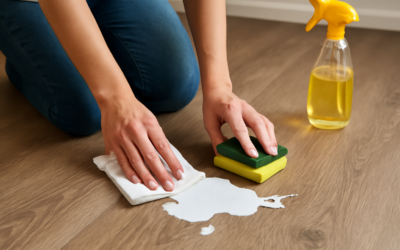
Learning how to get paint off tile floor usually starts with a small panic: you finished painting the trim, looked down, and found a trail of dried drips across your ceramic or porcelain. The good news is that tile is one of the easiest surfaces to remove paint from, because its glazed, non-porous face does not let paint sink in the way wood or carpet does. With the right approach, most spills come up cleanly without scratching or dulling the tile. The trick is matching your method to the paint type and how long it has been sitting.
Part of our Tile & Grout guide — explore the full guide →
Before you attack a stubborn spot with a razor blade, work through the gentler options first. Tile is durable, but the glaze and the grout lines can be damaged by aggressive scraping and harsh solvents, so escalate only as far as you need to.
First, Identify the Paint and Its Age
Your whole strategy depends on two questions: is it water-based (latex or acrylic) or oil-based, and is it still wet or fully dried? Water-based paint dominates interior projects today and cleans up with water, soap, and mild solvents. Oil-based paint is tougher and needs mineral spirits or a dedicated stripper. As for timing, wet paint wipes away in seconds while cured paint has to be softened or scraped, so speed genuinely matters if you catch a spill fresh.
A quick test tells you what you are dealing with: dab a rag with a little rubbing alcohol on the spot. If the paint softens and lifts, it is latex or acrylic. If it barely reacts, you are likely looking at oil-based paint and should reach for mineral spirits instead.
Removing Wet Paint Immediately
If the paint is still fresh, you have won before you started. Wipe it up right away with a damp cloth or paper towel, working from the outside of the drip inward so you do not smear it into the grout. For water-based paint, warm water and a drop of dish soap is all you need. For oil-based paint that is still wet, dampen a rag with mineral spirits and lift it, then wash the area with soapy water.
Pay special attention to grout lines while the paint is wet, because grout is porous and will absorb paint if you let it sit. A soft toothbrush dipped in soapy water works the paint out of the grout texture before it cures. Getting to grout early saves you from the much harder job of stripping cured paint out of those crevices later.
Removing Dried Latex Paint
Dried water-based paint responds well to a soak-and-scrape approach that is gentle on the glaze. Start by laying a warm, soapy wet cloth over the paint spot for five to ten minutes to soften it. Then work through these steps:
- Wipe the softened paint firmly with the cloth; small drips often come right up.
- For stubborn spots, apply rubbing alcohol or a little acetone (nail polish remover) on a rag and press it onto the paint for a minute to break the bond.
- Gently scrape with a plastic putty knife or an old credit card, keeping the blade nearly flat to the tile.
- Only if needed, use a razor blade held at a very low angle, roughly 30 degrees, and let the blade do the work without gouging.
- Wash the area with soapy water and dry it.
The plastic scraper is your friend here because it will not scratch the glaze. Reserve the razor blade for glazed ceramic and porcelain only, and never drag a metal blade across polished natural stone or you risk permanent scratches.
Removing Dried Oil-Based Paint
Oil-based paint needs a solvent to dissolve its bond. Ventilate the room, put on gloves, and dampen a cloth with mineral spirits or paint thinner. Lay the solvent-soaked rag over the dried paint for several minutes to soften it, then wipe and gently scrape with a plastic putty knife. Reapply as needed for thick drips, because oil paint often lifts in layers rather than all at once.
For truly stubborn cured oil paint, a commercial paint stripper gel formulated for hard surfaces will work, but test it on an inconspicuous tile first to make sure it does not affect the glaze or the grout sealer. Follow the product’s dwell time, then scrape and neutralize according to the label. Always finish by washing the tile with soapy water to remove any solvent residue.
Cleaning Paint Out of Grout
Grout is where paint likes to hide, and its rough, porous texture holds pigment that a flat tile face releases easily. Soften the paint in the grout line with the same solvent you used on the tile, then scrub along the joint with a stiff nylon brush or an old toothbrush. A grout saw or the corner of a plastic scraper can dig paint out of deep joints. If a faint stain remains after the paint is gone, an oxygen-based grout cleaner or a baking soda paste often lifts the last of it.
Protect the Tile and Prevent a Repeat
Whatever method you use, keep a few safeguards in mind. Always test solvents in a hidden corner first, especially on natural stone like marble or slate, which can etch or dull from acetone and strong strippers. Work at a shallow blade angle to avoid chipping the glaze, and rinse thoroughly so no solvent film dulls the finish.
Next time you paint, lay a drop cloth or rosin paper over the tile and tape it down at the edges; two dollars of paper prevents the whole problem. But if you missed a spot this time, take comfort that knowing how to get paint off tile floor is mostly about patience: soften first, scrape gently, and let the solvent, not brute force, do the work. Your tile will come out clean and unscratched.
Frequently Asked Questions
Will a razor blade scratch my tile?
On glazed ceramic and porcelain, a sharp razor blade held at a low angle, around 30 degrees, will not scratch the glaze if you let the blade slide rather than dig. The danger is polished natural stone like marble or slate, which scratches easily, so never use a metal blade on stone. Always start with a plastic scraper and escalate to a razor only if the paint refuses to lift.
Does vinegar remove paint from tile?
Warm vinegar can help soften dried water-based paint, and because tile has a hard glaze rather than a wood finish, occasional vinegar use will not harm it. Heat a little vinegar, apply it to the paint with a cloth, let it sit, then scrape gently. For oil-based paint, though, vinegar does little; you will need mineral spirits instead.
How do I get paint out of grout lines?
Grout is porous, so soften the paint with the same solvent you used on the tile, then scrub along the joint with a stiff nylon brush or an old toothbrush. A grout saw or the corner of a plastic scraper digs paint out of deep joints. If a faint stain lingers after the paint is gone, an oxygen-based grout cleaner or a baking soda paste usually lifts the last of it.
Prefer to explore on your own?
See how new flooring looks in your actual room in seconds — free, no signup.
Try the free Floor Studio →