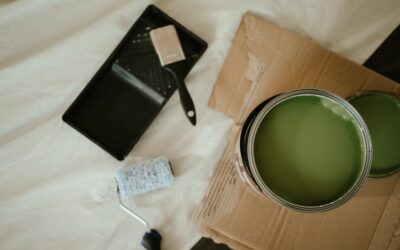
That sharp chemical smell lingering three days after you finished painting the bedroom is not harmless. It is volatile organic compounds (VOCs) off-gassing from the drying paint, and at high concentrations VOCs cause headaches, nausea, and respiratory irritation. Figuring out how to get rid of paint smell fast matters both for comfort and for health, especially in a bedroom you need to sleep in tonight. The tricks that actually work are based on either removing the VOCs from the air (ventilation, air scrubbers) or binding them to a neutral substrate (activated charcoal, baking soda, onions). Aromatherapy and scented candles do not remove odor; they mask it temporarily while the VOCs keep off-gassing.
Part of our Paint & Walls guide — explore the full guide →
Why Paint Smells in the First Place
Water-based latex paint contains VOCs that evaporate as the paint cures over several weeks. The strongest smell is the first 48 to 72 hours, but off-gassing continues at lower levels for up to 30 days. Oil-based paints contain significantly more VOCs (petroleum solvents like mineral spirits) and off-gas for two weeks at high concentration, then weeks more at lower levels.
Low-VOC and zero-VOC paints reduce but do not eliminate the problem. Zero-VOC products still emit some compounds from the colorants, preservatives, and anti-mildew additives mixed in at the paint store.
Ventilation: The First Line of Defense
Opening windows and running a box fan at the window pulling air out of the room is the single most effective intervention. Position the fan facing outward in one window, crack open a second window on the opposite side of the room for makeup air, and run for as long as you can keep the house open. Expect to knock down 60 to 80 percent of airborne VOCs in the first 4 to 8 hours.
During cold or stormy weather, ventilation is harder but still worth doing in short bursts. A 20-minute full house flush every 2 hours strips accumulated VOCs out and moderates the temperature impact. An HRV or ERV (heat recovery ventilator) in a newer home handles this automatically.
Activated Charcoal
Activated charcoal adsorbs VOCs through a massive internal surface area (up to 2,000 square meters per gram). Place open bowls of activated charcoal around the painted room, ideally one 1-pound bag per 200 sq ft. Expect $10 to $15 per pound from pet supply stores (aquarium charcoal), hydroponic suppliers, or Amazon.
Leave the charcoal in place for 48 to 72 hours. Dispose of used charcoal outdoors; do not regenerate it in the oven because trapped VOCs re-release as the charcoal heats. Activated carbon air purifiers work on the same principle at larger scale.
Baking Soda
Baking soda neutralizes many VOCs through a mild acid-base reaction. Sprinkle a light layer of baking soda across carpeted floors in the painted room and let sit for 24 hours before vacuuming. For hard floors, set open containers of baking soda around the room.
Baking soda also absorbs moisture, which indirectly slows paint curing in humid conditions. For best effect, combine baking soda with improved ventilation; one without the other is less effective.
The Onion Method
Sliced onions genuinely absorb paint fumes. Cut several onions in half and place them on plates around the room overnight. The sulfur compounds in onions react with paint solvent molecules. By morning the room smells faintly of onion instead of paint, and within another day with ventilation the onion smell dissipates as well.
Discard the onions; they are not safe to eat after absorbing VOCs. Budget one onion per 100 sq ft of painted area.
Water and Lemon
Fill several large bowls with cold water and place them around the freshly painted room. Water absorbs some water-soluble VOCs from the air and evaporates slowly, helping flush the room. Adding lemon slices or a few drops of lemon juice provides a fresh scent while the water works.
Change the water every 12 hours. This method alone will not clear a heavily painted room but works well as a supplement to ventilation and charcoal.
Commercial Air Scrubbers
For serious paint smell or after a full-house repaint, rent or buy an air scrubber with a combined HEPA and activated carbon filter. BlueAir, IQAir, and Austin Air all make units rated for VOC removal. Expect $300 to $1,200 for a quality unit, or $40 to $80 per day to rent a commercial-grade machine from a tool rental shop.
Run the scrubber continuously for 48 to 72 hours after painting, at the highest fan speed the room noise tolerance allows. Replace the carbon filter after each major use; saturated carbon no longer adsorbs VOCs.
Coffee Grounds
Dry coffee grounds adsorb odors including paint smell. Spread ground coffee in shallow dishes around the room. The method works best on residual smell after the major VOCs have dissipated, roughly day three through day seven. Use fresh or used grounds; dried used grounds from your morning brew work fine.
Expect noticeable improvement within 24 hours. Dispose of used grounds in the trash, not back into the soil as fertilizer; they may contain absorbed VOCs.
Speeding Up Paint Cure
Raising room temperature to 75 to 80°F and reducing humidity below 50 percent with a dehumidifier accelerates paint cure and VOC release. Counterintuitively, off-gassing happens faster, but the room clears faster overall because ventilation can keep up with the accelerated release.
Do not paint in cold or very humid conditions. Paint applied below 60°F or above 75 percent humidity cures poorly, holds VOCs longer, and can mildew in the film.
Prevention for Next Time
Choose paint by VOC content, not marketing. True low-VOC paints list grams per liter on the label (below 50 g/L is good, below 10 g/L is very low). Benjamin Moore Natura, Sherwin Williams Harmony, and Behr Premium Plus Ultra all test at or below 10 g/L. Expect to pay $45 to $70 per gallon for premium low-VOC paint.
Avoid oil-based paints for interior work. The benefits of oil-based finish for durability are real but the VOC trade-off is significant. Water-based alternatives to oil (waterborne alkyds from Benjamin Moore Advance or Sherwin Williams Emerald Urethane) deliver similar hardness with a fraction of the odor.
Mistakes to Avoid
Do not burn candles or incense to mask paint smell; the combustion products add to indoor air pollution rather than solving it. Do not sleep in a freshly painted room until the smell is fully gone and ventilation has been running; VOC exposure during sleep causes morning headaches and sore throats. Do not seal the room closed thinking the smell will “dissipate on its own” faster; VOCs only leave through ventilation or adsorption, not by waiting.