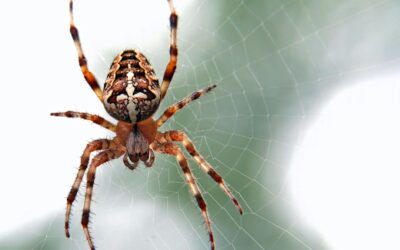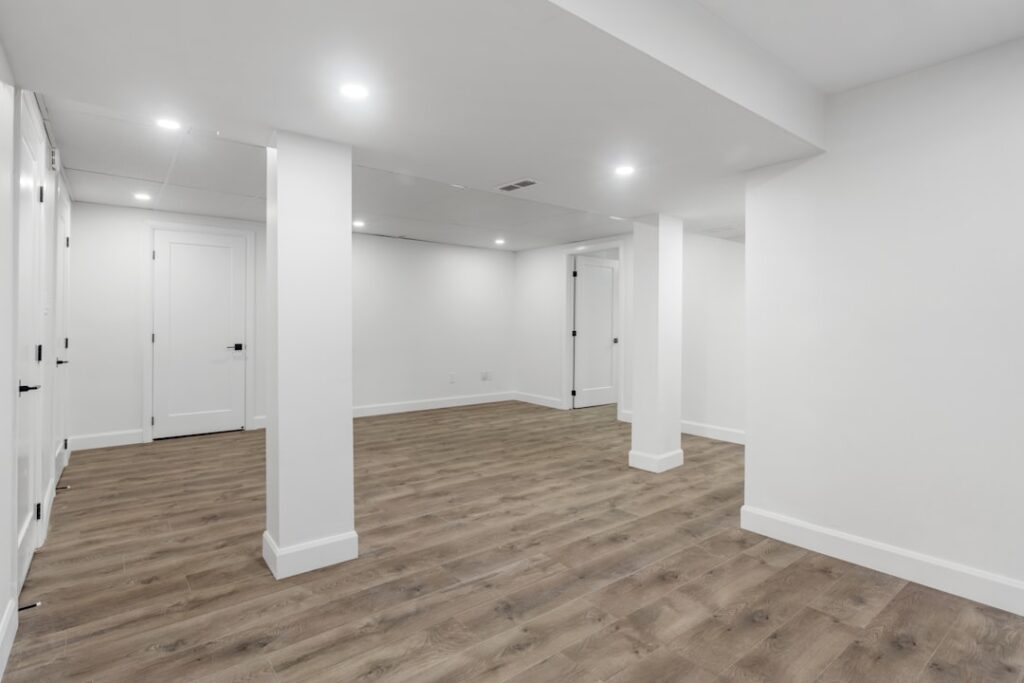
Spiders gravitate to basements for the same reason mice do — dark corners, low foot traffic, and a steady supply of insect prey near foundation cracks. Killing the ones you see is the easy part. Knowing how to get rid of spiders in basement spaces for good means cutting off their food, sealing their entry points, and disrupting the conditions they like.
This guide walks through the same multi-step approach a licensed pest control technician would use, minus the $300 service call.
Why Basements Attract Spiders in the First Place
Spiders are not after your Christmas decorations. They follow the bugs that live in your basement: silverfish, earwigs, crickets, drain flies, and spring tail clusters around damp wood. Cellar spiders (the long-legged ones often mistaken for daddy long legs) and common house spiders thrive in 60-75% relative humidity and dim, cluttered conditions.
Get rid of the prey, dry the air, and remove the hiding spots — spider populations crash within two to three weeks. Spraying without doing the underlying work just buys you a month.
Step 1: Deep Clean and Declutter
This is unglamorous but it does more than any pesticide. Pull boxes off the floor, vacuum corners and ceiling joists with a long-attachment shop vac, and break up every cobweb you can find.
- Move stored items into sealed plastic bins instead of cardboard. Cardboard absorbs moisture and shelters egg sacs.
- Vacuum egg sacs immediately. A single sac contains 100-400 spiderlings.
- Clear a 12 in perimeter around walls so you can see and reach problem zones.
- Empty the vacuum canister into an outdoor trash bag right after — alive spiders crawl out otherwise.
A standard 12-gallon shop vac with a HEPA filter ($90-130) handles spider work better than any handheld. Wear gloves and a dust mask while you work.
Step 2: Reduce Humidity Below 50%
Spiders and most of their prey need humid air to survive. A basement holding 65-70% relative humidity is paradise for them. Drop it to 45-50% and you make the space biologically hostile.
Buy a $15 hygrometer from any hardware store and check the reading at floor level. If it sits above 55%, run a dehumidifier sized for the square footage:
- Up to 1,500 sq ft, mildly damp: 30-pint unit ($180-230).
- 1,500-2,500 sq ft, moderately damp: 50-pint unit ($230-300).
- 2,500+ sq ft or visible moisture: 70-pint or whole-basement system ($300-600).
Frigidaire and hOmeLabs make reliable consumer models. Empty the bucket every 1-2 days or run a hose to a floor drain. Within 10-14 days you will see fewer spiders.
Step 3: Seal Entry Points
Spiders squeeze through gaps as small as 1/16 in. Walk the basement perimeter inside and outside with a flashlight and a tube of clear silicone caulk ($6) and expanding foam ($8).
- Caulk where the sill plate meets the foundation wall.
- Foam around plumbing penetrations, electrical conduit, and dryer vents.
- Add door sweeps to walk-out basement doors and the door at the top of the stairs.
- Replace torn window screens — spiders walk in through ripped 1/4 in mesh.
- Cap unused vents and clean dryer vent flaps so they close fully.
Outside, trim mulch back 12 in from the foundation and clear away firewood, leaf piles, and stacked lumber within 5 ft of the wall. These harbor the insects that draw spiders inside.
Step 4: Apply a Targeted Residual Spray
If steps 1-3 have not solved it, a perimeter spray finishes the job. Skip aerosol “spider killer” cans — they evaporate within hours. Use a concentrated residual insecticide diluted in a 1-gallon pump sprayer ($20).
Effective options:
- Bifen IT (bifenthrin 7.9%): $25 for 16 oz, makes 19 gallons of spray. Lasts 90 days indoors.
- Demon WP (cypermethrin): $20 per pack, similar longevity, low odor.
- Suspend SC (deltamethrin): Professional-grade, $50, very low staining.
Mix per label, then spray a 12 in band along the foundation wall inside and out, around windows, doorframes, and pipe penetrations. Re-treat every 60-90 days. Always read the label and ventilate while spraying.
Natural Repellents That Work (and Some That Do Not)
Peppermint oil is the most-cited natural deterrent and it does have some scientific support. Mix 15-20 drops of pure peppermint essential oil with 2 cups water and 1 tbsp dish soap in a spray bottle. Mist along baseboards, window frames, and corners weekly.
Cedar blocks, white vinegar sprays, and citrus peels offer mild deterrent effect at best. Ultrasonic plug-in repellers consistently fail in independent lab tests — save the $25.
Dealing with Specific Problem Spiders
Two basement species deserve extra attention.
Brown Recluse
Found in the Midwest and South, brown recluses hide in undisturbed clutter, shoes, and stored clothing. Their bite can cause necrosis. Use sticky traps (Catchmaster 72MAX, $15 for 72) along baseboards behind storage. Fifty traps placed in a 1,000 sq ft basement give you a real population count within two weeks.
Black Widow
More common in garages and crawl spaces than basements but found in both. They build messy webs at floor level. Wear gloves when cleaning corners in widow territory (most of the southern US and California). If you find an egg sac, vacuum it immediately and seal the bag.
Maintenance Schedule
Once you have cleared the population, a quick monthly routine keeps it from rebuilding:
- Run the dehumidifier April through October.
- Vacuum corners and ceiling joists once a month.
- Re-treat the perimeter spray every 60-90 days.
- Inspect and re-caulk entry points every spring.
- Keep storage bins sealed and elevated on shelves.
FAQ
What is the fastest way to get rid of spiders in a basement?
Vacuum every visible web and egg sac with a shop vac, then spray a residual insecticide like Bifen IT along the perimeter. You will see a 70-80% reduction within 48 hours. Long-term control requires sealing entry points and lowering humidity below 50%.
Does peppermint oil really keep spiders away?
It works as a mild deterrent but not as an eliminator. Mix 15-20 drops with 2 cups of water and a teaspoon of dish soap, spray weekly along baseboards and corners. Use it as a supplement to cleaning and exclusion, not a replacement.
Why do spiders keep coming back to my basement?
Spiders return when the food source returns. If silverfish, crickets, earwigs, or drain flies still live there, more spiders will follow within weeks. Lower humidity, seal entry gaps, and treat for the prey insects, not just the spiders.
Are spiders in the basement dangerous?
Most basement spiders — cellar spiders, house spiders, and wolf spiders — are harmless and actually help control other pests. Brown recluses and black widows are the exceptions. If you live where either species is common, use sticky traps to monitor and call a pro if counts are high.
What humidity level do basement spiders need?
Most species thrive at 60-75% relative humidity. Dropping the basement to 45-50% with a properly sized dehumidifier kills off their prey insects and forces spiders to leave. A $15 hygrometer tells you exactly where you stand.