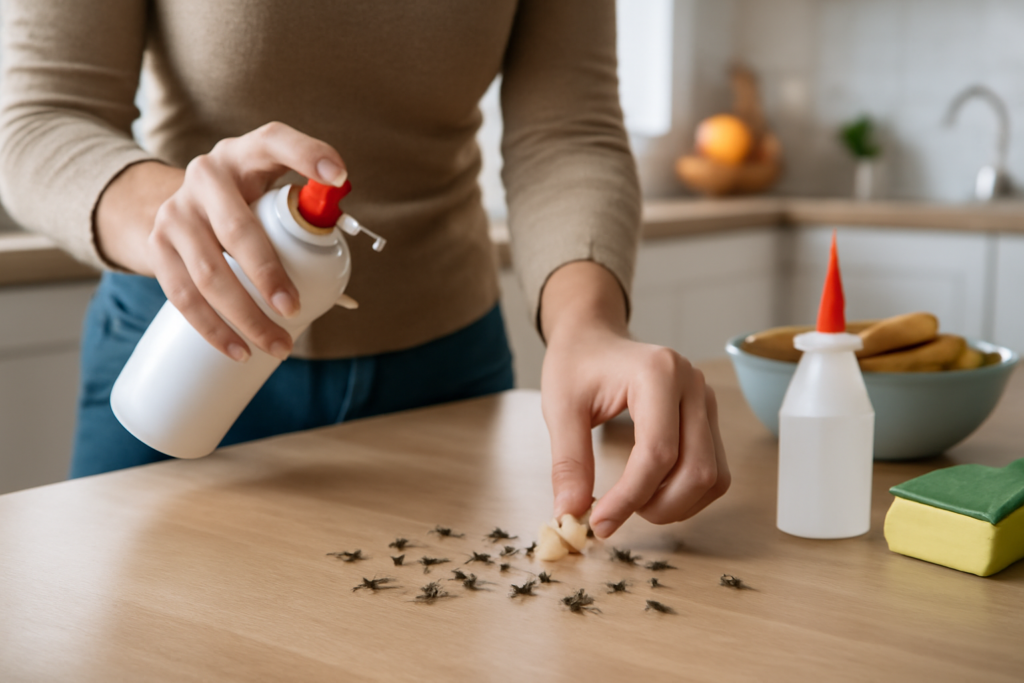
One minute your counter is clean, and the next there is a marching line of tiny ants leading straight to a crumb by the sink. Learning how to get rid of sugar ants in the kitchen comes down to a simple truth: killing the ants you see does almost nothing, because thousands more stay hidden in the nest. The real fix is to bait the colony, cut off their food and water, and seal the cracks they use to get inside. Do those three things together and you can clear an infestation in one to two weeks and keep it from coming back.
- What Are Sugar Ants, Really?
- Why Squishing Ants Never Works
- Step 1: Do Not Spray the Trail Yet
- Step 2: Set Out Ant Bait
- Step 3: Be Patient and Leave the Bait Alone
- Step 4: Deep Clean to Remove Food and Water
- Step 5: Seal Entry Points
- Natural Deterrents That Actually Help
- When to Call an Exterminator
- Prevention: Keep Them Out for Good
- Frequently Asked Questions
- How long does it take to get rid of sugar ants?
- Why do I have sugar ants when my kitchen is clean?
- Is it better to use bait or spray for sugar ants?
- Does killing the ants I see help?
- Are sugar ants harmful?
- The Bottom Line
What Are Sugar Ants, Really?
“Sugar ant” is a catch-all name for several small species drawn to sweets, most often odorous house ants, pavement ants, and pharaoh ants in American kitchens. They are usually 1/16 to 1/8 inch long, brown or black, and travel in visible trails. Odorous house ants even give off a faint rotten-coconut smell when crushed. They forage for sugary spills, grease, and moisture, which is why the kitchen is ground zero.
Understanding their behavior is the key to defeating them. Scout ants find food, lay down a scent trail, and lead the colony to it. That trail is both your enemy and your best weapon, because you can use it to deliver poison straight back to the nest.
Why Squishing Ants Never Works
Wiping out a trail feels satisfying but solves nothing. A colony can hold thousands of workers plus a queen who lays eggs constantly. Kill the visible foragers and the colony simply sends more. Some species, when threatened by sprays, even split into multiple new colonies in a survival response called budding, which makes the problem worse. To truly win, you must reach the queen, and baiting is how you do it.
Step 1: Do Not Spray the Trail Yet
Resist the urge to hit the ants with a contact killer right away. Sprays kill foragers before they can carry poison home and can scatter the colony. Instead, let the trail stay active for a day or two while you set out bait. The ants will do the work of delivering the poison for you.
Step 2: Set Out Ant Bait
Bait is the single most effective tool. Workers carry the slow-acting poison back to the nest, feed it to the queen and brood, and the colony collapses from within.
Store-Bought Baits
- Terro Liquid Ant Baits use borax and sugar, cost about $6 to $10 for a pack, and are highly effective on sweet-loving ants.
- Advion or Combat gel and stations work well too, especially when you are unsure of the species.
Place bait stations directly on the ant trail and near entry points, not in the middle of the room. Set out several. Expect the number of ants to briefly increase as they swarm the bait. That is a good sign. It means they are carrying it home.
DIY Borax Bait
You can make your own by mixing 1 tablespoon of borax with 1/2 cup of sugar and enough warm water to form a syrup. Soak cotton balls in it and set them on bottle caps along the trail. Keep any borax bait away from children and pets.
Step 3: Be Patient and Leave the Bait Alone
Give the bait 1 to 2 weeks to work. Do not clean up the trail or move the stations while ants are feeding. It is tempting, but interrupting the process resets the clock. You should see activity drop off sharply within a week as the colony dies out.
Step 4: Deep Clean to Remove Food and Water
Once the colony is knocked back, take away every reason for ants to return. Sanitation is what keeps them gone.
- Wipe counters and sweep floors daily, especially around toasters, stoves, and the trash can.
- Clean up spills immediately and take out the trash often in a lidded bin.
- Store sugar, cereal, honey, and pet food in airtight containers.
- Wash dishes right away instead of letting them soak overnight.
- Wipe down sticky jars of syrup, jam, and soda.
- Fix dripping faucets and dry out the sink at night. Ants need water as much as food.
Erase existing scent trails by wiping surfaces with a 1:1 mix of white vinegar and water, or soapy water. This removes the chemical breadcrumb trail so new scouts cannot follow it.
Step 5: Seal Entry Points
Ants squeeze through astonishingly small gaps. Cutting off their access is the long-term fix.
- Caulk cracks around windows, baseboards, and where pipes enter walls under the sink.
- Add or replace worn door sweeps and weatherstripping.
- Fill gaps around outlets and along countertop backsplashes.
- Trim shrubs and tree branches that touch the house, since they act as ant bridges.
A $5 tube of silicone caulk goes a long way here and pays for itself by keeping the next wave out.
Natural Deterrents That Actually Help
These will not kill a colony, but they discourage foraging once the nest is dealt with:
- White vinegar spray erases trails and repels scouts.
- Diatomaceous earth (food grade) sprinkled in cracks and along entry lines dehydrates ants that cross it. Keep it dry to stay effective.
- Peppermint or citrus essential oil wiped along entry points masks scent trails.
- Cinnamon, coffee grounds, or bay leaves in pantry corners act as mild repellents.
When to Call an Exterminator
Most kitchen sugar ant problems are solvable with bait and cleaning for under $20. But call a professional if the infestation keeps returning after two rounds of baiting, if you suspect pharaoh ants (which budd aggressively and are hard to control), or if you cannot locate the nest. A pro visit typically runs $150 to $350 and includes targeted treatments and identification. Carpenter ants, which are larger and can damage wood, always warrant a professional.
Prevention: Keep Them Out for Good
- Keep counters and floors free of crumbs every night.
- Store all sweet and starchy foods in sealed containers.
- Empty the trash regularly and rinse recyclables.
- Fix leaks and eliminate standing water.
- Re-caulk entry points once a year.
- Keep a few bait stations tucked out of sight as an early-warning defense in spring, when ants are most active.
Frequently Asked Questions
How long does it take to get rid of sugar ants?
With bait, expect the colony to collapse in 1 to 2 weeks. You may see more ants at first as they swarm the bait, then a sharp decline. Cleaning and sealing entry points prevents a comeback.
Why do I have sugar ants when my kitchen is clean?
Ants need very little to survive, and even a spotless kitchen has water at the sink, grease film on the stove, or a hidden crumb. Scouts also come indoors seeking moisture during hot or wet weather regardless of cleanliness.
Is it better to use bait or spray for sugar ants?
Bait is far more effective because workers carry the poison back to the queen and colony. Sprays only kill visible foragers and can cause some species to split into new colonies, making the problem worse.
Does killing the ants I see help?
No. The visible ants are a tiny fraction of the colony. Killing them prompts the queen to produce more. You must reach the nest with bait to actually solve the problem.
Are sugar ants harmful?
Sugar ants do not sting dangerously or damage wood like carpenter ants, but they contaminate food and are a persistent nuisance. Remove them promptly to keep your food and surfaces sanitary.
The Bottom Line
Getting rid of sugar ants in the kitchen is not about the ants you can see. Set out bait and let the workers poison the colony, then deep clean to erase trails and remove food and water, and finally seal the cracks they used to get in. Combine all three steps, stay patient for a week or two, and your kitchen will be ant-free and ready to stay that way.