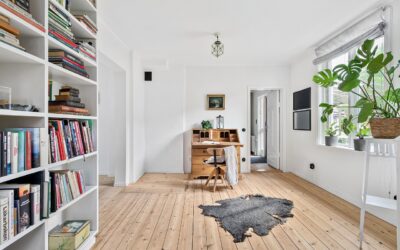
Walk into any well-styled home and the bookshelves tell you something about the people who live there. The opposite is also true: a chaotic, overloaded shelf reads as cluttered no matter how nice the room is otherwise. Knowing how to organize a bookshelf is part library science, part interior design, and part honest editing of what actually deserves shelf space. Below are seven methods used by professional book curators and stylists, with practical tips for spacing, weight, and the small details that elevate a shelf from messy to magazine-worthy.
- Method 1: By Genre or Subject
- Method 2: By Color (the Rainbow Shelf)
- Method 3: By Size for Visual Calm
- Method 4: By Frequency of Use
- Method 5: The 70/30 Mix of Books and Objects
- Method 6: Symmetrical Built-Ins
- Method 7: Horizontal Stacks as Sculpture
- Practical Spacing and Weight Considerations
- Editing: The Step Everyone Skips
Method 1: By Genre or Subject
The library standard for a reason. Group all your cookbooks together, all your novels, all your reference and design books. Within each genre, you can subdivide if the shelf is large enough — fiction by author last name, cookbooks by cuisine, design books by topic. This method is unbeatable for actually finding a book when you need it.
The downside is visual chaos. Genre groupings produce uneven heights and clashing spine colors. The fix is to alternate vertical and horizontal stacking within each genre, which breaks up the visual monotony while keeping books findable.
Method 2: By Color (the Rainbow Shelf)
Polarizing among readers but undeniably striking. Arrange books by spine color in roygbiv order or in a lighter-to-darker gradient. Color organization works best in living rooms and home offices where the shelf is decoration first and a working library second. It is terrible for actually finding a specific book.
If you go this route, do not stop at color sorting. Group similar shades together rather than scattering individual yellow spines among oranges. A 2 to 3 ft block of one color reads cleanly. Single-spine accents look like mistakes.
Method 3: By Size for Visual Calm
Sort books from tallest on one side to shortest on the other across each shelf. This is the technique most often used in upscale hotel libraries and Restoration Hardware showrooms. The eye moves smoothly across the shelf without visual interruption, and the shelf reads as deliberately styled rather than randomly accumulated.
Combine size sorting with horizontal stacks of large coffee table books on the bottom shelf where they belong (heavy books should always sit low). The structural reason matters too — books over 5 lbs each on a top shelf can sag a 30 inch unsupported pine board within a year.
Method 4: By Frequency of Use
The most practical method if you actually read your books. Place the books you reach for daily or weekly at eye level (between 50 and 65 inches off the floor). Books you use occasionally go on the second-best shelves above and below. Reference books you rarely touch land at the top or bottom.
This is also the right method for kid bookshelves. Kid-height shelves get the picture books in heavy rotation. Higher shelves hold reference, the chapter books they are growing into, and the books too precious for everyday handling.
Method 5: The 70/30 Mix of Books and Objects
Designers use this ratio across nearly every styled shelf you see in shelter magazines. Roughly 70 percent of the visible space holds books. The remaining 30 percent is decorative objects: framed art leaning against the back wall, small sculptures, ceramics, vintage finds, or single live plants. The mix prevents the wall-of-books look that can read as overwhelming.
Rules of thumb for the objects:
- Vary heights — pair tall items with short ones, never all matched heights
- Use odd numbers — groupings of 3 or 5 are more visually interesting than pairs
- Repeat materials in 3 places across the bookshelf to create visual rhythm (brass, ceramic, wood)
- Leave breathing room — every shelf needs at least one small empty zone
Method 6: Symmetrical Built-Ins
If you have a built-in unit flanking a fireplace or window, mirror the styling on each side. Identical book groupings, matched objects, same horizontal stacks at the same heights. This formal arrangement suits traditional and transitional homes and gives instant visual order to a busy room.
You do not need true symmetry — the books on each side can be different — but the overall shape and weight should mirror. A tall vase on the left needs a similarly tall element on the right at the same height.
Method 7: Horizontal Stacks as Sculpture
Stop standing every book up. Lay 4 to 8 books flat in horizontal stacks, then place a small object on top — a paperweight, a piece of pottery, a framed photo. Mix horizontal stacks with vertical groupings on every shelf for instant visual variety.
Horizontal stacks work especially well for art books, large photo books, and antique hardcovers with attractive bindings. They also solve the problem of books too tall to stand on a particular shelf.
Practical Spacing and Weight Considerations
Style is one thing, structural reality is another. Solid wood shelves 3/4 inch thick can hold about 25 lbs per linear foot before they sag. Particleboard or MDF shelves should hold less, around 15 lbs per linear foot, and even less if the unsupported span is over 30 inches.
For a typical IKEA Billy bookcase (32 inch wide shelves), distribute heavy books across multiple shelves rather than loading all the hardcovers on one. Weight matters most on the bottom two shelves anyway — that is where heavy books should live for visual balance and structural safety.
Editing: The Step Everyone Skips
Before any organizational method, pull every book off the shelf and decide which ones earn their space back. Donate or sell anything you will never reread, never reference, and do not love looking at on the shelf. The Konmari approach is a useful filter — keep only what genuinely serves you.
Aim for 80 to 90 percent shelf occupancy after editing. Stuffing books wall to wall looks crammed. Leaving more than 20 percent of each shelf empty looks like you are still moving in. The best shelf has just enough breathing room to look intentional. Now that you know how to organize a bookshelf properly, the hard part is restraint, not arrangement.