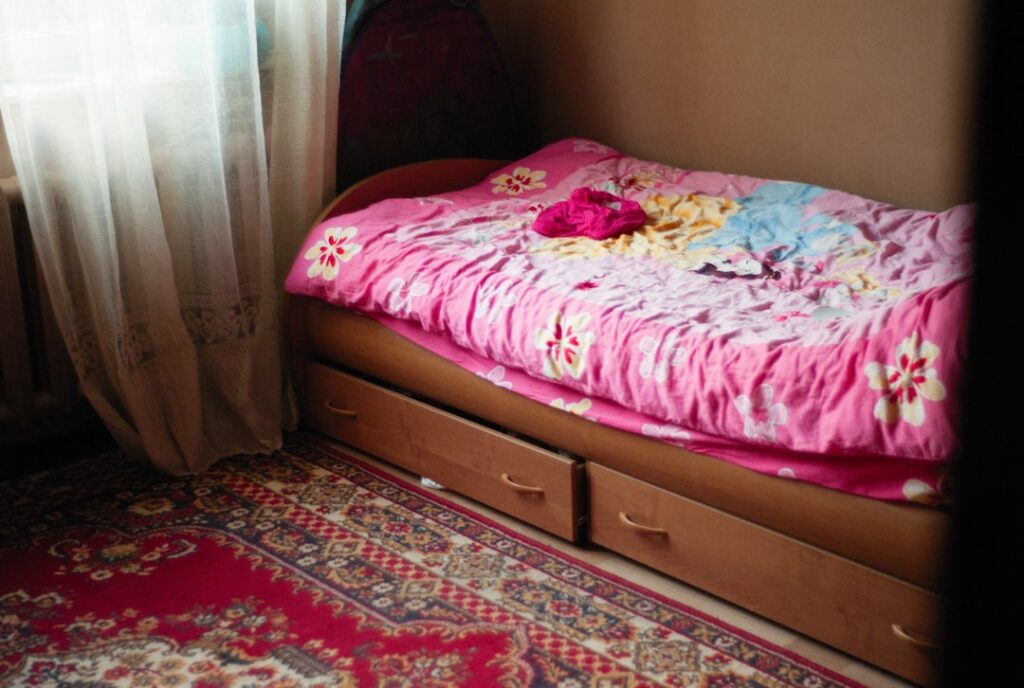
Knowing how to put a rug under a bed transforms a bedroom from plain to pulled-together, anchoring the bed visually and giving your feet a soft landing each morning. The trick is getting the size and placement right, because a rug that is too small or positioned awkwardly can make the whole room feel off-balance. Done well, the rug frames the bed and ties the space together like a finished picture.
This guide walks you through choosing the correct size, the main placement layouts, and the exact steps to position the rug so it looks intentional rather than accidental.
Why Rug Placement Matters
A rug under the bed does more than add warmth underfoot. It defines the sleeping zone, adds texture and color, softens hard flooring, and helps absorb sound for a calmer room. The most common mistake is buying a rug that is too small; a postage-stamp rug floating near the footboard looks lost and shrinks the bed visually. Scale is everything in a bedroom, so size up rather than down.
Choosing the Right Rug Size
Your bed size is the starting point for picking a rug. The goal is to have a generous border of rug visible on the sides and foot of the bed once it is in place. Use these common pairings as a starting guide.
- Queen bed: An 8-by-10-foot rug is the popular choice, leaving roughly 18 to 24 inches of rug exposed on three sides.
- King bed: A 9-by-12-foot rug gives the proportions you want for a larger frame.
- Full or double bed: A 6-by-9-foot rug often works, though an 8-by-10 still looks great for extra margin.
- Twin bed: A 5-by-8-foot rug, frequently placed sideways, suits a smaller space.
Aim for at least 18 inches of rug showing beyond the sides of the bed so there is room to step onto softness when you get up. In larger rooms you can go bigger and let the rug extend further into the floor space.
The Main Placement Options
There are three reliable layouts depending on your rug size and goals.
- Fully under the bed: The rug sits beneath the entire bed and nightstands, extending well past the sides and foot. This is the most luxurious look and works with the largest rugs.
- Two-thirds under the bed: The rug starts partway under the bed, usually just below the pillows or nightstands, and extends out the foot. This is the most budget-friendly approach because it uses a smaller rug while still framing the bed.
- Horizontal at the foot or runners on the sides: A single rug placed perpendicular at the foot, or two narrow runners flanking the bed, suits tight rooms or layered styling.
Step-by-Step: Positioning the Rug
Once you have the right rug, placement is straightforward with a helper, since shifting a bed is far easier with two people.
- Unroll the rug nearby and let it relax for a day or two if it was rolled, so creases settle.
- Lay a quality non-slip rug pad on the floor first, cut to be slightly smaller than the rug, to prevent sliding and protect the floor.
- With a helper, lift or slide the bed off the rug area, or tilt it on one side.
- Position the rug pad and rug so the rug will sit evenly, then set the bed back down in your chosen layout, fully on, two-thirds on, or at the foot.
- Adjust until the exposed border looks equal on the sides and the rug runs square to the bed and walls.
Measure the exposed edges on both sides before finalizing; an even reveal is what makes the placement read as deliberate.
Using a Rug Pad and Keeping It in Place
A rug pad is not optional if you want the setup to last. It grips the floor so the rug does not creep when you climb in and out of bed, adds cushioning, and prevents abrasion between rug and floor. The weight of the bed legs further pins the rug down in full or two-thirds layouts, which is one reason these arrangements stay put so well. For runners or foot-of-bed rugs that are not weighted by furniture, the pad does most of the work.
Styling Tips for a Cohesive Look
Coordinate the rug with your bedding and room palette rather than matching everything exactly; a complementary tone or subtle pattern adds depth. In a neutral room, the rug can be the statement piece with bold color or texture. In a busy room, keep the rug calmer to ground the space. Layering a smaller patterned rug over a large neutral one is a designer trick that adds interest if you want more dimension.
Layouts for Different Bedroom Shapes
Room shape changes the best approach. In a narrow bedroom where the bed sits against one wall with a tight walkway on the other, two-thirds placement or a runner on the open side often works better than a full rug that would crowd the path. In a spacious primary bedroom, a large rug fully under the bed and nightstands creates a luxurious, hotel-like feel with room to spare.
If your bed sits in a corner, you can angle a rug to follow the two exposed sides, or use a single rug at the foot to anchor a seating bench. For platform beds that sit low, a full or two-thirds rug underneath emphasizes the clean lines, while taller beds with skirts pair nicely with a generous border of rug peeking out all around.
Common Mistakes to Avoid
A few missteps undercut even a good rug. The biggest is going too small, which leaves the rug stranded and the bed looking ungrounded. Another is centering the rug on the wall instead of the bed, so the exposed border ends up uneven. Forgetting the rug pad leads to a rug that slides and bunches, especially under the friction of getting in and out of bed.
- Do not let the rug stop short of the nightstands in a full layout; extend past them for balance.
- Avoid a rug so thick the bedroom door drags over it; check door clearance first.
- Square the rug to the bed and walls so it does not look askew.
- Leave equal reveals on both sides rather than shoving the rug to one edge.
Final Thoughts
The secret to how to put a rug under a bed comes down to choosing a rug large enough to frame the bed, picking a placement layout that fits your space and budget, and anchoring it with a non-slip pad. Get the size right first, leave a generous even border, and let the bed’s weight hold everything steady. The result is a warmer, more polished bedroom that feels finished from the floor up.