Stainless steel is not supposed to rust — that is the whole point of the name. Yet those orange-brown spots still show up on sinks, refrigerators, dishwasher fronts, and cookware. The culprit is usually iron particles from external sources (steel wool, cast iron pans, or iron-rich water) that deposit on the surface and corrode. Knowing how to remove rust from stainless steel properly restores the finish without creating scratches that invite future corrosion.
Why Stainless Steel Rusts
Stainless steel contains at least 10.5 percent chromium, which forms an invisible oxide layer that protects against corrosion. When that layer gets damaged by scratches, harsh chemicals, or prolonged exposure to salt or chlorine, the underlying iron in the alloy is exposed to moisture and oxygen — and rust forms.
Common causes include leaving wet cast iron cookware on a stainless sink, using steel wool or wire brushes for cleaning, exposure to chloride-based cleaners like bleach, and hard water with high iron content. The rust you see is often not from the stainless steel itself but from iron particles transferred from other sources that corrode on the surface.
Baking Soda Paste Method
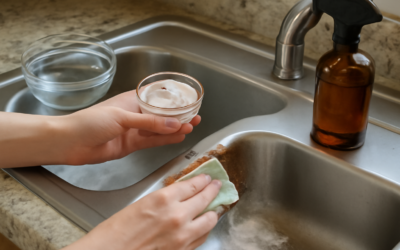
This is the safest and most effective first approach for light rust spots on any stainless steel surface. Mix 3 tablespoons of baking soda with 1 tablespoon of water to form a thick paste. Apply it directly to the rusted area with a soft cloth or your finger.
Let the paste sit for 30 minutes to 1 hour. Then rub gently in the direction of the grain — this is critical. Stainless steel has a visible brush pattern, and scrubbing against the grain creates cross-hatch scratches that dull the finish. Rinse with clean water and dry immediately with a microfiber cloth. Repeat if needed for stubborn spots.
White Vinegar Soak
For larger rusted areas or rust inside sinks, white vinegar’s acetic acid dissolves iron oxide effectively. Spray undiluted white vinegar directly on the rust, or soak a paper towel in vinegar and lay it over the affected area. Leave it for 30 minutes to 2 hours depending on severity.
After soaking, scrub gently with a soft nylon brush or non-abrasive sponge, always following the grain direction. Rinse thoroughly and dry. Vinegar is safe for most stainless steel grades, but avoid leaving it on for more than 3 hours — prolonged acid exposure can pit the surface.
Bar Keepers Friend for Stubborn Rust
When baking soda and vinegar are not enough, Bar Keepers Friend (oxalic acid-based) is the go-to product for professional cleaners and appliance repair technicians. The powder version costs about $3 and handles rust that household remedies cannot budge.
Make a paste with water, apply to the rust, and wait no more than 1 minute. Scrub with a wet soft cloth in the direction of the grain, then rinse completely. The short contact time is important — oxalic acid is effective but can etch stainless steel if left too long. For convenience, the Bar Keepers Friend Soft Cleanser liquid version works identically without the mixing step.
Lemon and Salt Scrub
Cut a lemon in half, dip the cut side into table salt, and rub it directly on the rust spot. The citric acid dissolves the rust while the salt provides gentle mechanical abrasion. This method is especially practical for rust spots inside stainless steel sinks where you want to avoid chemical cleaners near food preparation areas.
Let the lemon juice sit on the rust for 15 to 20 minutes after scrubbing, then rinse and dry. The combination of citric acid and sodium chloride creates a mild but effective rust-removal reaction. Results are comparable to vinegar for light to moderate rust.
Commercial Rust Removers
Several commercial products are formulated specifically for how to remove rust from stainless steel without damaging the protective chromium layer:
- Flitz Stainless Steel and Chrome Cleaner — a cream polish that removes rust, water spots, and fingerprints in one step, about $10 for a 7-ounce tube
- CLR (Calcium Lime Rust) — spray on, wait 2 minutes, wipe off. Effective on heavy rust but rinse immediately and thoroughly
- Whink Rust Stain Remover — a stronger acid-based product for severe rust, use with gloves and ventilation, about $5 per bottle
- WD-40 Specialist Rust Remover Soak — safe for prolonged contact, soak small items for up to 24 hours
How to Prevent Rust From Returning
Removing rust is only half the solution. Prevention keeps your stainless steel looking clean permanently.
- Dry surfaces after every use — standing water is the primary cause of rust on sinks and appliances
- Never use steel wool or metal brushes — switch to nylon scrub pads or microfiber cloths
- Keep cast iron cookware off stainless sinks — use a silicone sink mat or dish rack as a barrier
- Avoid bleach-based cleaners — chlorine attacks the chromium oxide layer that protects stainless steel
- Apply stainless steel polish monthly — products like Weiman Stainless Steel Cleaner leave a protective coating that repels water and fingerprints
- Install a water softener — if you have iron-rich well water, a whole-house softener or iron filter eliminates the source of recurring rust
When the Rust Is Too Deep
If rust has pitted the surface — meaning you can feel a rough texture even after removing the visible rust — the damage goes below the chromium layer. For appliance fronts, a stainless steel refinishing kit ($30 to $50) containing progressively finer abrasive pads can blend out shallow pits and restore a uniform grain pattern. Deep pitting on sink bowls sometimes requires professional refinishing at $150 to $300 or replacement of the sink entirely.
Catching rust early is always easier and cheaper than dealing with advanced corrosion. Make a habit of inspecting your stainless steel surfaces monthly, especially around seams, drain areas, and spots where water pools. A 30-second wipe with a dry cloth after each use is the single most effective prevention strategy.