
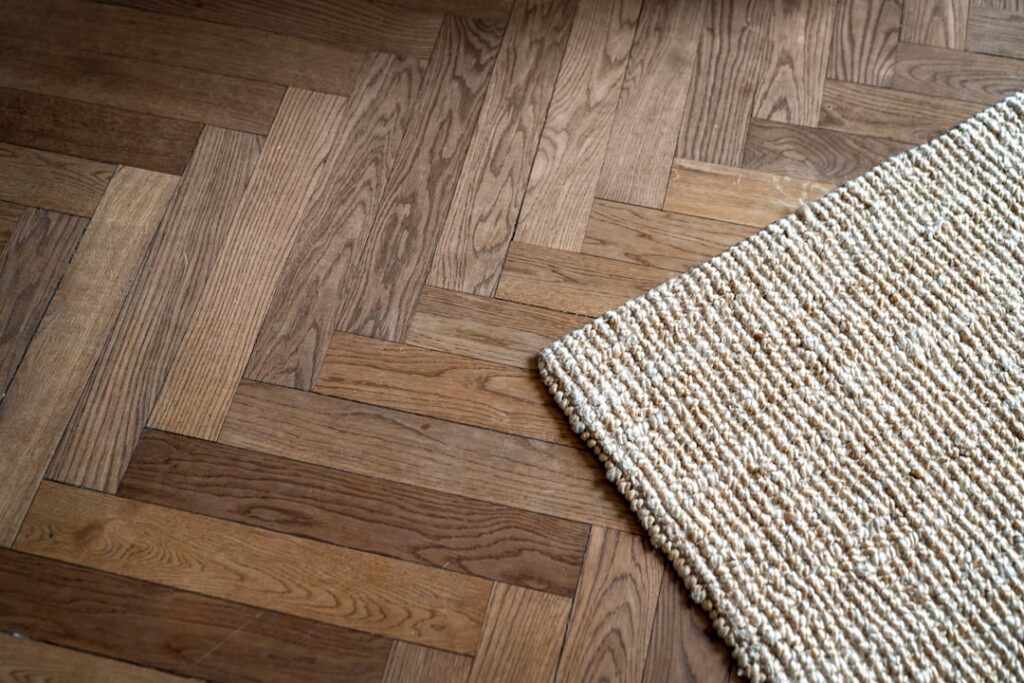
Swapping carpet for hardwood is one of the most popular home improvements in the United States, and for good reason. Hardwood floors look better, last longer, and add measurable resale value. If you are considering replacing carpet with hardwood, this guide covers the entire process from ripping out the old carpet to walking on your brand-new hardwood floor.
- Why Replace Carpet with Hardwood?
- Step 1: Remove the Old Carpet
- Step 2: Inspect and Prepare the Subfloor
- Step 3: Choose Your Hardwood
- Step 4: Acclimate the Hardwood
- Step 5: Install the Hardwood Floor
- Cost to Replace Carpet with Hardwood
- Timeline: How Long Does the Project Take?
- Tips for a Successful Carpet-to-Hardwood Conversion
- Frequently Asked Questions
- Is it hard to replace carpet with hardwood yourself?
- How much does it cost to replace 1,000 sq ft of carpet with hardwood?
- Can I install hardwood over carpet?
- Does replacing carpet with hardwood increase home value?
- What is the cheapest hardwood to replace carpet with?
- How long do I need to stay off new hardwood floors?
Why Replace Carpet with Hardwood?
- Resale value: Homes with hardwood floors sell for 2 to 5 percent more than comparable homes with carpet, according to real estate data.
- Durability: Hardwood lasts 50 to 100 years with periodic refinishing. Carpet typically needs replacement every 8 to 15 years.
- Allergen reduction: Carpet traps dust mites, pet dander, mold spores, and pollen. Hardwood is easy to clean and does not harbor allergens.
- Aesthetics: Hardwood complements virtually any interior design style, from farmhouse to contemporary.
- Easier maintenance: Sweeping and occasional mopping replace the need for frequent vacuuming and professional carpet cleaning.
Step 1: Remove the Old Carpet
Carpet removal is straightforward and an excellent way to save money on labor by doing it yourself. Here is how to remove carpet properly.
- Put on protective gear. Wear gloves, a dust mask, and long sleeves. Old carpet harbors years of dust, allergens, and potentially staples.
- Pull up a corner. Start in a corner of the room and grip the carpet with pliers. Pull it away from the tack strip along the wall. Once you have a good grip, pull the carpet toward the center of the room.
- Cut into manageable strips. Use a utility knife to cut the carpet into 3-to-4-foot-wide strips. Roll each strip tightly for easier disposal.
- Remove the carpet pad. The pad is usually stapled to a plywood subfloor or glued to a concrete slab. Pull it up and roll it for disposal.
- Remove all staples. Use a flat-head screwdriver, pliers, or a staple puller to remove every staple from the subfloor. This step is tedious but essential. Leftover staples will prevent hardwood from sitting flat.
- Remove tack strips. Pry up the tack strips around the perimeter with a flat bar. Be careful of the sharp nails. Dispose of them safely.
Carpet Disposal
Most municipal waste services accept rolled carpet for bulk pickup. You can also rent a dumpster for $250 to $400 if you have a large project. Some carpet recycling programs accept old carpet and pad for free.
Step 2: Inspect and Prepare the Subfloor
The subfloor is the foundation of your new hardwood floor. Any issues here will cause problems later.
Plywood Subfloor
- Check for moisture. Use a moisture meter to test the plywood. Readings should be below 12 percent. If moisture is high, identify and fix the source before proceeding.
- Check for flatness. Lay a straight 8-foot board or level on the subfloor. It should not deviate more than 3/16 inch over 10 feet. Sand down high spots with a belt sander or fill low spots with a floor leveling compound.
- Look for damage. Replace any sections of plywood that are soft, delaminated, water-stained, or moldy.
- Secure loose areas. Screw down any sections that flex or squeak when you walk on them. Use 1-5/8-inch subfloor screws every 8 inches along the joists.
Concrete Slab
- Moisture test: Tape a 2-foot square of plastic sheeting to the slab and wait 48 hours. If condensation forms underneath, you have a moisture issue that requires a moisture barrier or epoxy sealer before installation.
- Flatness: Same standard applies: 3/16 inch over 10 feet. Use self-leveling compound to fix low spots. Grind down high spots.
- Choose engineered hardwood. Solid hardwood should not be installed directly on concrete. Engineered hardwood can be glued or floated over concrete with a proper moisture barrier.
Step 3: Choose Your Hardwood
With the subfloor ready, it is time to select your hardwood flooring.
| Decision | Option A | Option B | Recommendation |
|---|---|---|---|
| Construction | Solid hardwood | Engineered hardwood | Solid for above-grade plywood; engineered for concrete or below-grade |
| Species | White oak (Janka 1360) | Hickory (Janka 1820) | White oak for versatility; hickory for maximum durability |
| Width | 3-1/4 inch strip | 5 to 7 inch wide plank | Wide plank for modern look; strip for traditional |
| Finish | Pre-finished | Site-finished (unfinished) | Pre-finished for faster install; site-finished for seamless custom look |
| Grade | Select (minimal character) | Character or #1 Common | Character grade for rustic charm and lower cost |
How Much to Order
Measure the room’s square footage and add 10 percent for waste from cuts, defects, and mistakes. If your room has many angles or closets, add 15 percent.
Step 4: Acclimate the Hardwood
Hardwood is a natural material that expands and contracts with changes in humidity. Bring the flooring into the room where it will be installed and let it sit, unboxed, for 3 to 7 days. The wood needs to reach equilibrium with the room’s temperature and humidity to prevent gaps or buckling after installation.
Run your HVAC system during acclimation to maintain the conditions the floor will experience year-round. Ideal indoor humidity is 35 to 55 percent.
Step 5: Install the Hardwood Floor
Nail-Down Installation (Over Plywood)
- Install a moisture barrier (15-pound asphalt felt paper or rosin paper) over the subfloor, overlapping seams by 4 inches.
- Snap a chalk line parallel to the longest wall, offset by the width of one plank plus a 1/2-inch expansion gap.
- Lay the first row. Face-nail the first row of planks along the chalk line using a finish nailer. Place nails every 8 to 10 inches, about 1/2 inch from the edge that will be covered by baseboard.
- Blind-nail subsequent rows. Use a pneumatic hardwood floor nailer to drive cleats through the tongue of each plank at a 45-degree angle. Space nails every 6 to 8 inches.
- Stagger end joints. Offset the end joints between adjacent rows by at least 6 inches, ideally more. Random staggering looks most natural.
- Rack the floor. Before nailing each row, lay out several rows of planks to check the color and grain pattern. Mix planks from different boxes to ensure even distribution.
- Face-nail the last row. Like the first row, the last row must be face-nailed because the floor nailer cannot reach the wall.
- Install transitions and baseboards. Add T-moldings or reducers at doorways. Reinstall baseboards to cover the expansion gap.
Glue-Down Installation (Over Concrete)
Spread hardwood adhesive with a notched trowel and press each plank into the adhesive. Work in small sections and place weights on the planks until the adhesive sets. This method is recommended for engineered hardwood on concrete slabs.
Floating Installation
Some engineered hardwood products feature click-lock edges. These float over an underlayment without nails or glue. While the fastest method, floating installations can feel slightly less solid underfoot than nailed or glued floors.
Cost to Replace Carpet with Hardwood
| Expense | Cost per Sq Ft | Cost for 500 Sq Ft |
|---|---|---|
| Carpet removal and disposal | $0.50 – $1.50 | $250 – $750 |
| Subfloor repair (if needed) | $1 – $3 | $500 – $1,500 |
| Hardwood materials | $3 – $12 | $1,500 – $6,000 |
| Professional installation | $3 – $8 | $1,500 – $4,000 |
| Trim and transitions | $0.50 – $2 | $250 – $1,000 |
| Total (professional) | $8 – $26.50 | $4,000 – $13,250 |
You can save $1,500 to $4,000 by removing the carpet yourself and handling the subfloor prep. Hardwood installation itself is best left to professionals unless you have experience with a floor nailer.
Timeline: How Long Does the Project Take?
| Phase | Duration |
|---|---|
| Carpet removal | 1 day (DIY) |
| Subfloor inspection and repair | 1 – 2 days |
| Hardwood acclimation | 3 – 7 days |
| Hardwood installation (500 sq ft) | 2 – 3 days |
| Trim and finishing | 1 day |
| Total | 8 – 14 days |
If you choose site-finished (unfinished) hardwood, add 3 to 5 days for sanding, staining, and applying finish coats.
Tips for a Successful Carpet-to-Hardwood Conversion
- Budget for the unexpected. Roughly 30 percent of carpet-to-hardwood projects uncover subfloor issues that add cost. Build a 15 to 20 percent buffer into your budget.
- Consider door clearance. Hardwood is thicker than carpet. You may need to trim the bottom of doors so they swing freely.
- Plan for transitions. If adjacent rooms have different flooring, choose transition strips that complement both surfaces.
- Get multiple installer quotes. Prices vary widely. Get at least three quotes and check references before hiring.
- Do not rush acclimation. Skipping or shortening acclimation is the number-one cause of post-installation gaps and buckling.
Frequently Asked Questions
Is it hard to replace carpet with hardwood yourself?
Carpet removal is easy for any DIYer. Hardwood installation is moderately difficult and requires specialized tools like a pneumatic floor nailer. Most homeowners save money by removing the carpet themselves and hiring a professional for the hardwood installation.
How much does it cost to replace 1,000 sq ft of carpet with hardwood?
For 1,000 square feet, expect to pay $8,000 to $26,000 total, depending on the wood species, grade, and whether you choose professional installation. Mid-range white oak with professional install typically runs $12,000 to $16,000.
Can I install hardwood over carpet?
No. Carpet and pad create an unstable, spongy surface that prevents hardwood from sitting flat and locks properly. The carpet, pad, tack strips, and staples must all be completely removed.
Does replacing carpet with hardwood increase home value?
Yes. The National Association of Realtors estimates that hardwood flooring adds 2 to 5 percent to a home’s sale price. In many markets, hardwood is the single most requested feature among home buyers.
What is the cheapest hardwood to replace carpet with?
Red oak in a #1 Common (character) grade is typically the most affordable solid hardwood at $3 to $5 per square foot for materials. Engineered hardwood with a thin veneer can be even less expensive at $2 to $4 per square foot.
How long do I need to stay off new hardwood floors?
For pre-finished hardwood, you can walk on it in socks immediately after installation. For site-finished hardwood, wait 24 hours after the final coat before walking in socks, and 72 hours before placing furniture and rugs.


