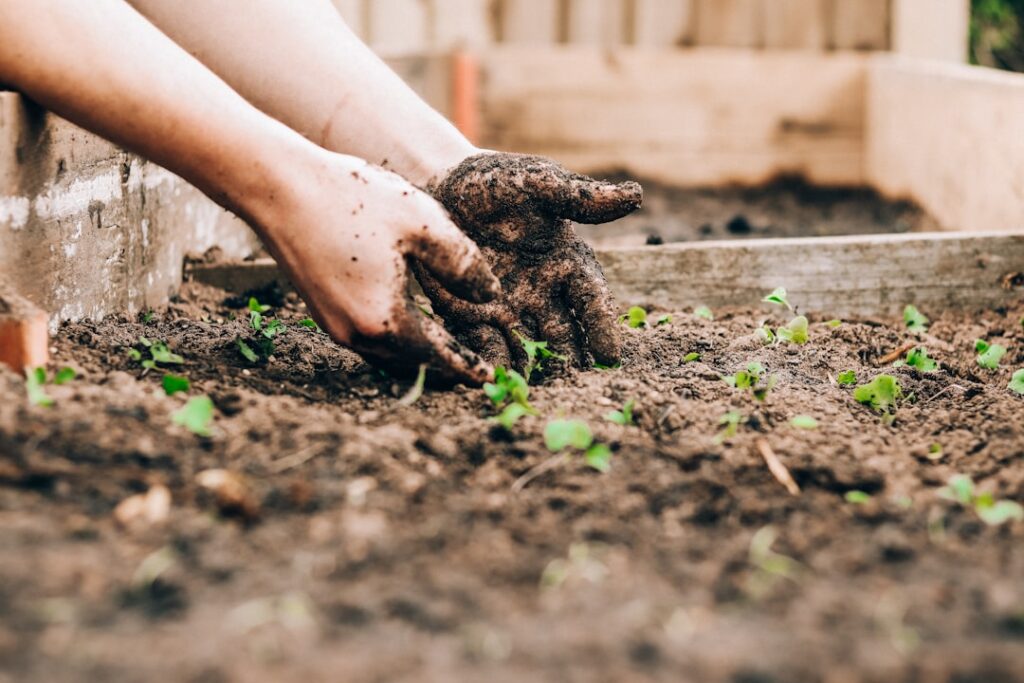
After thirty-odd growing seasons of turning bare lawn into productive beds, I can tell you that how to start a garden from scratch comes down to a handful of decisions you make before you ever pick up a shovel. Get the site, the soil, and the sizing right, and the plants mostly take care of themselves. Rush those first steps, and you will spend three summers fighting problems you baked in on day one.
This guide walks you through the exact sequence I use with clients who have never grown anything but a lawn. Follow it in order and you will have your first harvest inside a single season.
- Pick the Right Spot Before Anything Else
- Decide In-Ground Beds or Raised Beds
- Clear the Sod and Prep the Ground
- Test and Understand Your Soil
- Build Your Soil With Compost and Amendments
- Choose Your First Crops and Plan the Layout
- Time Your Planting Around the Frost Date
- Water, Mulch, and Keep It Going
- Feed the Soil Through the Season
- Common First-Year Mistakes to Avoid
- Budget and Realistic Expectations
Pick the Right Spot Before Anything Else
Sunlight is the single biggest variable, and it is the one thing you cannot amend your way out of. Most vegetables and flowering crops want a minimum of six hours of direct sun a day, and eight is better. Tomatoes, peppers, squash, and beans sulk in anything less. Leafy greens like lettuce, spinach, and kale will tolerate four to five hours, which makes them your fallback for partly shaded yards.
Spend one clear day tracking the sun across your yard. Walk out at 8 a.m., noon, 3 p.m., and 6 p.m. and note where the shadows fall. A south-facing patch with no tree canopy overhead is the gold standard in the Northern Hemisphere. Avoid low spots where cold air and water pool, and stay at least 6 to 10 feet clear of large tree trunks so you are not competing with hungry surface roots.
Water access matters more than beginners expect. If you have to drag a hose more than 50 feet, you will water less often than you should. Site your first bed within reach of a spigot, and factor in a soaker hose or a simple drip line down the road.
Decide In-Ground Beds or Raised Beds
You have two honest choices for a first garden. In-ground beds cost almost nothing but demand decent native soil and more digging. Raised beds cost more up front but give you clean, weed-free, well-draining soil from day one and save your back with a working height of 10 to 18 inches.
For most first-timers on average suburban lots, I recommend one or two raised beds sized 4 feet by 8 feet. That 4-foot width is deliberate: you can reach the center from either side without ever stepping on and compacting the soil. Keep pathways between beds at 24 to 36 inches so a wheelbarrow fits through.
Clear the Sod and Prep the Ground
If you are building in-ground or setting a raised bed over lawn, that grass has to go or it will grow right back up through your crops. You have three methods.
- Sod cutting: Slice under the turf with a flat spade at a depth of about 2 inches, roll it back like carpet, and compost it upside down. Fastest for small areas.
- Sheet mulching: Lay down overlapping cardboard, wet it thoroughly, and pile 4 to 6 inches of compost and mulch on top. The grass smothers and rots in place over 8 to 12 weeks. This is my favorite for building soil.
- Solarizing: Cover the area with clear plastic for 4 to 6 weeks in peak summer to cook the grass and weed seeds. Slow but chemical-free.
Whatever you choose, resist the urge to reach for a rototiller on virgin ground. Tilling chops perennial weed roots into hundreds of new plants and wrecks the soil structure you are trying to build.
Test and Understand Your Soil
Never guess at soil. A basic soil test costs about $15 to $25 through your county extension office and tells you your pH plus levels of phosphorus, potassium, and organic matter. Most vegetables want a pH between 6.0 and 7.0. Below 6.0 you add garden lime; above 7.0 you add elemental sulfur, following the test’s application rate.
While you wait for results, learn your soil texture with the jar test. Fill a quart jar one-third with soil, top with water, shake hard, and let it settle for a day. Sand drops first, silt next, clay on top. Ideal loam runs roughly 40 percent sand, 40 percent silt, and 20 percent clay. Heavy clay drains slowly and needs organic matter; pure sand drains too fast and needs the same fix.
Build Your Soil With Compost and Amendments
Whatever you started with, compost is the answer. For a new in-ground bed, spread a 2 to 3 inch layer of finished compost across the surface and fork it into the top 8 to 10 inches. For a raised bed, fill with a blend of roughly 60 percent quality topsoil, 30 percent compost, and 10 percent aeration material like coarse perlite or composted bark.
Do the math on volume so you order the right amount. A 4-by-8-foot bed filled 12 inches deep needs 32 cubic feet of fill, which is about 1.2 cubic yards. Buying by the yard from a landscape supplier runs $30 to $55 per cubic yard delivered, far cheaper than the $6 to $9 you would pay per bagged cubic foot at a big-box store.
Choose Your First Crops and Plan the Layout
Grow what you actually eat, and keep the list short your first year. Reliable beginner crops include bush beans, zucchini, leaf lettuce, radishes, cherry tomatoes, and cucumbers. These germinate readily, forgive mistakes, and produce heavily.
Respect spacing on the seed packet, because crowded plants invite disease. Bush beans go 4 to 6 inches apart in rows 18 inches apart. A single tomato plant needs an 18 to 24 inch footprint and a 5-foot cage or stake. Put tall crops on the north side of the bed so they do not shade shorter neighbors.
- North edge: caged tomatoes or a trellis of pole beans.
- Middle rows: peppers, bush beans, or cucumbers.
- South edge: low lettuce, radishes, and herbs you can harvest continually.
Time Your Planting Around the Frost Date
The most common rookie mistake is planting warm-season crops too early. Find your average last spring frost date from the extension service, then work backward. Cool-season crops like peas, spinach, and radishes can go in the ground two to four weeks before that date. Warm-season crops like tomatoes, peppers, squash, and beans wait until the soil hits 60 degrees Fahrenheit and all frost danger has passed, usually a week or two after the last-frost date.
Start seeds indoors six to eight weeks ahead for tomatoes and peppers if you want a head start, or simply buy healthy transplants for a few dollars each. Either way, harden off young plants by setting them outside for a few hours a day over a week before you transplant.
Water, Mulch, and Keep It Going
New gardens live or die by consistent moisture. Aim for about 1 inch of water per week, delivered deeply two or three times rather than a daily sprinkle. Push a finger 2 inches into the soil; if it is dry at that depth, water. Early morning is best so leaves dry before evening and you dodge fungal problems.
Once seedlings are established, lay 2 to 3 inches of mulch such as straw, shredded leaves, or fine bark around your plants. Mulch cuts watering by roughly a third, blocks weeds, and keeps soil temperature steady. Keep the mulch an inch or two back from plant stems to prevent rot.
Walk your garden every couple of days. Pull small weeds before they seed, scout for chewed leaves, and harvest often, because picking beans, zucchini, and cucumbers regularly tells the plant to keep producing. That daily stroll is where you actually learn gardening, and it is the habit that separates a patch that fizzles from one that feeds you all season.
Feed the Soil Through the Season
Vegetables are hungry, and even a well-amended bed benefits from a mid-season boost. Work a balanced granular fertilizer, something in the range of a 5-5-5 or 10-10-10 analysis, into the top few inches at planting, following the label rate of roughly 1 to 2 pounds per 100 square feet. Heavy feeders like tomatoes, corn, and squash appreciate a second side-dressing about six weeks in.
If you prefer the organic route, compost, worm castings, and a fish-and-kelp liquid feed every two to three weeks keep plants producing without the risk of chemical burn. Watch the plants themselves: pale lower leaves usually signal a nitrogen shortage, while purple-tinged foliage can mean the soil is too cold or short on phosphorus. Learning to read those signs is worth more than any fertilizer schedule.
Common First-Year Mistakes to Avoid
Nearly every beginner makes the same handful of errors, and knowing them ahead of time saves a season of frustration.
- Planting too much: A single zucchini plant can bury a family in squash. Start with a bed or two, not a quarter acre.
- Crowding plants: Ignoring spacing feels efficient in spring and turns into a disease-ridden jungle by July. Trust the seed packet.
- Inconsistent watering: Deep, regular watering beats a daily splash. Erratic moisture causes blossom-end rot in tomatoes and split roots in carrots.
- Ignoring the frost date: Rushing warm-season crops into cold soil stunts them for weeks; a plant set out on time often overtakes one planted early.
- Skipping the soil test: Guessing at pH and nutrients is the most expensive shortcut you can take.
Give yourself permission to lose a few plants. Every experienced gardener you admire has killed more crops than you have planted, and that is exactly how the skill is built.
Budget and Realistic Expectations
A single 4-by-8-foot raised bed, built from lumber, filled with soil, and planted, runs roughly $150 to $250 all in the first year. In-ground beds can cost under $50 if your native soil is workable. Either way, expect to spend more time than money at the start, and expect a few failures. Even a modest first garden should return $200 to $400 in produce over a season, and every year after that your soil, your skills, and your yields all improve.
Keep a simple garden journal that first year. Jot down planting dates, what thrived, what failed, when frost hit, and which varieties you would grow again. That notebook becomes the most valuable tool you own, because it turns this year’s guesswork into next year’s confidence. Start small, keep good notes, and the garden that feels overwhelming today will feel routine a season from now.