The most common reason a first veggie garden disappoints has nothing to do with a green thumb. It is that people plant too much, in the wrong spot, in soil they never improved, and then get overwhelmed. Start smaller and smarter and the opposite happens: a well-sited 4-by-8-foot bed can hand you salads, tomatoes, and herbs all summer for the price of a few packets of seed and a couple of bags of compost. This guide covers the decisions that actually determine whether your first garden succeeds.
Choosing the Right Location
Sunlight is the single biggest factor, and it is not negotiable. Most vegetables, especially the fruiting crops everyone wants like tomatoes, peppers, cucumbers, and squash, need a minimum of 6 hours of direct sun a day, and 8 or more is better. Watch your yard across a full day and pick the sunniest open spot, away from the shade of the house, fences, and trees.
Beyond sun, look for a location with decent drainage that does not stay soggy after rain, reasonable protection from harsh wind, and convenient access to a water source. Placing the garden where you will walk past it daily matters more than it sounds; the gardens closest to the back door get tended, and the ones out of sight get forgotten.
In-Ground Beds vs. Raised Beds
You have two practical choices for a first garden. Planting directly in the ground is cheapest and works well if your native soil is reasonably good. Building a raised bed costs more upfront but gives you a clean start with imported soil, better drainage, warmer earth in spring, and less bending. A classic beginner raised bed is 4 feet wide by 8 feet long and 10 to 12 inches deep. Four feet is the key dimension: it lets you reach the center from either side without ever stepping on and compacting the soil. Keep any bed no wider than 4 feet for that reason.
For a first year, one 4-by-8 bed, or a small in-ground plot of similar size, is plenty. You can always add a second bed next season once you know what you enjoy growing.
Building Good Soil
Vegetables are only as good as the soil they grow in, and good garden soil is loose, rich in organic matter, and well-draining. If you are filling a raised bed, a proven mix is roughly 60 percent quality topsoil blended with 30 to 40 percent finished compost. For an in-ground bed, spread 2 to 3 inches of compost over the plot and work it into the top 8 to 12 inches with a fork or tiller.
Most vegetables prefer a soil pH between 6.0 and 7.0, slightly acidic to neutral. An inexpensive soil test kit tells you where you stand and whether you need to add lime to raise pH or sulfur to lower it. Compost is the one amendment that fixes almost everything: it feeds the soil, improves both drainage and moisture retention, and supplies slow-release nutrients. Add it every season.
What to Plant Your First Year
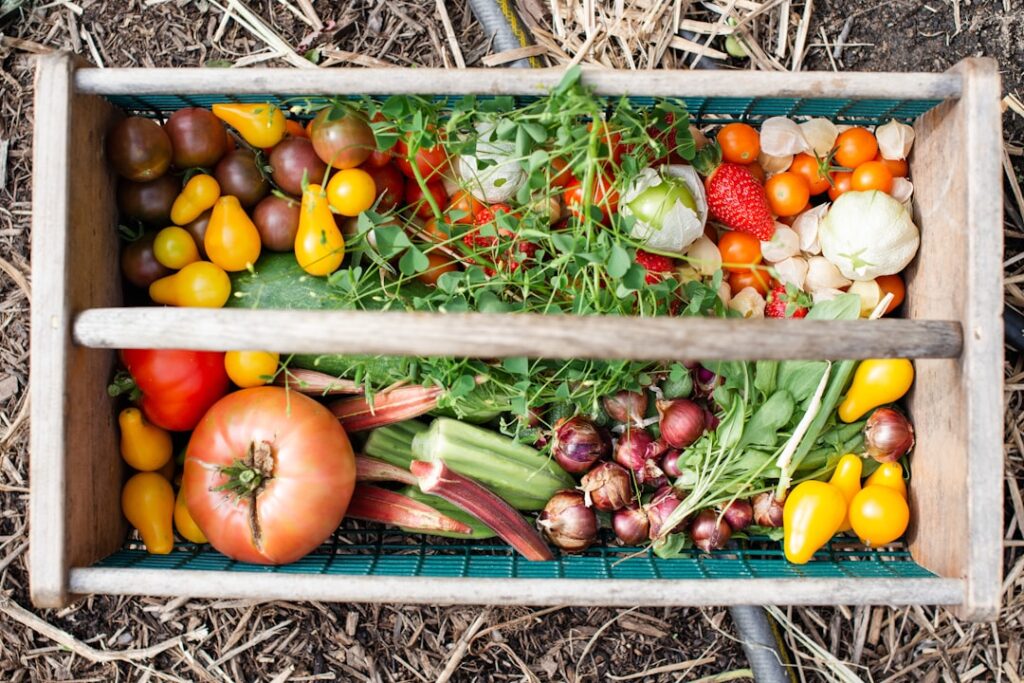
Success builds confidence, so start with vegetables that are genuinely easy and productive rather than the finicky crops that frustrate beginners. Reliable first-year choices include:
- Tomatoes: the classic; one or two plants of a proven variety produce for months.
- Lettuce and salad greens: fast, cool-season, ready to cut in 30 to 45 days.
- Bush beans: sow directly, no support needed, heavy yields.
- Zucchini and summer squash: almost embarrassingly productive from a single plant.
- Cucumbers: prolific on a small trellis.
- Radishes: ready in three to four weeks, great for kids.
- Herbs like basil, parsley, and chives: tuck them along the edges.
Check your USDA hardiness zone and last frost date before planting. Cool-season crops like lettuce, peas, and radishes go in weeks before the last frost, while warm-season crops like tomatoes, peppers, beans, and squash must wait until after all danger of frost has passed and the soil has warmed.
Spacing and Planting
Crowding is the second great beginner mistake, right behind too little sun. Plants packed too tightly compete for light, water, and nutrients, and poor air circulation invites disease. Follow the spacing on the seed packet or plant tag, which is there for good reason. As a rough guide, give tomatoes 24 to 36 inches between plants, peppers 18 inches, bush beans 4 to 6 inches, zucchini 24 to 36 inches, and lettuce 8 to 12 inches. Read the packet for planting depth too; a common rule is to sow seeds about two to three times as deep as they are wide. Set transplants at the same depth they grew in the pot, with the notable exception of tomatoes, which root along a buried stem and can be planted deep to build a stronger root system.
Watering, Mulching, and Feeding
Most vegetables want about 1 inch of water per week, from rain or irrigation combined. Water deeply and less often rather than a little every day, which encourages deep, drought-resistant roots. Water at the base of the plants in the morning so foliage dries quickly, reducing disease. A 2 to 3 inch layer of straw or shredded leaf mulch around the plants conserves moisture, suppresses weeds, and keeps soil temperatures steady. If you built the bed with compost-rich soil, most crops need little extra feeding the first year, though heavy feeders like tomatoes and squash appreciate a midseason side-dressing of compost or a balanced organic fertilizer.
Staying on Top of It
A veggie garden rewards small, consistent attention more than occasional heroics. Spend a few minutes most days walking the bed: pull young weeds while they are tiny, check soil moisture, look for pests like hornworms and squash bugs, and harvest regularly, since picking beans, cucumbers, and zucchini often keeps the plants producing. Start with one manageable bed, the easy crops above, good soil, and proper spacing, and your first veggie garden will give you far more than you expect, along with the experience to expand with confidence next year.
Extending the Harvest With Succession Planting
Once you have the basics down, a simple technique doubles or triples what a small bed produces: succession planting. Rather than sowing all your lettuce or beans at once and getting one big glut, sow a short row every two to three weeks so a fresh batch matures in a steady stream. When a cool-season crop like spring lettuce or radishes finishes in early summer, replant that space with a warm-season crop like beans or cucumbers, and as those wind down in late summer, sow a fall crop of greens, spinach, or kale in the same spot. This keeps the bed working all season instead of sitting empty after a single harvest. Pay attention to days-to-maturity on each seed packet and count backward from your first fall frost date to know how late you can plant a given crop and still harvest it. In many regions you can get two or even three plantings out of the same square foot of soil over one growing season.
Managing Pests the Simple Way
You do not need a chemistry cabinet to protect a home vegetable garden; a few low-effort habits handle most problems. Walk the bed regularly and remove pests by hand while their numbers are small, dropping tomato hornworms, squash bugs, and cabbage worms into soapy water. Encourage beneficial insects by tucking a few flowers like marigolds, zinnias, and alyssum among the vegetables, which draw the ladybugs, lacewings, and parasitic wasps that eat aphids and caterpillars. Floating row cover, a lightweight fabric laid over young plants, keeps beetles, cabbage moths, and squash vine borers off vulnerable crops during their most damaging weeks. Rotate where you plant each crop family from year to year so soil-borne pests and diseases do not build up. For persistent soft-bodied pests, insecticidal soap or a strong blast of water from the hose usually does the job without harming the good bugs. Healthy, well-spaced plants in rich soil also simply resist pests and disease better than stressed ones, so good growing conditions are your first line of defense. With these habits and a little daily attention, your first veggie garden stays productive from spring right through fall.