A rug shampooer rental gives you a powerful, deep-cleaning carpet machine for a day or two without the cost and storage hassle of owning one. For most households, a couple of deep cleanings a year is plenty, which makes renting the smart financial move over buying a machine that sits in a closet. Knowing what these rentals cost, where to get one, and how to run it correctly is the difference between fresh, fast-drying carpet and a soggy mess. Here is the full rundown.
Why Rent Instead of Buy
Rental carpet cleaners, sometimes called extractors, are typically larger and more powerful than the consumer models you would buy for home. They pull more dirt and water out of the carpet, which means a deeper clean and faster drying. Because you only need this kind of cleaning occasionally, renting avoids spending a lot on a machine plus the bother of maintenance and storage.
Renting also lets you match the machine to the job, grabbing a heavy-duty unit for a whole-house clean or a smaller one for a single room or a stairway.
Where to Rent and What It Costs
Rug shampooers are widely available to rent at grocery stores, home improvement centers, and hardware stores, often near the entrance or cleaning aisle. As a general USD guide, daily rentals commonly run about $30 to $50 for a 24-hour period, with some locations offering shorter or multi-day rates.
Budget for cleaning solution on top of the machine fee, which usually adds $15 to $25 per bottle. Factor that in when comparing rental against the cost of hiring a professional carpet cleaner, which is more expensive but hands-off.
What You Need Before You Start
A little prep makes the job smoother. Gather these before you bring the machine home.
- Carpet cleaning solution compatible with the rented machine
- A vacuum to pre-clean the carpet
- Towels or a stain pretreatment for problem spots
- Hot tap water to fill the tank
- Fans for faster drying afterward
Vacuum thoroughly first. Removing loose dirt and hair before shampooing dramatically improves the result, because the wet machine is meant to extract embedded grime, not bulk debris.
How to Use a Rug Shampooer
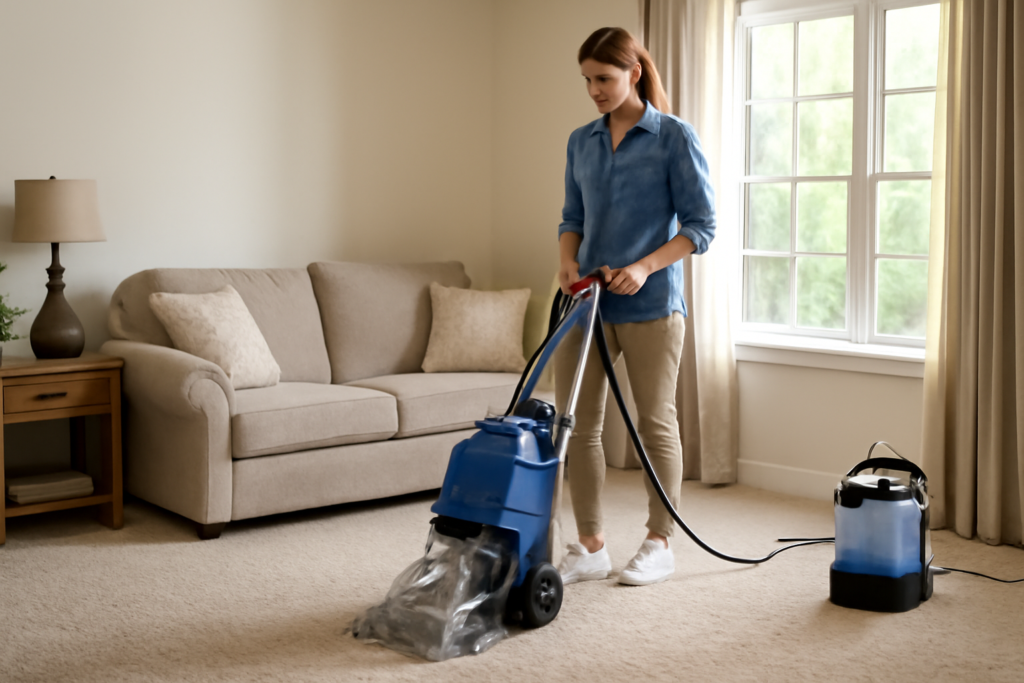
The process is straightforward once the machine is filled. Mix the cleaning solution and hot water in the tank per the directions, then move the unit slowly across the carpet in overlapping rows.
- Push forward while dispensing solution, then pull back slowly with the trigger released to extract the dirty water
- Overlap each pass slightly so you do not miss strips
- Make an extra dry pass, with no solution, to pull out more moisture and speed drying
- Empty and refill the recovery tank as it fills with dirty water
- Work toward an exit so you do not walk across freshly cleaned carpet
Pro Tips for the Best Results
Do not overwet the carpet. The most common mistake is soaking the fibers, which leads to long drying times, musty smells, and even mildew. Use the right amount of solution and make those dry extraction passes to pull moisture back out.
Pretreat stains and high-traffic lanes before the main pass, letting the spot cleaner dwell for a few minutes. Work in sections so the solution does not dry before you extract it, and keep the windows open and fans running to dry the carpet quickly afterward.
Drying and Aftercare
Carpet should be dry to the touch within several hours and fully dry within a day, depending on humidity and airflow. Keep foot traffic off until it dries to avoid re-soiling and matting. Running fans, opening windows, and turning on a dehumidifier or air conditioning all speed the process.
Avoid replacing furniture until the carpet is completely dry, and place foil or plastic under furniture legs if you must set them back early, so metal or wood finishes do not transfer onto the damp pile.
Rental vs Buying vs Hiring a Pro
Three paths exist for deep-cleaning carpet, and the right one depends on how often you clean. Renting suits households that deep-clean a couple of times a year, since you get a powerful machine without storage or maintenance. Buying a consumer model makes sense if you clean monthly, have pets, or want spot-cleaning on demand, though home units are usually less powerful than rentals.
Hiring a professional costs the most but is fully hands-off and uses truck-mounted equipment that extracts more deeply than any rental. For tough pet stains, heavily soiled carpet, or delicate fibers, the pro route can be worth it. For routine refreshing, a rental delivers most of the benefit at a fraction of the price.
Avoiding Common Mistakes
Beyond overwetting, a few errors undercut results. Skipping the pre-vacuum leaves loose dirt that the machine smears around instead of lifting. Using too much cleaning solution leaves a sticky residue that attracts dirt and causes carpet to re-soil quickly, so follow the dilution directions exactly.
Walking on damp carpet tracks new dirt into clean fibers, so plan your cleaning path toward an exit and stay off until dry. Finally, do not rush the dry time before moving furniture back, since trapped moisture under furniture legs can stain the carpet or damage the furniture finish.
Returning the Machine
Most rental machines must be returned clean and empty. Dump and rinse the tanks, wipe down the unit, and return it within the rental window to avoid extra charges. Check the agreement for any cleaning or late fees so there are no surprises.
Keep your receipt and note the return time. A 24-hour rental can usually clean several rooms if you stay efficient.
The Bottom Line
A rug shampooer rental is an affordable, effective way to deep-clean carpets a couple of times a year, typically for $30 to $50 a day plus solution. Vacuum first, avoid overwetting, make extra dry passes, and dry the carpet quickly with fans and airflow. Do that, and you get professional-grade results at a fraction of the cost, with no machine to store afterward.