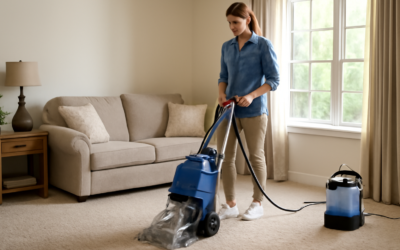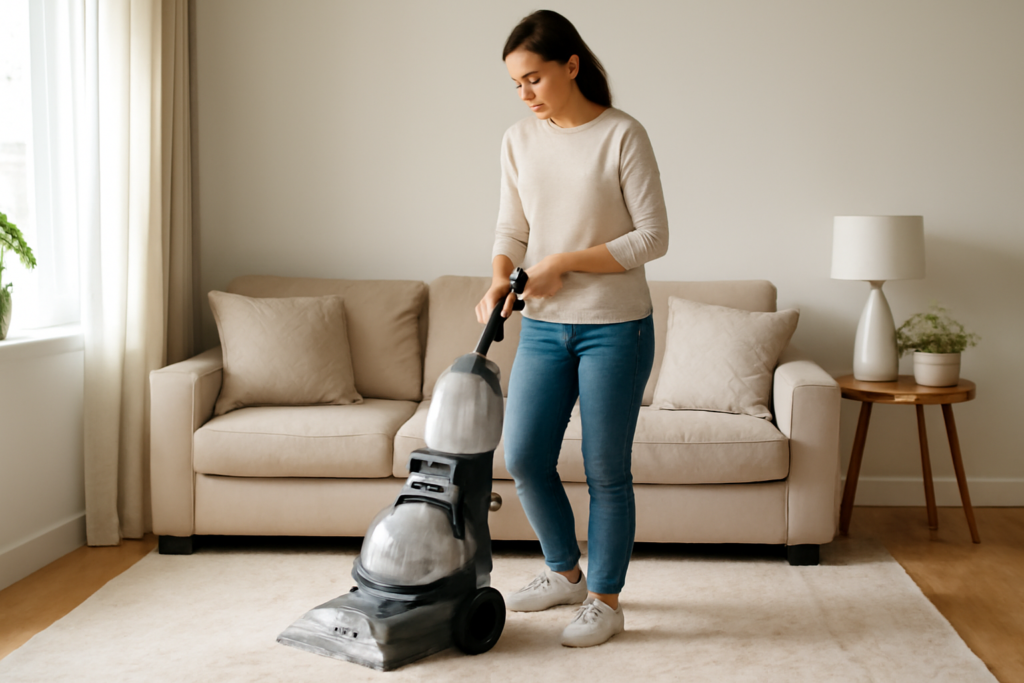
A vacuum lifts surface dirt, but it cannot reach the ground-in grime, pet odors, and old spills buried deep in a rug’s fibers. That is the job of a rug shampooer, a machine that injects a cleaning solution into the carpet, agitates it, and then extracts the dirty water back out. Used correctly, it can refresh a tired rug dramatically. Used carelessly, it leaves rugs soaking wet, slow to dry, and prone to mildew, so technique matters as much as the machine.
How a Rug Shampooer Works
Most home machines are technically carpet extractors. They hold two tanks: one for clean water mixed with detergent and one for the dirty water they pull back up. As you push the unit forward, rotating brushes scrub the solution into the pile; as you pull back, a powerful suction nozzle vacuums the soiled liquid into the recovery tank. The key principle is to lay down less water than you remove, leaving the rug damp rather than drenched.
Types of Rug Cleaning Machines
Not every machine suits every rug, so match the tool to the job.
- Upright carpet shampooers: the classic full-size unit, best for large area rugs and wall-to-wall carpet
- Portable spot cleaners: compact, with a hose and handheld tool, ideal for small rugs, stairs, and pet accidents
- Rental machines: heavy-duty units from a grocery or hardware store for occasional deep cleans without buying
- Dry-foam or low-moisture systems: use minimal water, so rugs dry faster
Check the Rug Before You Start
Wet cleaning is not safe for every rug. Synthetic rugs like nylon, polyester, and polypropylene generally handle a shampooer well. Natural fibers are riskier: wool can be cleaned with the right solution but is sensitive to heat and over-wetting, while jute, sisal, and silk often should never be saturated at all. Always read the care label, and when it says dry-clean only or warns against water, believe it. A colorfast test on a hidden corner takes a minute and saves a ruined rug.
Step-by-Step Cleaning
A methodical pass beats a rushed one every time. Work in sections and resist the urge to overload the rug with solution.
- Vacuum thoroughly first to remove loose dirt and hair
- Pre-treat heavy stains with a spot remover and let it dwell
- Fill the clean tank with warm water and the recommended amount of detergent
- Push forward to apply, pull back slowly to extract; overlap each pass
- Make a final dry-suction pass with no solution to pull out extra moisture
Using too much detergent is a common mistake. Leftover soap residue acts like a magnet for dirt, so a rug that re-soils quickly after cleaning was probably under-rinsed.
Drying Without Mildew
Drying is where most rug-cleaning regrets happen. A rug that stays wet for more than a day can develop mold, odors, and even subfloor damage underneath. Speed things up by running ceiling fans or box fans, opening windows, and turning on a dehumidifier or the air conditioning. Lift area rugs off the floor or prop them so air circulates on both sides. Keep foot traffic off until the pile feels dry to the touch, usually 6 to 24 hours depending on humidity and how much water was used.
Buy or Rent?
If you have pets, kids, or several rugs, owning a machine usually pays off within a few cleanings and lets you tackle spills immediately. If you only deep-clean once or twice a year, renting a powerful unit can be the smarter move and saves storage space. Portable spot cleaners are worth owning regardless, because fast response to a fresh stain prevents permanent setting.
What a Rug Shampooer Costs
Pricing varies by capability. Compact portable spot cleaners often run about $80 to $150, full-size home upright shampooers land around $120 to $300, and high-end or professional-grade machines can exceed $400. Renting a unit typically costs roughly $30 to $50 per day plus cleaning solution. Treat these as general ranges, since features, tank size, and brand affect the price. For most households, a mid-range upright plus an inexpensive portable spot cleaner covers nearly every situation.
Choosing the Right Cleaning Solution
The detergent you put in the tank matters as much as the machine. Use a formula made specifically for carpet extractors, since dish soap and laundry detergent foam excessively and leave sticky residue. Many machines specify low-foam solutions, and using the wrong product can flood the recovery system with suds. For pet households, an enzyme-based cleaner breaks down the proteins in urine and odors rather than just masking them, which a standard detergent cannot do. Always measure the dose; doubling it does not clean better and only leaves more residue behind to attract fresh dirt.
Maintaining Your Machine
A shampooer that is not cleaned after use quickly turns into a source of odors and clogs. After every job, empty and rinse both tanks, and run clean water through the system to flush detergent out of the lines and spray jets. Remove and rinse the brush roll and any filters, and let all the parts air-dry before storing, since trapped moisture breeds mildew inside the machine. Check the spray nozzles periodically for clogs that cause uneven cleaning. A few minutes of care after each use keeps the suction strong and the tanks smelling fresh for years.
The Bottom Line
A rug shampooer brings deep-clean results that vacuuming alone cannot match, but success depends on restraint: less water, less detergent, and thorough extraction and drying. Confirm your rug can handle wet cleaning, pre-treat stains, make overlapping passes, and dry the rug fast with airflow. Follow that routine and you will keep your rugs fresh, soft, and odor-free for years. Pair the right cleaning solution with regular machine maintenance, and a single shampooer will pay for itself many times over compared with professional cleanings. Always test a hidden corner first, work in overlapping sections, and never skip the final dry-suction pass, because thorough extraction is what separates a rug that dries clean from one that stays damp and musty.