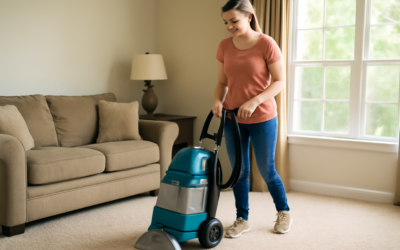
Walk down a cleaning aisle and you will see machines labeled carpet steamers, carpet shampooers and carpet extractors, often at similar prices and with nearly identical tanks and brushes. The truth behind carpet extractor vs steamer vs shampooer is simpler than the packaging suggests: most home “steam cleaners” are hot water extractors that never make steam, and true rotary shampooers are a separate, older technology that works very differently.
Here is the quick answer. A carpet extractor sprays cleaning solution into the pile and immediately vacuums it back out. A so-called carpet steamer is almost always the same thing, marketed with a friendlier word. A rotary shampooer scrubs foam into the fibers with a spinning brush and relies on the foam drying so you can vacuum the residue later. For most homes, extraction cleans deeper, leaves less residue and dries faster than traditional shampooing.
- Carpet Extractor vs Steamer vs Shampooer: The Core Difference
- How a Carpet Extractor Works
- What "Carpet Steamer" Really Means
- How a Rotary Shampooer Works
- Dry Times by Carpet Type
- Which Machine Should You Use?
- Tips for Better Results With Any Machine
- Troubleshooting Common Problems
- General Cost Ranges
- Frequently Asked Questions
We break down how each machine works, what the terms mean on a label, how drying time changes with carpet type, and which one fits your floors.
Carpet Extractor vs Steamer vs Shampooer: The Core Difference
The key difference is what happens to the dirty water. Extraction removes it. Shampooing leaves it behind to dry.
| Machine | How it cleans | What stays in the carpet |
|---|---|---|
| Carpet extractor | Sprays solution, agitates, vacuums it back | Some moisture, little residue |
| Carpet “steamer” | Usually the same as an extractor | Same as an extractor |
| Rotary shampooer | Brushes foam into fibers | Dried foam and loosened soil until vacuumed |
True steam, meaning water heated past 212°F into vapor, is used by some commercial truck-mounted systems and by handheld steam tools for spot cleaning. Upright home carpet cleaners heat water with an internal heater or rely on hot tap water, then spray it as liquid. That is hot water extraction, not steam.
How a Carpet Extractor Works
A carpet extractor machine has two tanks: one for clean solution and one for recovered dirty water. As you push the machine forward, it sprays solution into the pile. Brushes, either rotating or oscillating, loosen soil at the base of the fibers. On the pull stroke, a vacuum motor sucks the water, solution and soil back up through a narrow nozzle into the recovery tank.
Because most of the water comes back out, extraction leaves less residue than other methods. That matters because leftover detergent is sticky and attracts new dirt, which is why some carpets look dirty again within weeks of a cleaning.
Types of extractors
- Upright home extractors: the most common machine for DIY cleaning, with 1 to 1.5 gallon tanks and built-in brushes.
- Portable spot cleaners: small canister units with a hand tool for stairs, upholstery and single stains.
- Rental extractors: heavier machines with stronger suction and larger tanks, available at hardware and grocery stores by the day.
- Commercial and truck-mounted units: used by pros, with much higher heat, pressure and suction than any home machine.
Stronger suction means faster drying. That is the main reason professional hot water extraction often dries in 4 to 8 hours while an under-powered home unit can leave carpet damp for a day.
What “Carpet Steamer” Really Means
The word “steamer” is marketing shorthand. When people search for a carpet steam machine or a carpet steamer vacuum, they almost always end up with a hot water extractor. Some home models include a heater that keeps the water warm, often in the 120 to 150°F range, which helps dissolve oily soil. None of them reach steam temperature in the carpet.
That is not a bad thing. Real steam on carpet can shrink wool, damage some synthetic backings and deactivate certain adhesives. Hot water around 120 to 150°F with an appropriate cleaning solution is effective and gentler on most residential carpet.
If a label promises “steam cleaning” for carpet, read the fine print. You will usually find a clean water tank, a dirty water tank, a spray trigger and a suction nozzle. That setup is an extractor.
How a Rotary Shampooer Works
A classic carpet cleaner shampooer uses a single large rotating brush or pad driven by a motor. You add a foaming shampoo to a solution tank, and the brush works the foam deep into the pile. The foam encapsulates soil. Once it dries, you vacuum up the dried residue along with the dirt it trapped.
Rotary shampooing was the standard home method for decades. It still has a place on heavily matted, commercial-style low-pile carpet, and some janitorial crews use rotary machines with encapsulation chemistry for fast turnaround in offices. For home carpet, it has drawbacks:
- Residue: if the foam is not fully vacuumed, it leaves sticky film behind.
- Over-wetting: too much foam can soak the backing and pad.
- Pile distortion: aggressive rotary brushes can fuzz or untwist cut pile.
- Handling: rotary machines pull sideways and take practice to control.
Dry Times by Carpet Type
How long carpet takes to dry depends on fiber, pile height, the machine’s suction, room temperature and humidity. General ranges after a home extractor cleaning with good airflow:
| Carpet type | Typical dry time | Notes |
|---|---|---|
| Low-pile loop (Berber) | 4 to 8 hours | Dries fastest; avoid over-wetting olefin loops |
| Cut pile nylon | 6 to 12 hours | Most common home carpet |
| Plush or frieze | 8 to 16 hours | Dense pile holds more water |
| Shag or high pile | 12 to 24 hours | Use extra dry passes |
| Wool | 12 to 24 hours | Use cooler water and wool-safe solution |
A shampooer usually adds several hours because the foam has to dry before it can be vacuumed. To speed any method, run ceiling fans or box fans, keep the heat or air conditioning on, and do two or three dry passes (suction only, no spray) with an extractor.
Carpet that stays damp for more than about 24 to 48 hours can develop musty odors and mold in the pad. If a cleaning leaves carpet wet longer than that, the machine is putting down too much water or not pulling enough back.
Which Machine Should You Use?
For most people, settling carpet extractor vs steamer vs shampooer comes down to the job in front of them. Match the method to the situation:
- Routine deep cleaning of home carpet: a hot water extractor. It cleans at the base of the fibers and leaves the least residue.
- Pet accidents and spot stains: a portable spot extractor with a hand tool and an enzyme cleaner.
- Stairs and upholstery: a portable extractor with an upholstery tool.
- Large, heavily soiled areas: a rental hot water extractor with stronger suction, or a pro service.
- Commercial low-pile carpet in a basement office or rec room: a rotary machine with low-moisture encapsulation chemistry can work, used carefully.
- Wool, antique or natural-fiber rugs: a professional cleaner familiar with those fibers.
If you clean carpet two or more times a year, owning a carpet extractor usually costs less over time than renting. For an annual cleaning, renting or hiring a pro makes more sense.
Tips for Better Results With Any Machine
- Vacuum thoroughly first. Dry soil turns to mud when wet. Go slow, with overlapping passes.
- Pre-treat traffic lanes and spots with a solution made for your machine and let it dwell 5 to 10 minutes.
- Use the right dilution. More soap does not mean cleaner carpet; it means more residue.
- Test in a closet corner for colorfastness before cleaning a whole room.
- Make one wet pass and two dry passes. Suction is where most of the drying happens.
- Move furniture or protect legs with foil tabs or plastic blocks so wood stains and rust do not transfer to damp carpet.
- Rinse with clean water on a final pass if your machine allows it, to lift leftover solution.
Troubleshooting Common Problems
- Carpet feels crunchy or sticky after drying: too much detergent. Do a clean-water rinse pass with an extractor.
- Spots come back after drying: called wicking. Soil deep in the pad rises as the carpet dries. Re-extract the spot and blot with a dry towel weighted down overnight.
- Musty smell: carpet stayed wet too long. Add airflow, run a dehumidifier and use fewer wet passes next time.
- Brown edges on wool or cotton-backed carpet: over-wetting. Use less water and call a pro if it spreads.
- Machine leaves lots of water behind: clogged nozzle, full recovery tank or a worn seal. Clean the nozzle and check the tank lid gasket.
General Cost Ranges
- Portable spot extractors: roughly $80 to $180
- Upright home carpet extractors: roughly $120 to $400
- Rental extractor: roughly $35 to $60 per day, plus solution
- Rotary floor machine with shampoo tank (rental): roughly $50 to $90 per day
- Professional hot water extraction: commonly $0.25 to $0.50 per sq ft, or a per-room price
Whichever route you choose, prevent mold by keeping carpet from staying wet and by fixing any leaks, damp slabs or humidity problems before a deep clean. If you find mold on the pad or backing across more than about 10 sq ft, a remediation professional should handle it.
Frequently Asked Questions
Is a carpet steamer the same as a carpet extractor?
In almost every home model, yes. Machines sold as carpet steamers spray hot water and solution and vacuum it back, which is hot water extraction. They do not produce steam in the carpet.
Does shampooing or extraction clean carpet better?
Extraction generally cleans deeper and leaves less residue because it removes the water and loosened soil right away. Shampooing leaves foam behind to dry, which can attract dirt if not fully vacuumed.
How long should carpet take to dry after cleaning?
Most home carpet dries in 6 to 12 hours with good airflow. Dense plush, shag and wool can take up to 24 hours. Longer than that suggests over-wetting.
Can I use a hot water extractor on wool carpet?
Yes, with cooler water, a wool-safe solution and light passes. For valuable or antique wool rugs, hire a cleaner experienced with wool.
Should I buy or rent a carpet cleaning machine?
Buy if you clean carpet twice a year or more or have pets. Rent or hire a pro for a single annual cleaning.