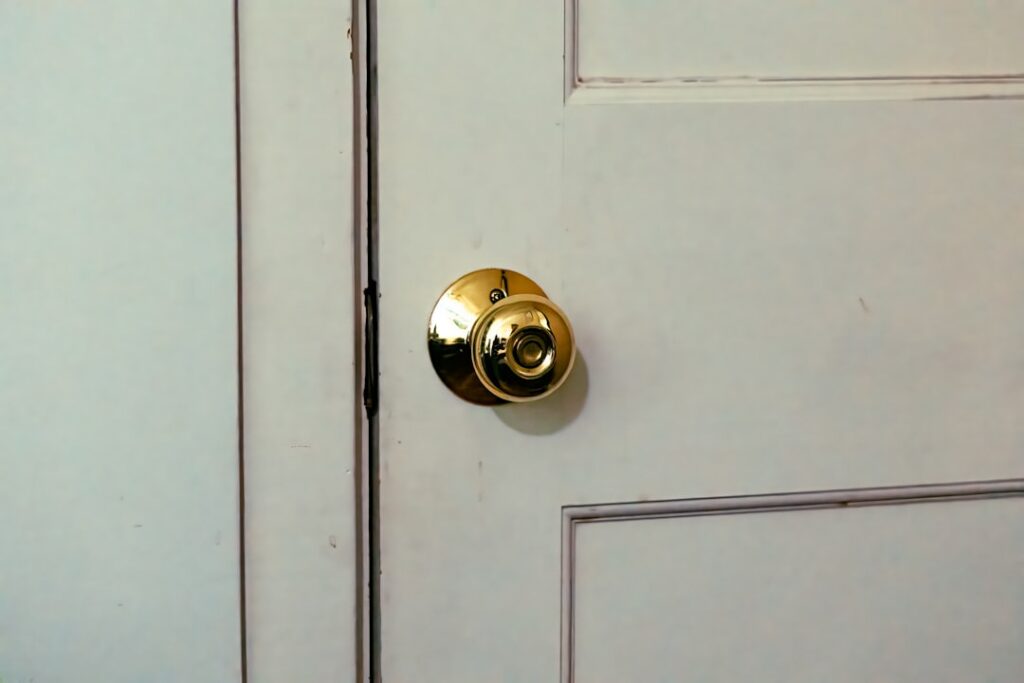
Knowing how to unlock a door knob is one of those skills you only need when a toddler has shut themselves in the bathroom or a bedroom privacy lock has jammed with someone on the wrong side. This guide covers interior privacy and push-button knobs — the kind on bathrooms and bedrooms — and the stuck or seized knobs that will not turn. It does not cover picking a keyed exterior deadbolt, which is a different animal.
- First, Identify Your Knob Type
- Unlocking a Pinhole Privacy Knob
- What to Do If the Pin Won’t Release It
- Unlocking a Slotted Privacy Knob
- When the Knob Is Stuck, Not Locked
- Getting Past a Latch With a Card
- Removing the Knob When Nothing Else Works
- Handling a Turn-Button or Thumb-Turn Lock
- The Absolute Last Resort
- Preventing the Next Lockout
- Keep a Fix on Hand
Almost every interior knob is designed to be opened from the outside in an emergency, without a key. Once you know which type you have, most of these take under a minute.
First, Identify Your Knob Type
Look at the outside center of the knob, the side facing the hallway. What you see tells you the tool you need:
- Small round pinhole — this is a privacy knob with a push-button lock inside. Most common on bathrooms and bedrooms.
- Narrow horizontal slot — same privacy function, but it takes a flat tool instead of a pin.
- Turn-button or thumb-turn — a privacy handle you rotate; usually there is a matching emergency release on the outside.
- No hole at all — this is a passage knob that does not lock, so if it will not open, the knob is jammed rather than locked.
Unlocking a Pinhole Privacy Knob
This is the everyday bathroom-lockout fix. Inside the little hole is either a slot or a button you push straight in.
- Find a rigid, straight tool: a small flat-head screwdriver, a paperclip bent straight, an eyeglasses screwdriver, or the tension-relief pin that shipped with the lock.
- Insert it straight into the hole until it stops, roughly 1 to 2 inches depending on the door thickness.
- If there is a slot inside, turn the tool until it lines up and the lock releases. If there is a button, push firmly and steadily until you feel the button pop.
- Turn the knob while you hold the pressure. It should open.
Push straight in, not at an angle. Angling the tool is the number-one reason people miss the release button and think the lock is broken.
What to Do If the Pin Won’t Release It
Sometimes you push the pin in, feel resistance, and the knob still will not turn. Work through these before you assume the lock is broken:
- Push and turn at the same time. On many push-button knobs the button only stays disengaged while the knob is turning. Hold the pin in with one hand and rotate the knob with the other in a single motion.
- Try a slightly thicker tool. A bent paperclip can be too thin to fully depress a stiff button. Step up to a small flat-head screwdriver or an Allen key.
- Wiggle the door. If the latch is under side load from a warped door, the internal button binds. Have someone push the door closed from the other side, or push it yourself, while you work the pin.
- Give it a firm, straight shove. Old buttons gum up with dust and dried lubricant. A deliberate, firm push, not a timid poke, often frees a sticky one.
Unlocking a Slotted Privacy Knob
Some privacy knobs have a horizontal or vertical slot instead of a pinhole. This one takes a flat blade, not a pin:
- Use a small flat-head screwdriver, a butter knife tip, or even a sturdy coin edge that fits the slot.
- Insert the blade fully into the slot.
- Rotate it 90 degrees, a quarter turn, in either direction. Most release with a small click.
- Try the knob. If the first direction does nothing, rotate the other way.
When the Knob Is Stuck, Not Locked
Sometimes the lock is already disengaged but the knob still will not turn, or it spins freely without retracting the latch. That is a mechanical failure, not a locked door. Work through these causes:
- Spring fatigue. An old knob loses its return spring and the latch stops retracting. Grip the knob firmly and jiggle while pulling the door toward you to take pressure off the latch.
- A binding latch bolt. If the door has shifted in its frame, the latch drags on the strike plate. Push or lift the door slightly as you turn the knob to relieve the bind.
- A stripped spindle. If the knob spins with no resistance, the square spindle inside has stripped and the knob is no longer catching the latch mechanism. This one usually means removing the knob.
Getting Past a Latch With a Card
If you are locked out and the knob turns from your side but the latch will not pull free, or you are working a passage knob with a beveled latch, the credit-card trick still works on spring latches, never on deadbolts:
- Use a stiff, expendable plastic card, a laminated card works better than a soft gift card.
- Slide it into the gap between the door and frame at latch height, angled toward the strike.
- Push the card against the angled face of the latch bolt and bend it back while pushing the door.
- The beveled latch slides in and the door pops. This only works when the latch’s angled side faces you.
Removing the Knob When Nothing Else Works
When the mechanism has genuinely failed, pull the knob and free the latch by hand. Look at the knob base, the rose, for how it is fastened:
- Visible screws: Remove the two screws on the interior rose, pull both knobs off the spindle, then unscrew the latch faceplate on the door edge and retract the bolt with a flat screwdriver.
- Hidden fastening: Look for a small slot or pinhole on the knob’s neck. Depress the detent pin with a paperclip while pulling the knob off, then pry the decorative rose to expose the mounting screws.
Once the knob is off, you can slide a flat-head screwdriver into the spindle hole or push the latch bolt in directly to open the door.
Handling a Turn-Button or Thumb-Turn Lock
Some interior privacy handles lock with a thumb-turn or a turn-button on the inside face instead of a simple push button. On a knob you turn the button 90 degrees to lock; on a lever the thumb-turn rotates. From the outside, these almost always have an emergency release too:
- Check the outside center for a slot or pinhole, the same as a standard privacy knob.
- Slotted release: insert a coin or flat screwdriver and rotate a quarter turn.
- Pinhole release: push the pin straight in until the inside button pops back to the unlocked position.
- If it is a lever handle, the release usually snaps the thumb-turn flat again; then just work the lever.
The Absolute Last Resort
If someone is in distress behind the door and nothing above works, you can force a hollow interior door. Hollow-core doors give way with a firm shoulder or a well-placed kick near the latch, and the damage is limited to a $30 to $60 door slab plus a new knob. For a solid-core or exterior door, do not kick it; call a locksmith, since you will just injure yourself against the frame.
Preventing the Next Lockout
Once you have the door open, spend two minutes making sure it does not happen again. Most repeat lockouts come from worn or misused hardware:
- Swap a failing privacy knob. If the button sticks or the spring feels weak, a new interior privacy knob runs $12 to $25 and installs with two screws in ten minutes.
- Lubricate the mechanism. A shot of dry PTFE or graphite lubricant, not oil, keeps the button and latch moving freely. Oil attracts dust and gums up over time.
- Consider a passage knob for kids’ rooms. A non-locking passage knob on a toddler’s bedroom or a shared bathroom removes the lockout risk entirely.
- Adjust a binding door. If the latch drags on the strike, tighten the hinge screws or file the strike plate so the door closes without side pressure on the lock.
Keep a Fix on Hand
Now that you understand how to unlock a door knob from every angle — pinhole, slot, stuck latch, and full removal — the practical move is prevention. Tape a small flat-head screwdriver or a straightened paperclip to the top of the door frame or inside a nearby cabinet. The next bathroom lockout becomes a ten-second problem instead of a panic, and you will never have to shoulder a door again.