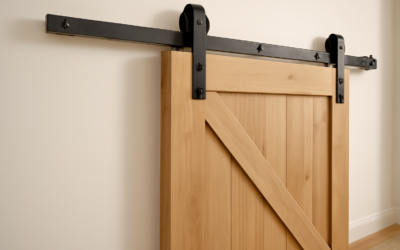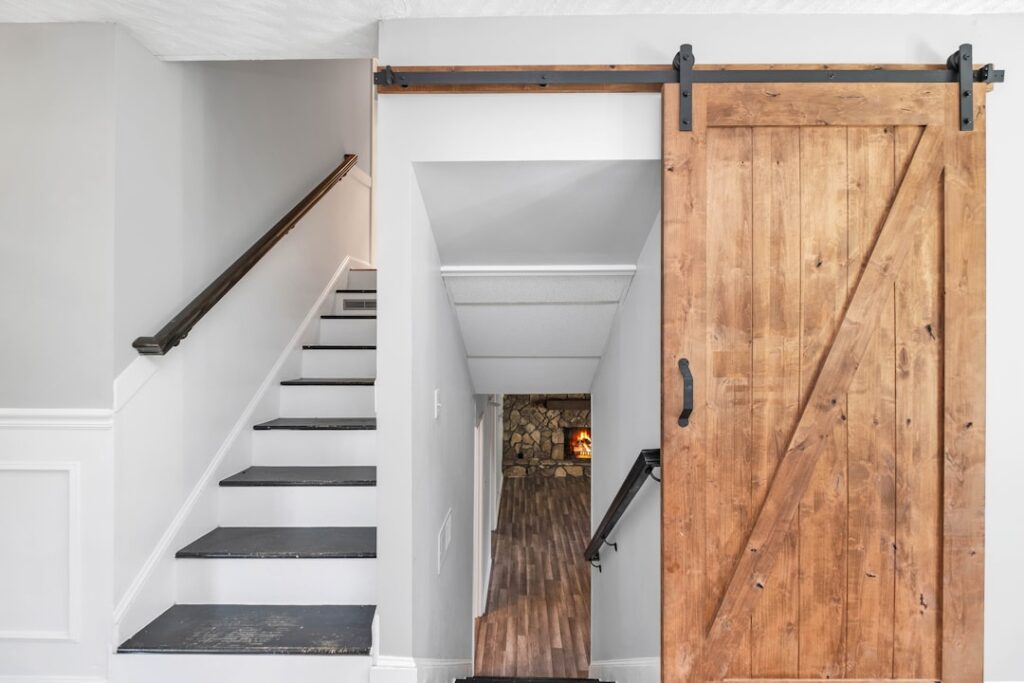
You spent good money on a sliding barn door, and then you reach for a handle that costs eight bucks and looks like it belongs on a garden shed. Choosing the right barn door handles is the detail that makes the whole install look intentional instead of thrown together. After hanging dozens of these doors in pantries, laundry rooms, and primary baths, I can tell you the handle is where most homeowners either nail the look or cheap out.
Part of our Windows & Doors guide — explore the full guide →
This guide walks you through the pull styles that actually work on a sliding door, how to size them, what mounting hardware you need, and how to install one without splitting the slab. No fluff, just what I’d tell you standing in your hallway.
Why a Sliding Door Needs a Different Handle
A swinging door has room for a lever or knob that sticks out several inches. A barn door slides flat against the wall, so anything protruding more than about 2 to 2.5 inches will either scrape the trim or catch your knuckles as the door rolls past. That’s the single biggest reason a standard door knob is the wrong call here.
You want a pull that sits close to the face of the door, has a hand-friendly grip, and often includes a flush recessed pull on the back edge so you can grab the door when it’s tucked against the wall. On a door that separates two rooms, plan for a pull on both faces plus a flush pull for closing it from either side.
The Main Handle Styles
There are really only a handful of shapes worth considering, and each suits a different door and budget.
Ladder and bar pulls
A straight horizontal or vertical bar mounted on two standoffs. This is the workhorse. A 12-inch stainless or matte-black bar runs $20 to $60 and looks clean on almost any slab. Vertical mounting reads more modern; horizontal reads more traditional farmhouse.
Handle-and-flush combos
These come as a set: a surface pull for the room side and a rectangular flush pull that mortises into the door edge. Expect $35 to $90 for a decent set from brands like National Hardware or SimpleTuff. If your door closes flush against a wall or into a pocket, you need the flush piece.
Rustic gate and spoon pulls
The heavy cast-iron gate pull is the classic farmhouse look. They’re chunky, usually 8 to 16 inches, and weigh a couple pounds. Great on a solid wood door, overkill on a hollow-core slab. Rust Belt and Rustica make nice ones in the $40 to $120 range.
Flush and recessed pulls
A pull that sits fully inside a routed pocket so nothing protrudes. Use these where the door passes very close to a wall or another door. They’re the most forgiving on clearance but require you to rout a mortise.
Getting the Size and Placement Right
Standard mounting height puts the center of the handle 36 to 40 inches off the finished floor, the same zone as a normal door knob. If the door is shared by adults and kids, 34 to 36 inches is a fair compromise.
- Pull length: 8 to 12 inches suits most interior doors. Go 18 to 24 inches on a tall or double-wide door for proportion.
- Projection: keep it under 2.5 inches so the door still clears the wall and any base trim.
- Edge clearance: mount the handle at least 3 to 4 inches in from the leading edge so your hand doesn’t hit the door stop or jamb.
Hold the handle up with painter’s tape before you drill. Slide the door back and forth and check that your knuckles clear both the wall and the trim through the full travel.
Match the Hardware, Not Just the Handle
Your handle should relate to the track hardware, the door hinges elsewhere in the room, and nearby fixtures. Matte black is the default for good reason: it hides fingerprints and pairs with almost everything. Oil-rubbed bronze warms up a wood-toned door. Brushed nickel and stainless lean modern and industrial.
One tip that saves regret: buy the handle and the track from finishes that read the same under your actual lighting. A “black” track and a “flat black” handle from two brands can look mismatched in daylight. When you can, buy them as a kit or from the same manufacturer.
What You Need to Install One
Most surface pulls mount with two through-bolts that pass entirely through the door and thread into the handle from the back. That means you need access to both faces, or a barrel-nut system if only one face is exposed.
- Cordless drill and a bit matched to the bolt (commonly 1/4 inch)
- Tape measure, pencil, and a level
- Painter’s tape for marking without gouging finish
- The included through-bolts or, for a hollow door, a set of appropriate anchors
- A chisel and router or a sharp utility knife if you’re mortising a flush pull
For a solid wood or MDF barn door, through-bolts are ideal because they clamp the handle tight and never work loose. On a hollow-core slab, through-bolts can crush the thin face over time, so use short bolts into a solid block or add a hardwood backer.
Step-by-Step Installation
- Mark your height on the door with tape. Confirm it clears the track roller above and the base trim below.
- Set the handle on the tape and mark both bolt holes. Check level.
- Drill pilot holes straight through, backing the exit side with a scrap block so the wood doesn’t blow out.
- Feed the through-bolts from the back, seat the handle on the front, and hand-tighten.
- Snug the bolts with a screwdriver or hex key. Firm, not gorilla-tight, or you’ll dimple the wood.
- For a flush pull, trace the mortise, rout or chisel to depth, dry-fit, then fasten.
Budget about 30 to 45 minutes for a simple bar pull, longer if you’re mortising a flush piece. Slide the door through its full range one last time and confirm nothing rubs.
Common Mistakes to Avoid
The one I see most: a handle that projects too far, so the door bumps the casing every time it opens. Measure your wall gap before you buy. Second is skipping the flush pull on a door that closes tight to the wall, then having no way to grab it. Third is over-tightening on a hollow-core door and cracking the veneer six months later.
Also think about how the door actually gets used. A pantry door you tug a hundred times a day deserves a comfortable grip, not a thin ring pull that pinches. Spend the extra $20 on something your hand likes.
Materials and How They Hold Up
Handle material affects both looks and longevity. Cast iron is the traditional farmhouse choice, heavy and durable, but raw iron can surface-rust if it’s not sealed, so keep it away from damp rooms unless it’s coated. Stainless steel shrugs off moisture and fingerprints, which makes it the smart pick for a pantry, mudroom, or bath. Powder-coated steel gives you that matte-black look at a lower price than solid iron and wears well indoors.
Solid brass and bronze cost more but age gracefully into a living patina that a lot of homeowners want on a rustic door. Aluminum handles are the lightest and cheapest; they’re fine on a light hollow-core slab but feel flimsy on a heavy door. Whatever the metal, run your thumb over the grip before you commit. A sharp machined edge that looks fine in a photo can be genuinely unpleasant to grab a dozen times a day.
Handles for Double Barn Doors
A pair of barn doors that meet in the middle needs a slightly different approach. Because the two leading edges close against each other, a bulky surface pull mounted near that edge will collide when the doors shut. On a double setup, mount the pulls farther toward the outer edges, or use flush recessed pulls on the meeting stiles so nothing sticks out.
For proportion, match the handle length to the taller, wider look of a double door. Two 18-inch vertical bars, one on each door, read balanced where two stubby 8-inch pulls would look lost. And decide up front which door you’ll open most; that one gets the everyday pull at a comfortable height, while the other can carry a matching handle purely for symmetry.
What to Budget
You can spend as little as $15 on a basic bar pull or north of $150 on a hand-forged iron piece. For most homeowners, $40 to $80 buys a solid handle plus a matching flush pull that will outlast the door. Given that the handle is the part you touch every single day, it’s the last place I’d cut corners. Pick something that fits your clearance, matches your track, and feels good in the hand, and the whole door will look like a pro hung it.