
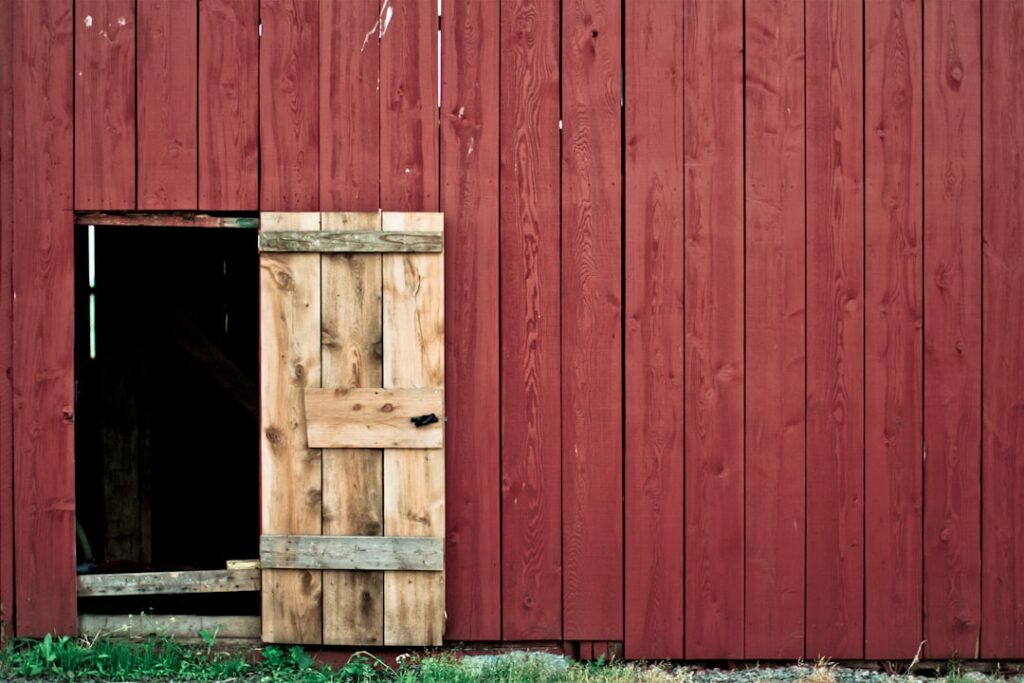
Barn door hinges trip up a lot of shoppers because the phrase covers two very different things. Sometimes it means the decorative strap hinges that give a swinging door that rustic, farmhouse look. Other times it means the hardware that actually carries a heavy barn or shed door — the strap-and-pintle hinges, or the roller and sliding gear people confuse with hinges. This guide sorts out both so you order the right part the first time.
Part of our Windows & Doors guide — explore the full guide →
Get the hinge type and the weight rating wrong and the door sags, drags, or tears its screws out of the jamb inside a season. Get it right and a 150-pound door swings like it’s on air. Here’s everything that matters.
The Main Types of Barn Door Hinges
Break the category into four families:
- Strap hinges — a long tapered “strap” that spans across the face of the door with a shorter leaf on the jamb. The classic decorative barn look, and structurally strong because the load spreads across a wide leaf. Straps range from 6″ to 24″-plus.
- Strap-and-pintle (gate) hinges — a heavy strap that drops onto a pintle pin lagged into the post. This is real agricultural hardware, built to hang full-size barn and gate doors weighing hundreds of pounds. The door lifts off the pin for removal.
- T-hinges — a shorter cousin of the strap hinge, with a T-shaped profile. Good for lighter shed doors and gates in the 3′-4′ range.
- Pivot and roller hardware — for sliding barn doors, the door hangs from rollers on a track rather than pivoting on hinges. People search “barn door hinges” for these, but technically they’re rollers and a track, not hinges.
Decide first whether the door swings or slides. Swinging doors need strap, T, or gate hinges. Sliding doors need a roller kit and track.
Sizing Barn Door Hinges to the Door
The rule of thumb for strap hinges: the strap should span at least one-third to one-half the door’s width. A 36″ door wants a strap around 12″-18″. Too short and the hinge can’t resist the door’s leverage, and the far edge sags.
- Light interior door (up to ~50 lbs): 8″-12″ strap or T-hinges, three per door.
- Heavy interior or exterior door (50-150 lbs): 14″-18″ strap hinges, three minimum.
- Full barn or gate door (150-400+ lbs): strap-and-pintle gate hinges rated for the weight, often 18″-24″.
Always use three hinges on anything over about 40 pounds — top, bottom, and middle. Two hinges on a heavy door concentrates the load and pulls the top hinge screws over time.
Weight Ratings and Screw Selection
A hinge is only as strong as its fasteners. Decorative strap hinges often ship with short wood screws that look right but strip out under real load. Upgrade to longer #10 or #12 wood screws — 2″ to 3″ — that reach past the trim into the framing or a solid stile.
Check the manufacturer’s weight rating and don’t cut it close. If a door weighs 120 pounds, don’t spec hardware rated for exactly 120; go to the 150-200 pound class so the hinge isn’t working at its limit every swing. On exterior gate doors, use through-bolts (carriage bolts with washers and nuts) rather than screws wherever the frame allows — bolts won’t back out under vibration.
Finishes and Materials
Barn door hinges live or die on finish, especially outdoors. The common options:
- Powder-coated steel (matte black) — the default farmhouse look, affordable, holds up well indoors and under a covered porch.
- Galvanized or zinc-plated steel — for exterior gates and barns where rust is the enemy.
- Stainless steel — coastal and high-moisture environments; won’t rust, costs more.
- Oil-rubbed bronze and antique finishes — for interior decorative doors that need to match cabinet or lighting hardware.
- Cast iron / wrought-iron style — heavy, authentic look; often just powder-coated steel styled to imitate forged iron.
Matte black is the runaway favorite for interior farmhouse doors because it reads intentional against light-painted or natural-wood doors. For anything outdoors, prioritize corrosion resistance over looks — a rust-streaked hinge ruins the whole door face.
What Barn Door Hinges Cost
Prices depend on size, material, and whether you’re buying decorative or structural hardware:
- Decorative interior strap hinges: $15-$40 per pair for 8″-12″ powder-coated steel; a three-hinge set runs $25-$60.
- Heavy-duty exterior strap hinges: $30-$80 per pair for 14″-18″.
- Strap-and-pintle gate hinges: $40-$120 per pair, more for stainless or extra-long straps.
- Sliding barn door roller kits (track + rollers): $60-$250 for a complete kit that carries a single 36″-42″ door.
Don’t skimp on the structural piece. The difference between a $20 hinge and a $60 hinge is usually steel thickness and screw quality — exactly the things that determine whether the door sags in year two.
Installing Barn Door Hinges
Hanging a swinging barn door on strap hinges is straightforward with a helper and a level:
- Lay the door flat and mark the hinge positions — top and bottom hinges about 6″-10″ from the ends, third centered.
- Pre-drill every screw hole. Hardwood and even softwood stiles split without pilot holes, and pre-drilling keeps the screws from wandering.
- Attach the straps to the door face first, keeping them parallel and square to the edge.
- Stand the door in the opening on shims (a pry bar and a block make a good foot lever), set the gap at the top, and check plumb.
- Mark and pre-drill the jamb leaves, then drive the jamb screws. Test the swing and adjust shims before the final tighten.
For strap-and-pintle gate hardware, lag the pintles into the post first, get them dead vertical and aligned with each other, then lift the door’s straps onto the pins. If the two pintles aren’t in the same vertical line, the door binds — a straightedge or plumb line across both pins is worth the extra five minutes.
Sliding vs. Swinging: Choosing Your Setup
If floor space is tight or you want the modern sliding-barn-door look, a roller kit and track beat swinging hinges — the door glides flat against the wall and needs no clearance to open. Confirm the wall beside the opening is at least as wide as the door, and that the track’s mounting board hits solid framing. For a true swinging door — a garden gate, a shed, an old-house pantry — strap or gate hinges are the honest answer, and they cost far less than a full slider kit.
Matching Hinges to the Door Material
The door itself changes how the hinge behaves. A solid-wood plank door is heavy and holds screws well, so strap hinges bite firmly into the stiles. A hollow-core or MDF interior door weighs little but grips screws poorly — there, use shorter, wider straps and consider a threaded insert or through-bolt at the jamb rather than trusting screws in soft material. Reclaimed or rough-sawn barn wood is dense and often cracked; pre-drilling is non-negotiable, and a longer strap spreads the load across sounder wood, away from existing splits.
For exterior gate doors built from cedar or pressure-treated pine, the wood moves seasonally. Leave a slightly wider gap at the latch edge than you would indoors, and choose hinges with a touch of adjustability or slotted holes so you can re-set the door after the first year of swelling and shrinking settles the frame.
Common Mistakes to Avoid
- Undersized straps that don’t span enough of the door width, guaranteeing sag.
- Two hinges on a heavy door instead of three.
- Stock short screws left in place instead of upgrading to 2″-3″ fasteners into framing.
- Skipping pilot holes and splitting the stile.
- Wrong finish for the location — bare or powder-coated steel outdoors rusts; use galvanized or stainless.
Sort out swing versus slide, match the hinge size and weight rating to the door with a comfortable margin, upgrade the screws, and pick a finish built for the environment. Do that and your barn door hinges will carry the door quietly and squarely for decades — no sag, no drag, no re-drilling stripped-out holes next spring.


