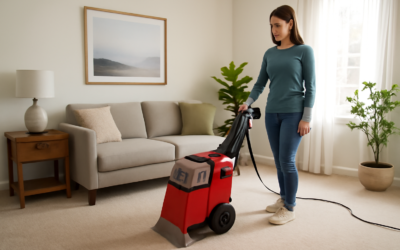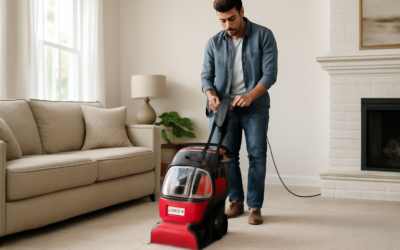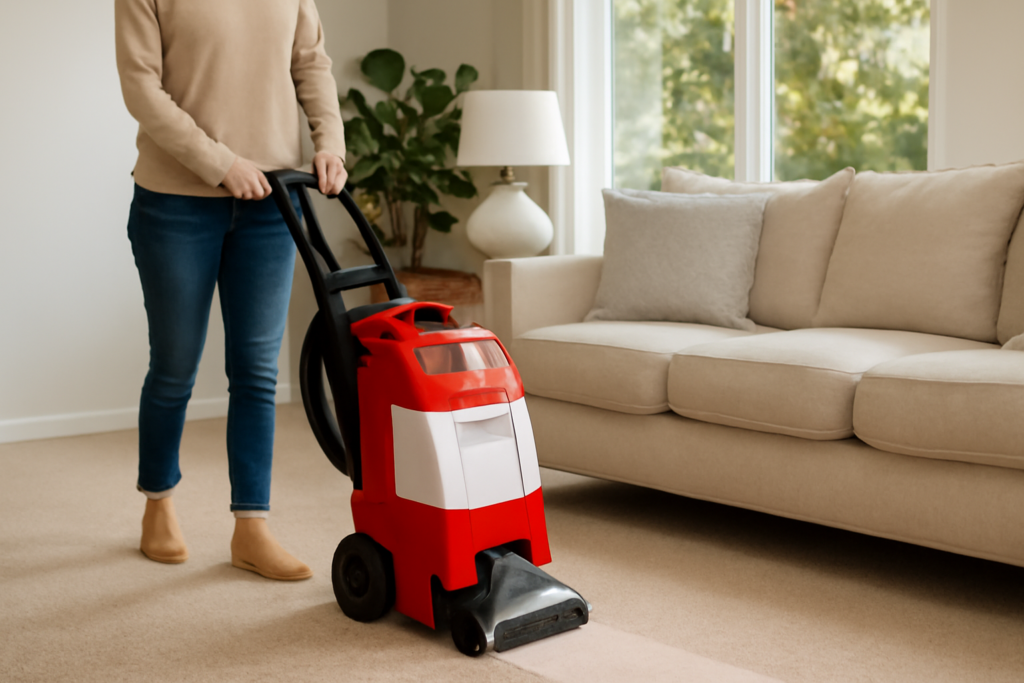
Renting a carpet cleaner is one of the most cost-effective ways to deep-clean your floors, and knowing how to use a Rug Doctor properly is the difference between sparkling, fast-drying carpet and a soggy, streaky mess. The Rug Doctor is a hot-water extraction machine: it sprays a cleaning solution into the carpet, scrubs it, and vacuums the dirty water back out. Used correctly, it pulls out grime that regular vacuuming never touches.
You can rent a Rug Doctor from many grocery and hardware stores, or buy a home model. Either way, the operating steps are the same. Here is exactly how to do it for the best results.
Before You Start: Prep the Room
Good prep determines how well the machine performs. Start by clearing the room of furniture, or at least moving it out of the area you plan to clean. Then vacuum the entire carpet thoroughly to remove loose dirt, hair, and debris. Skipping this step lets the machine push dry dirt around and clog with hair.
Treat any visible stains in advance with a pretreatment spray, letting it dwell for a few minutes so the solution can break the stain down before extraction. Open a window or set up a fan, since good airflow speeds drying later.
Filling the Machine Correctly
The Rug Doctor has two tanks: one for clean water and solution, and one that collects the dirty water it extracts. Filling it right is essential:
- Fill the clean-water tank with hot tap water to the indicated line; hot water cleans better than cold.
- Add the recommended amount of Rug Doctor cleaning solution per the bottle’s directions. Do not overdose; too much soap leaves residue that attracts dirt.
- Make sure the recovery tank for dirty water is empty and seated properly.
- Secure all caps and lids before plugging in.
Use the cleaning solution designed for the machine. Household detergents can foam excessively and damage the unit or void a rental agreement.
The Cleaning Technique
Rug Doctor machines clean on the pull stroke, which is the key technique to learn. Plan to work in sections, starting at the corner farthest from the door so you can exit without walking on freshly cleaned carpet. Then follow this rhythm:
- Push the machine forward slowly while pressing the trigger to release solution into the carpet.
- Release the trigger and pull the machine back slowly; this is where it extracts the dirty water.
- For a dry-only pass, pull the machine back again without pressing the trigger to suck out extra moisture.
- Overlap each pass slightly so you do not miss strips.
Move slowly and deliberately. Rushing leaves solution and dirt behind, while a steady, patient pace lets the machine do its job and extract more water, which means faster drying.
Managing the Tanks During Cleaning
As you work, the clean-water tank empties and the recovery tank fills. Stop and check both periodically. When the clean tank runs low, refill it with hot water and solution. When the recovery tank is full, empty it down a toilet or sink, rinse it, and reseat it.
Do not let the recovery tank overflow, and do not run the machine dry of solution while spraying. Many machines slow or stop spraying when the clean tank empties, which is your cue to refill.
Drying the Carpet
The final extraction passes matter as much as the cleaning. Go over the cleaned carpet several extra times pulling back without spraying, to pull out as much moisture as possible. The less water left behind, the faster the carpet dries and the lower the risk of musty odors or mildew.
After cleaning, keep the room well ventilated with open windows or fans, and keep foot traffic off the carpet until it is dry, usually several hours and sometimes longer in humid conditions. Avoid replacing furniture until the carpet is fully dry, and place foil or plastic under furniture legs if you must move them back early, to prevent stains and rust marks.
Troubleshooting Common Problems
If the machine sprays but the carpet stays very wet, you are likely moving too fast or skipping the dry-only return passes; slow down and add extra pull strokes without the trigger to extract more water. If little or no solution comes out, check that the clean-water tank is not empty, that the solution cap is secured, and that the spray nozzle is not clogged.
Streaky or uneven results usually trace back to inconsistent overlap or rushing. Work in deliberate, slightly overlapping rows and keep a steady pace across the whole room. If the carpet looks clean but smells off as it dries, the cause is often too much solution left behind, so do a second pass with clean water only in the tank to rinse, followed by thorough extraction.
Excessive foam in the recovery tank signals too much soap or the wrong cleaner. Stick to the recommended Rug Doctor solution at the correct dose, and never substitute regular laundry or dish detergent, which foams heavily and can leave a sticky, dirt-attracting residue or damage the machine.
Using It on Upholstery and Stairs
Many Rug Doctor rentals offer an upholstery or hand-tool attachment, which extends the machine’s usefulness beyond floors. The hand tool connects via a hose and works on the same spray-and-extract principle, letting you clean sofas, chairs, car seats, and stairs that the main unit cannot reach. Use a lighter touch and an upholstery-rated solution, and always check the furniture’s cleaning code first, since some fabrics cannot tolerate water-based cleaning.
Stairs are awkward for the full machine, so the hand tool is ideal there too. Work from the top step down, spraying and extracting one tread and riser at a time, and take care on the edges. As with carpet, the key is thorough extraction so the upholstery or stairs are left damp rather than soaked, allowing them to dry quickly and avoid mildew or watermarks.
Cleaning Up and Pro Tips
When you finish, empty and rinse both tanks, run a little clean water through the system to flush the lines, and wipe the machine down before returning a rental. A few habits improve every job: pretreat heavy traffic lanes, do not oversaturate the carpet, and never use more solution than directed.
For best results, deep-clean your carpets one or two times a year, more often in homes with pets or kids. Knowing how to use a Rug Doctor turns a rented machine into a powerful tool that refreshes your carpets for a fraction of the cost of professional cleaning, as long as you take your time and extract the water thoroughly.