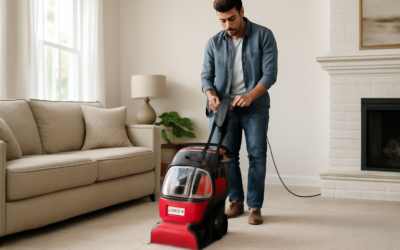
Professional carpet cleaning for a typical three-bedroom house runs $150 to $300 a visit, which is why so many homeowners decide to rent Rug Doctor machines for a fraction of that price and do the job themselves in an afternoon. Rug Doctor is the bright red, commercial-grade carpet cleaner you have probably seen parked near the front of grocery and hardware stores, available by the day for around $30 to $40. For deep cleaning carpets, area rugs, and even upholstery, a one-day rental can save real money. Here is exactly how it works, what it costs, and how to get professional-level results.
Where to Rent One
Rug Doctor machines are stocked at thousands of retail locations, so one is rarely far away.
- Grocery stores: many large supermarkets keep a Rug Doctor kiosk near the entrance.
- Home improvement stores: Lowe’s, Walmart, and similar retailers offer rentals.
- Hardware and pharmacy chains: some carry them as well.
Use the store locator on the Rug Doctor website to find the nearest machine and confirm availability before you drive over. You can often reserve one to avoid arriving to an empty kiosk.
What It Costs to Rent
Pricing is simple and predictable. A standard daily rental runs about $30 to $40 for 24 hours, with some locations offering a discounted 4-hour or 48-hour rate. On top of the machine, you will buy cleaning solution, which runs roughly $20 to $30 per bottle. A single bottle handles several rooms. Factor in a refundable deposit at some locations. All told, doing the whole house yourself typically lands around $60 to $80, well under half the cost of hiring a pro.
How a Rug Doctor Works
The machine is a hot-water extraction cleaner, the same method professionals use. It sprays a heated cleaning solution deep into the carpet, agitates the fibers with a vibrating brush, and immediately vacuums the dirty water back out. That extraction is the key. It pulls embedded grime and the loosened detergent out of the carpet rather than leaving residue behind. The result is a genuinely deep clean, not just a surface freshening.
Compared to lightweight consumer machines, the rental units have stronger suction and a wider cleaning path, which is why a rental often outperforms an inexpensive carpet cleaner you might buy.
Step-by-Step: Using It Right
Results depend on technique. Follow these steps for a clean that dries fast and looks professional.
- Vacuum first. Remove loose dirt and hair so the machine handles deep grime, not surface debris.
- Pretreat stains. Spray heavy traffic lanes and spots and let them dwell a few minutes.
- Fill correctly. Add hot tap water and the measured cleaning solution to the tank per the instructions.
- Push and pull slowly. Press the trigger on the forward push to spray, then release and pull back to extract.
- Do a dry pass. Make a final pull-back pass with no spray to extract extra moisture.
- Empty and refill. Dump the dirty recovery tank as needed and keep clean water in the supply tank.
Work in slow, overlapping rows. The single biggest mistake is moving too fast, which leaves carpets soaked and dirty.
Drying and Aftercare
A properly cleaned carpet should dry in 4 to 8 hours, though heavy passes can extend that. Speed drying by opening windows, running fans, and turning on the air conditioning to pull humidity from the air. Stay off the carpet until it is dry, and keep furniture legs on foil or blocks to prevent rust or stain transfer onto damp fibers. Avoid over-wetting in the first place, since soggy carpet invites mildew and can take more than a day to dry.
What You Can Clean
A Rug Doctor handles more than wall-to-wall carpet. With the right attachments, it tackles a range of soft surfaces:
- Carpets and area rugs: the primary use, including high-traffic lanes.
- Upholstery: sofas and chairs, using the handheld tool.
- Stairs: the hand tool reaches treads and risers.
- Car interiors: seats and floor mats with the upholstery attachment.
Rent vs. Buy: Which Makes Sense
If you deep clean carpets once or twice a year, renting is the clear winner. You pay only when you need it, get a powerful commercial machine, and avoid storing bulky equipment. If you have pets, kids, or allergies and clean monthly, buying a midrange home carpet cleaner for $150 to $300 pays for itself within a year or two. For most households, though, the math favors a rental a couple of times a year, especially since the rental units clean more aggressively than budget home models.
A handful of insider tips squeeze the most value from your rental window. Since you pay for a full day, line up every soft surface in the house before you pick up the machine, including throw rugs, the car seats, and that one stained chair, so the rental covers as much ground as possible. Buy the cleaning solution ahead of time at the same store, and grab an extra bottle if you have pets, since odor and stains take more product. Pretreating is the highest-leverage step most people skip: spend 15 minutes spraying traffic lanes and known spots and letting them dwell while you vacuum, and the machine will lift far more in a single pass. Finally, do not overfill the carpet with water in pursuit of a deeper clean. Two slow extraction passes pull out more dirt than one soaking pass and leave the carpet dry enough to walk on hours sooner.
Final Thoughts
Choosing to rent Rug Doctor equipment gives you professional-grade hot-water extraction for around $60 to $80 a session, far less than hiring a service. Find a machine at a nearby grocery or hardware store, vacuum and pretreat before you start, and work in slow overlapping passes with a dry final pull. Dry the carpet quickly with fans and airflow. For occasional deep cleaning, renting beats both hiring a pro and buying a machine that sits in the closet most of the year.