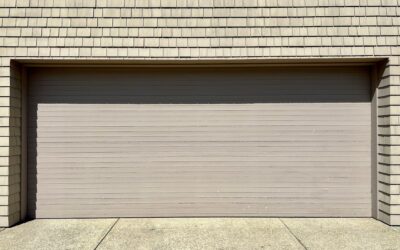
If you measure ten suburban driveways, you will see eight 16 foot doors, one 18 footer, and the occasional oddball 14 or 17. The honest answer to how wide is a double garage door is that 16 by 7 feet has been the American standard since the 1970s, but oversized 18 by 8 doors are now the default in any new build with a third stall, an SUV-heavy fleet, or a workshop conversion. Picking the right width is not just about fitting two cars; it is about turning radius, mirror clearance, and how often you will scrape paint off the jamb.
Part of our Garage Doors guide — explore the full guide →
Standard Double Garage Door Widths
US residential builders stock four common double-door widths, all available in 7 or 8 foot heights:
- 14 feet wide: tight fit for two compact cars, common in homes built before 1980
- 16 feet wide: the modern standard, accommodates two midsize sedans or a pickup plus a sedan
- 18 feet wide: oversized, fits two full-size pickups or SUVs side by side
- 20 feet wide: rare in residential, used for boat storage or workshop bays
Height usually scales with width. A 16 foot door is typically 7 feet tall; an 18 footer is 8 feet tall to keep proportions correct. Anything taller than 8 feet is a custom order and triggers higher-clearance opener requirements.
The 16×7 Standard Explained
The 16 by 7 door became standard because the average American midsize sedan from 1975 to 2000 was about six feet wide, and 16 feet allows two cars plus four feet of total clearance for door opening, mirror room, and the structural jamb between vehicles. Modern crossovers and pickups have grown; a Ford F-150 SuperCrew is 79.9 inches wide without mirrors and 96.8 inches with mirrors extended.
Two F-150s in a 16 foot opening leave roughly 10 inches of total clearance with mirrors folded. Doable, but tight enough that one wrong pull-in scrapes a tailgate. If you drive full-size trucks, plan on 18 feet or wider.
When to Size Up to 18×8
An 18 by 8 foot door costs roughly $300 to $600 more than a 16 by 7 in steel insulated construction, and it solves several problems at once. Lifted trucks, roof boxes, and rooftop kayaks need the 8 foot clearance. Boat trailers and jet skis pull through more easily. Workshop owners get a wider opening for sheet goods, ladder racks, and equipment.
The 18 foot width also eases turn-in from a narrow driveway. If your driveway makes a 90 degree turn off the street, every additional foot of opening width drops the required cut-in arc dramatically.
Rough Opening and Framing
The rough opening is always 1 to 2 inches larger than the door dimension to allow for jamb installation, shimming, and squaring. For a 16 by 7 door, the framed opening should be 16 feet 1 inch wide by 7 feet 1.5 inches tall. The header above the door must be sized to span the opening; a typical 16 foot residential door uses a doubled 2 by 12 header with appropriate jack and king studs, or a steel flitch beam in higher-snow regions.
Headroom above the opening matters as much as width. Standard sectional doors need 12 to 18 inches of clearance between the top of the opening and the ceiling for the horizontal track to mount. Low-headroom kits handle 4 to 6 inches but cost an extra $200.
Single Double Door vs Two Single Doors
Many builders offer the choice between one 16 foot double door and two 8 foot single doors with a center post. Each has trade-offs:
- One double door: better curb appeal, simpler operation, lower cost, easier to maneuver between bays inside
- Two singles: if one opener fails, the other works; better insulation R-value because of the center post; one car can leave without exposing the entire garage to weather
For most homeowners, the single 16 by 7 wins. The energy difference is negligible if both doors are insulated, and the visual unity is hard to argue with from the street.
Insulation, R-Value, and Material
A 16 by 7 garage door comes in steel, aluminum, fiberglass, and wood. Steel sandwich doors with polyurethane foam insulation hit R-17 to R-19 and dominate the market. Common brands include Clopay, Amarr, Wayne Dalton, and CHI. Expect $1,200 to $2,800 installed for a quality insulated steel double door.
Wood and full-glass doors look stunning but cost $4,000 to $12,000 and need annual finish maintenance. Aluminum and glass doors are favored for modern homes; allow $3,500 to $6,500 installed.
Opener Sizing for a Double Door
A 16 foot insulated steel sectional weighs roughly 220 to 280 pounds. A 1/2 horsepower opener handles it but works hard; a 3/4 horsepower opener runs cooler and lasts longer. For 18 foot doors or insulated wood, step up to a 1 to 1.25 horsepower direct-drive unit. LiftMaster 8500W and Chamberlain B6753T are the industry workhorses, $300 to $500 retail before install.
Cost Summary
- Standard 16×7 steel insulated, installed: $1,200 to $2,200
- Oversized 18×8 steel insulated, installed: $1,800 to $3,000
- Carriage-house style 16×7: $2,500 to $4,500
- Full glass aluminum 16×7: $4,000 to $7,500
- Wood custom 18×8: $6,000 to $14,000
Final Thoughts on How Wide is a Double Garage Door
Default to 16 by 7 if your driveway is straight and you drive sedans or compact SUVs. Move up to 18 by 8 if you own pickups, trailer toys, or the driveway requires a tight turn. Either way, frame the rough opening 1 to 2 inches oversize and leave at least 12 inches of headroom above for the opener track. Get those numbers right at the framing stage and the door install becomes the easy part.