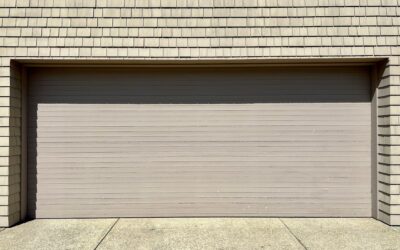
Pull into any suburban neighborhood and the garage doors look uniform, but they are not. The question of how wide is a 2 car garage door has four common answers and a dozen specialty variants, and picking the wrong one can leave your SUV’s side mirrors inches from the jamb every single morning. This guide covers the real standard sizes, the rough-framing dimensions, and the clearance math you need before you buy.
Part of our Garage Doors guide — explore the full guide →
Standard Widths You Will See
The term “two-car garage door” refers to a single door covering a two-car bay, not two separate single doors. Four widths dominate the US market:
- 16 feet by 7 feet: The most common residential size since the 1980s. Fits two sedans comfortably.
- 16 feet by 8 feet: Same width with extra height for lifted trucks, SUVs, or overhead storage.
- 18 feet by 7 feet: Common in newer builds for wider vehicles and easier mirror clearance.
- 18 feet by 8 feet: Popular in suburban homes built after 2010. Accommodates full-size trucks.
Custom widths from 14 feet to 20 feet exist, but anything outside the 16-to-18-foot range falls into special-order pricing and longer lead times. Expect a 6 to 8 week wait for non-standard widths.
How Height Affects Usable Space
Width gets all the attention, but door height matters just as much. A 7-foot door works for sedans and small SUVs. An 8-foot door accommodates Ford F-150s with roof racks, kayaks, and rooftop cargo carriers. If you own a lifted truck, a full-size van, or plan to install a 4-post car lift, bump to a 9-foot or 10-foot door and build the garage ceiling to 11 feet minimum.
The ceiling clearance above the door also matters. Standard torsion spring setups need 15 inches of headroom above the door’s top edge. Low-clearance kits exist for 6-inch headroom but add $200 to the opener package and reduce the smoothness of travel.
Rough Opening vs. Door Size
When builders talk about a 16-foot door, they mean the door itself measures 16 feet wide. The rough framing opening is cut the same 16 feet wide and 7 feet tall, with no oversize allowance. This is opposite of how windows and entry doors work, so first-time builders often get confused.
Leave 3.5 inches of wall framing on each side of the rough opening for the vertical track, plus another 10 inches above for the horizontal track, torsion tube, and spring. Total rough-opening-to-wall dimension for a 16-foot by 7-foot door needs a 23-foot-wide garage minimum to leave room for electrical, shelving, and workbench space.
Why Width Choice Matters for Parking
A 16-foot door sounds spacious, but two full-size SUVs parked inside leave only 3 to 4 feet between vehicles and 18 inches per side to the wall. Opening driver and passenger doors simultaneously means dings and dents. Bumping up to 18 feet adds roughly 12 inches per side and a full 18 inches between vehicles, which dramatically improves daily usability.
If you regularly park full-size trucks or need room for a small workshop along one wall, a 20-foot custom door with a 24-foot garage depth is the sweet spot. The upgrade from 16 to 20 feet adds about $600 to the door cost and $2,000 to framing, but the difference in daily use is substantial.
Insulation, R-Value, and Climate
Garage doors range from uninsulated single-layer steel at R-0 to triple-layer polyurethane insulated at R-18. For attached garages in northern climates, do not buy anything below R-12. The heat loss through a 128-square-foot uninsulated door exceeds the entire rest of the garage wall combined, and the adjacent rooms will feel cold all winter.
Clopay, Amarr, and Wayne Dalton all sell R-18 insulated sectional doors in the $1,600-$2,400 range for a 16×7 size. Detached garages or southern climates can use R-6 or lower and save about $400 on the door.
Springs, Openers, and Hardware by Size
Larger doors need proportionally more spring lift and stronger openers. A 16×7 steel door weighs 150-180 pounds and pairs with a 1/2 horsepower opener. An 18×8 insulated door can weigh 250 pounds and needs a 3/4 horsepower unit or a belt-drive DC motor rated for that load.
Torsion springs are sized by the door’s total weight and height of lift. Never reuse old springs on a new door. The steel fatigues over time, and a snapped spring under tension can cause serious injury. Expect a new torsion spring set to run $80-$150 as part of a professional install.
Measuring Your Existing Opening
Before ordering a replacement door, measure the rough opening, not the old door. Width is measured between the finished jambs at the widest point. Height runs from the finished floor to the underside of the header. Check the backroom depth from the door header into the garage, the sideroom distance from each jamb to the nearest wall, and the headroom above the opening.
Write all five numbers down before visiting the dealer. Mismatched measurements send orders back and add two or three weeks to an installation that should take half a day.
Budget and Installation Timeline
A basic steel 16×7 two-car door with installation runs $1,200-$1,800. Insulated steel goes $1,800-$2,600. Carriage-style or wood overlay doors run $3,000-$6,500 installed. Plan for one full day of installation with two pros, plus another half day if you are also upgrading the opener and wiring in a smart controller like myQ or LiftMaster.