The Husqvarna 55 chainsaw is one of those tools that quietly outlasted its replacements. Built in Sweden from the mid-1990s through about 2007, the 55 (and its 55 Rancher variant) became the go-to homeowner-grade saw for anyone serious about firewood, storm cleanup, or property maintenance. They’re long out of production, but tens of thousands still run daily on farms and woodlots across North America. Anyone considering buying a used one — or rehabbing a saw that’s been sitting for years — needs to understand the specs, common failure points, and what a working unit actually costs in 2026.
Specifications and Capabilities
The Husqvarna 55 is a 53cc displacement two-stroke chainsaw with a max engine output of roughly 3.4 horsepower. The dry weight (saw only, no bar or chain) is approximately 11.7 lbs. Most units shipped with either an 18-inch or 20-inch bar, though the saw is rated to run bars up to 24 inches in softwood. For most homeowner work, an 18-inch bar offers the best balance of capability and maneuverability.
Engine RPM at full throttle hits around 13,000 RPM with chain speed around 70 feet per second. That puts it firmly in the prosumer category — significantly more capable than the 35cc-40cc homeowner saws (Husqvarna 135, Stihl MS 170) and comparable to the modern Husqvarna 455 Rancher or 460 Rancher.
Best Uses and Bar Sizing
This saw shines in three applications:
- Firewood processing — cutting up rounds 14-22 inches in diameter all day without bogging
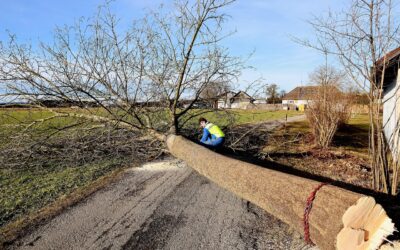
- Storm cleanup — clearing downed limbs and small-to-medium trees
- Light land clearing — taking down trees up to 30 inches in diameter (with care and proper technique)
For larger felling work or commercial use, step up to a 70cc-class saw (Husqvarna 372XP, 562XP). For occasional yard cleanup of small branches, the 55 is overkill and harder to start than a smaller, lighter saw.
Fuel Mix and Oil Requirements
This is the single most important detail for keeping a Husqvarna 55 chainsaw alive. The engine is a two-stroke, which means it requires premixed gasoline with two-cycle oil. The correct ratio is 50:1 — 2.6 oz of two-cycle oil per gallon of gasoline.
Use a quality oil designed for air-cooled engines. Husqvarna XP+ oil ($8-$12 per quart) is the obvious choice; Stihl Ultra HP, Echo Power Blend, and Amsoil Saber are also excellent. Skip the cheap big-box brands and never run a saw on straight gas — even one tank of unmixed gasoline can score the cylinder and end the engine.
For bar oil, any high-tack bar and chain oil works. Cheap motor oil is a poor substitute because it doesn’t have the tackifiers that keep oil on the chain at high speed.
Common Problems on Used Saws
A 15-25 year old saw will have issues. Before buying or restoring a used Husqvarna 55, check for these:
- Fuel line deterioration — Husqvarna used a fuel line that goes brittle after 10-15 years. Replacement is a $10 part and 30 minutes of work
- Carburetor diaphragm degradation — old fuel destroys carburetor diaphragms. A carburetor kit runs $15-$30 and rebuilds the carb to like-new
- Air filter saturation — old foam filters disintegrate. Replace immediately
- Worn clutch drum and bearings — listen for rattling at idle. Drum + bearings: about $40-$60
- Cracked starter housing — common on saws stored in extreme cold. Used replacements: $25-$50 on eBay
A saw with low compression (below 130 PSI on the cylinder) probably has scored cylinder walls and isn’t worth rebuilding for a homeowner — that’s a $400-$600 repair on a saw worth $250-$400 running.
Maintenance Schedule
Routine maintenance keeps this saw running for decades. After every tank of fuel:
- Check chain tension — should pull away from the bar slightly but snap back
- Top off bar oil reservoir
- Clear sawdust from the air intake and around the clutch
Every 5-10 tanks, sharpen the chain with a round file (5/32-inch for standard .325 pitch chain) or take it to a saw shop for a $5-$10 sharpening. A dull chain causes more engine wear and operator fatigue than any other factor.
Every 20-30 tanks: clean the air filter (wash foam filters in soapy water, let fully dry), inspect the spark plug (NGK BPMR7A, about $4), and check the bar for grooves or wear on one side.
Used-Market Pricing in 2026
A working Husqvarna 55 in good condition runs $250-$425 in private sales on Facebook Marketplace and Craigslist. A saw needing minor rebuild work (carb kit, fuel lines) runs $150-$250. A “for parts” saw with engine issues sells for $50-$120.
The 55 Rancher (a slightly stripped-down variant aimed at homeowner buyers) sells for about 10-15% less than the standard 55 in equivalent condition. Both saws share most parts, so either is a good choice.
For comparison, a new Husqvarna 455 Rancher (the modern equivalent) costs about $480 new. A rebuilt 55 with a fresh top end and clean carb often runs better than a new 455 Rancher because the older saw has more aggressive porting and a stronger lower end.
Modern Alternatives Worth Considering
If hunting a working used 55 sounds like more work than you want, three modern saws fill the same niche:
- Husqvarna 455 Rancher — direct successor, 56cc, slightly heavier but easier starting
- Stihl MS 271 Farm Boss — 50cc, smoother running, excellent build quality
- Echo CS-590 Timber Wolf — 59.8cc, best value in the class at $400-$450
Each runs $400-$550 new and offers modern emissions equipment, easier maintenance access, and warranty support. For a homeowner who doesn’t enjoy small-engine repair, a new saw is the practical choice.
Why the 55 Still Has a Following
Old-saw enthusiasts pay a premium for the Husqvarna 55 because it predates the emissions-restricted carburetors that hurt power on newer saws. The 55 starts easier in cold weather, accelerates faster, and has a reputation for the kind of mechanical simplicity that lets a homeowner fix almost anything in the field. For someone willing to invest the time in maintenance, it’s a saw that will still be cutting in 2050.