Professional dishwasher installation costs $150-$300 for what amounts to three connections: water supply, drain, and electrical. Installing a dishwasher yourself takes 1-2 hours with basic tools and saves that entire labor cost. The job is straightforward when replacing an existing unit and moderately more involved for a first-time installation where supply lines need to be run. Either way, the connections are standard and well within a handy homeowner’s skill set.
Tools and Materials Needed
Gather everything before starting — crawling out from under the counter mid-install to buy a missing fitting wastes time:
- Adjustable wrench and channel-lock pliers
- Screwdriver (Phillips and flathead)
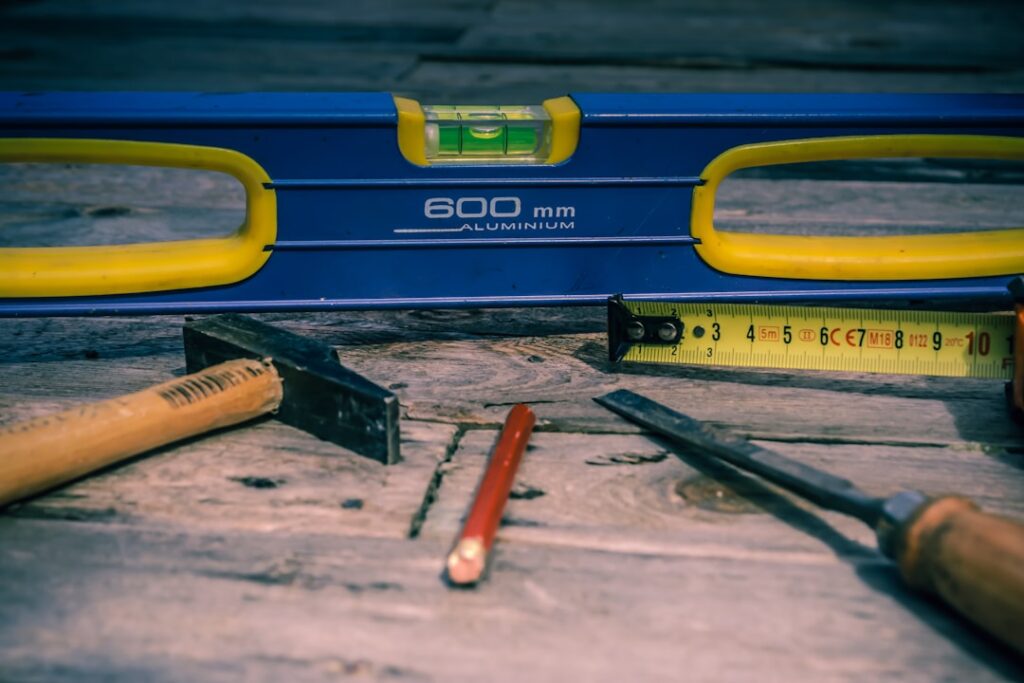
- Level (torpedo size fits easily under the counter)
- Dishwasher supply line: 6-foot braided stainless steel with 3/8-inch compression fittings ($8-$12)
- Drain hose: Usually included with new dishwashers. Buy a universal 6-foot hose ($10) if the included one is too short
- Wire nuts and electrical tape (for hardwired connections)
- Teflon tape
- Towels (water will drip during disconnection)
Removing the Old Dishwasher
- Turn off power at the circuit breaker. Verify with a non-contact voltage tester
- Turn off water supply under the sink at the hot water shutoff valve
- Remove the lower access panel (usually two screws at the bottom front)
- Disconnect the water supply line from the inlet valve using an adjustable wrench. Have a towel ready for residual water
- Disconnect the drain hose from the garbage disposal or sink tailpiece
- Disconnect the electrical: remove the wire nut connections (black to black, white to white, green/bare to ground) or unplug from the outlet
- Remove the two mounting screws from the underside of the countertop
- Lower the front leveling legs by turning them clockwise to drop the dishwasher height
- Carefully slide the old unit straight out. Protect the floor with cardboard
Water Supply Connection
The hot water supply connects to the dishwasher’s inlet valve, located at the bottom left or center behind the access panel. Run the braided supply line from the hot water shutoff valve under the sink, through the cabinet wall hole (drill a 1-inch hole if one does not exist), to the dishwasher inlet. Hand-tighten the 3/8-inch compression fitting onto the valve, then snug with a wrench — one-quarter turn past hand-tight.
Use the existing dual-outlet shutoff valve under the sink that serves both the faucet and dishwasher. If your current valve has only one outlet, replace it with a dual-outlet valve ($8-$15) — this is a 10-minute swap that does not require soldering if your existing valve uses compression fittings. Wrap all threaded connections with 3-4 wraps of Teflon tape clockwise before tightening.
Drain Connection
The dishwasher drain hose connects to either the garbage disposal (through the knockout plug on the side) or a dishwasher tailpiece on the sink drain. If connecting to a disposal, first remove the knockout plug by inserting a screwdriver into the disposal inlet and tapping with a hammer. Forgetting this step is one of the most common installation mistakes — the dishwasher fills but never drains.
Create a high loop in the drain hose by securing it to the underside of the countertop with a hose clamp or zip tie at the highest possible point. This high loop prevents sink water from backflowing into the dishwasher. Some local codes require an air gap device ($10-$15) mounted on the sink or countertop instead of a high loop — check your local plumbing code before installing.
Electrical Connection
Dishwashers require a dedicated 15 or 20-amp circuit — they should not share a circuit with the garbage disposal or other appliances. Older installations are hardwired: connect the house wiring to the dishwasher junction box (black to black, white to white, green or bare copper to the grounding screw). Newer installations often use a standard electrical outlet under the sink or behind the dishwasher with a cord-and-plug connection.
If converting from hardwired to plug-in, install a GFCI-protected outlet under the adjacent sink cabinet. NEC 2020 code requires GFCI protection for all dishwasher circuits. The outlet should be accessible without moving the dishwasher — mounting it inside the sink cabinet satisfies this requirement. Running a new dedicated circuit from the panel costs $200-$400 if a licensed electrician does the work.
Leveling and Final Adjustments
Once all three connections are made, slide the dishwasher into the opening. Adjust the front leveling legs until the dishwasher is level side-to-side and front-to-back. The unit should sit snug against the underside of the countertop — secure it with the two mounting screws through the brackets into the countertop underside.
Turn on the water supply and check for leaks at the inlet valve connection. Turn on the breaker and run a test cycle on the shortest setting. Check under the dishwasher for leaks at the supply line, around the drain hose clamp, and at the electrical junction box. A single drop during the first fill cycle is normal from air in the line. Persistent dripping means a connection needs tightening.
First-Time Installation Considerations
Installing a dishwasher where none existed before requires cutting a 24-inch-wide opening in the base cabinets, running a hot water supply line, routing a drain line to the sink, and providing a dedicated electrical circuit. Cabinet modification alone may cost $200-$400 if hiring a carpenter. The total cost for a first-time installation with all new connections typically runs $500-$800 in professional labor plus the cost of the dishwasher itself ($350-$900 for mid-range models).