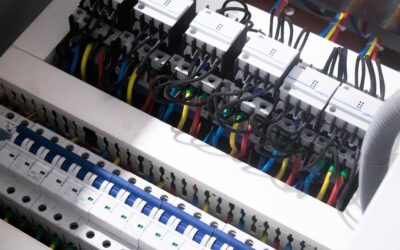
Most overheated splices, melted wire nuts, and burned-out devices trace back to one of three mistakes: too many conductors crammed in a box, undersized wire nuts, or a broken ground path. Proper junction box wiring follows NEC 314 to the letter — cubic-inch fill calculations, listed splice devices, and continuous bonding from box to box. Whether you are extending a circuit for a new outlet, splicing a damaged cable, or burying a junction in an attic, the rules below keep the install legal, safe, and inspector-approved.
Cubic-Inch Fill: The First Calculation
Every junction box has a stamped cubic-inch volume. NEC 314.16 requires you to count conductors, devices, clamps, and grounds against that volume. Each conductor of a given gauge has an assigned volume:
- 14 AWG: 2.0 cubic inches each
- 12 AWG: 2.25 cubic inches each
- 10 AWG: 2.5 cubic inches each
- 8 AWG: 3.0 cubic inches each
Count one conductor for each hot, neutral, and traveler that enters and leaves. Count one extra conductor (largest gauge) for all grounds combined. Add one extra conductor for all internal cable clamps and one or two extra for each yoke (device). A standard 18 cubic-inch single-gang box fills up fast — six 14 AWG conductors plus a ground plus a clamp plus a switch yoke equals 18 cu in exactly.
Picking the Right Box
For most splice-only junctions in residential work, a 4-inch square box (sometimes called a 1900 box) is the workhorse. The standard 4x4x1.5 metal box gives 21 cubic inches; the 4x4x2.125 deep version gives 30.3 cubic inches and handles up to ten 12 AWG conductors with grounds and clamps.
Plastic single and double-gang boxes (Carlon, Allied Moulded) print cubic-inch volumes on the side. Pick the deepest version available — the extra capacity lets you add a circuit later without replacing the box. Never use a 4-inch round pancake box for splices; they are intended for surface fixtures only.
Splice Methods That Pass Inspection
Three splice methods are NEC-listed for residential boxes:
- Twist-on wire connectors (Ideal, 3M, Wago) — sized to the conductor count and gauge
- Push-in or lever-nut connectors (Wago 221, Ideal In-Sure) — fast, reliable, and excellent for stranded-to-solid joins
- Crimp sleeves with insulating cover — common in older work and large grounds
Soldering, taping bare twists, and screw-and-tape splices are not code-compliant for branch circuits. Every splice must be made inside an accessible box with a cover. Buried splices in walls and ceilings without a box are a code violation and a fire risk.
Wire Nut Sizing
The wire nut box has a chart that nobody reads. Match the connector to the conductor count and gauge:
- Gray (Ideal Wire-Nut 73B) — two 22 AWG to two 16 AWG
- Blue (Ideal 72B) — two 22 AWG to two 14 AWG, max three 16 AWG
- Orange (Ideal 71B) — two 18 AWG to three 14 AWG
- Yellow (Ideal 74B) — three 14 AWG to four 12 AWG, mixed gauge friendly
- Red (Ideal 76B) — three 14 AWG to four 10 AWG, the workhorse for branch splices
- Gray “twister” — large 4 to 8 AWG service splices
Strip 5/8 to 3/4 inch of insulation, hold the conductors flush, and twist the connector clockwise until the wires twist together visibly inside. Tug each conductor afterward — none should pull out.
Ground Continuity
The equipment grounding conductor must remain continuous through every box. Best practice in metal boxes: pigtail all grounds with a green wire nut, run one pigtail to the box’s grounding screw (10-32 thread), and run another pigtail to each device’s ground screw. Plastic boxes skip the box bond — but every device still needs its own ground tail.
Grounds in a metal box that simply touch each other under a wire nut, with no separate bond to the box, fail inspection. The box itself must be bonded for the system to clear a ground fault.
Box Support and Cable Securement
NEC 314.23 covers box support. Boxes must be securely fastened to a structural member or supported by approved means. Old-work boxes use spring tabs and bracket clips; new-work boxes nail or screw to a stud. Cables must be secured within 12 inches of the box (or 8 inches for single-gang plastic boxes without internal clamps).
Inside the box, cables need clamps unless the box is single-gang plastic with cable strain-relief built in. Strip 6 to 8 inches of NM sheathing inside the box and leave at least 6 inches of free conductor for splicing.
Junction Boxes in Concealed Spaces
NEC 314.29 requires every junction box to remain accessible — no burying behind drywall, in finished walls, or under flooring. Attics, crawlspaces, and unfinished basements all qualify as accessible. If you must bury a splice, the only legal path is an in-line connector listed for concealed use, like the Tyco/Raychem heat-shrink or NSi WireGard kits.
For attic boxes, mount them on a stud or joist with the cover facing the access opening. Cover plates must be present even on splice-only boxes.
Frequently Asked Questions
How many wires can fit in a junction box?
It depends on box volume. A 4x4x1.5 metal box (21 cu in) holds nine 14 AWG conductors with deductions for ground and clamps.
Can I bury a junction box in a wall?
No. NEC 314.29 requires accessibility. Use an extension ring and cover plate flush with the wall surface.
Do I need a wire nut for every splice?
Yes, or another listed connector like a Wago lever nut. Bare twists or tape-only splices are not code-compliant.
What size wire nut for three 12 AWG wires?
Yellow Ideal 74B handles three 12 AWG; red 76B handles four 12 AWG with margin for a ground pigtail.
Does junction box wiring require a permit?
Most jurisdictions require a permit for new circuits or extensions. Splice-only repairs in accessible boxes often do not, but check locally.