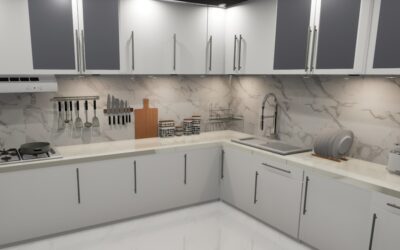
A beautifully renovated kitchen with $9,000 of Cambria quartz can still look mediocre if the counters are cluttered with mail, a wilting plant, and three half-empty coffee bags. The difference between a kitchen that photographs like a showroom and one that looks like a back office is rarely the materials — it is the styling. Thoughtful kitchen counter styling uses the rule of three, layered heights, and intentional negative space to make the same stone or quartz read as designer-finished rather than utilitarian. The good news is that this layer of polish costs almost nothing once you understand the framework.
Part of our Kitchen Remodeling guide — explore the full guide →
- Start With Aggressive Editing
- The Rule of Three for Vignettes
- Match the Style to the Countertop Material
- The Coffee Station as Anchor
- Cutting Boards as Decor and Function
- Plants and Greenery That Actually Survive
- Tray Discipline Keeps Counters Functional
- What to Hide and How
- Seasonal Refresh Without Buying New Things
- Common Styling Mistakes
Start With Aggressive Editing
The single highest-impact move in counter styling is removing 70 to 80 percent of what is sitting there now. Walk through the kitchen with a laundry basket and pull every item off the counters. Then put back only the things you actually use daily — the coffee maker, the salt cellar, the cutting board you reach for every night. Everything used weekly goes into a cabinet. Everything used monthly goes into deep storage or gets donated.
A typical kitchen counter has 8 to 12 feet of horizontal surface. Leaving 60 percent of that surface visible reads as luxurious; covering 80 percent reads as cluttered no matter how curated the items are.
The Rule of Three for Vignettes
Style in odd-numbered groups. Three is the workhorse — visually balanced, easy to compose, and impossible to over-style. A classic three-object vignette has one tall element, one medium element, and one low or horizontal element. Pull them from different material families to add visual interest:
- Tall: a Le Creuset utensil crock, a cutting board on edge, a tall bottle of olive oil
- Medium: a wood pepper mill, a stoneware vase with greenery, a marble mortar
- Low: a footed marble board, a brass tray with salt and pepper, a stack of two cookbooks
Anchor the vignette at the back of the counter, leaving the front 18 to 24 inches clear for prep work. Repeat the rule of three for a second cluster at the opposite end of the counter — for instance, a coffee station with grinder, beans canister, and small dish.
Match the Style to the Countertop Material
White marble counters from Calacatta or Carrara want softer, more organic styling — wood cutting boards, brass accents, linen tea towels, fresh herbs in stoneware. Cambria quartz with bold veining handles modern minimalism well — black matte canisters, a single sculptural bowl, no fussy florals. Caesarstone solid concrete-look benefits from warm wood and matte black metals. Soapstone reads beautifully with brass and copper. Granite with heavy movement needs the styling to step back — go simpler than you think.
For laminate or butcher block counters, lean into the casual nature with farmhouse touches: enamelware, antique cutting boards, and woven baskets. Trying to dress a butcher block up to look like high-end stone reads as awkward.
The Coffee Station as Anchor
A dedicated coffee zone is the most-used styled area in any kitchen, so it deserves intentional treatment. Cluster the espresso machine or drip maker, a small canister or scoop, and a tray for mugs. A wood or stone tray underneath catches drips, defines the zone visually, and contains the mess. Trays in 18 by 12-inch sizes work well — Crate and Barrel and Williams Sonoma both carry options between $40 and $90.
Add a small piece of art or a chalkboard above the coffee zone on the backsplash to anchor the vertical. A 12 by 16-inch piece is the right scale for a 24-inch counter run.
Cutting Boards as Decor and Function
A leaned cutting board behind the cooktop or sink is the cheat code of kitchen styling. It adds height, breaks up a long counter run, and is genuinely useful. End-grain maple from Boos costs $90 to $250 depending on size. Olive wood from Berard runs $120 to $300. Acacia or teak boards from Williams Sonoma start at $50.
Layer two boards of different sizes and shapes — a rectangular workhorse behind a round serving board, for example. Keep them oiled monthly with food-grade mineral oil so they stay rich-looking instead of dried out and gray.
Plants and Greenery That Actually Survive
Live greenery softens hard surfaces but only if it lives. Kitchens are tough on plants because of temperature swings near the cooktop and direct sun in window-side spots. Stick with proven kitchen-friendly species:
- Pothos: tolerates low light, occasional neglect, and warmth — $8 to $15 at any garden center
- Snake plant: nearly indestructible, vertical habit good for narrow corners
- Basil, mint, and rosemary: functional and decorative on a sunny windowsill
- Lemon balm and parsley: tolerate the most kitchen abuse of any herb
- Cuttings in a clear glass bottle: rotate eucalyptus, olive branches, or hydrangea from the yard
Skip orchids, ferns, and fiddle-leaf figs near the kitchen — they all hate the conditions and look pitiful within weeks.
Tray Discipline Keeps Counters Functional
Anything that lives on the counter long-term should sit on a tray. A tray creates a visual “frame” that says the items belong there intentionally, and it allows you to lift everything in one motion when wiping the counter. Soap, hand lotion, and a small plant beside the sink should all sit on a single 6 by 12-inch tray. Salt, pepper, and oil near the cooktop go on a small 8-inch round.
This discipline pays off the first time you have a major spill or hosting prep — the trays come off the counter in seconds, the surface wipes clean, and the styled scene resets without any decision-making.
What to Hide and How
The toaster, microwave (if not built in), blender, instant pot, and stand mixer should live in cabinets or a dedicated appliance garage. Pull-out appliance lifts from Rev-a-Shelf or Hafele cost $180 to $400 and turn a base cabinet into a stand-mixer station that disappears when not in use. An appliance garage built into the corner of the counter behind a tambour door hides the daily-use appliances for $400 to $900 depending on size.
Mail, keys, and phone chargers do not belong on kitchen counters. Designate a drop zone in the entry or a mudroom drawer for these items. The counter recovers immediately when this household habit changes.
Seasonal Refresh Without Buying New Things
Rotate styling pieces by season to keep the kitchen feeling fresh. Spring brings fresh herbs in clay pots and a bowl of lemons. Summer adds a wood bowl of stone fruit and a linen runner under a small vase of garden flowers. Fall layers in a small pumpkin or gourd vignette and warm-toned ceramics. Winter introduces evergreen cuttings, a bowl of citrus, and a cast-iron tea kettle on the stove.
The base styling stays consistent — the tray, the cutting boards, the utensil crock — and the seasonal layer changes with three or four small swaps. The result feels considered without requiring storage of dozens of decor items.
Common Styling Mistakes
Avoid these patterns that drag down otherwise nice kitchens: too many small items spread evenly across the counter, every appliance left out “because we use it weekly,” fake fruit in a bowl, candles near the cooktop, decorative items that block the light from a window, and any decor item that does not earn its space. When in doubt, remove one more thing. Restraint is what separates styled kitchens from the rest.