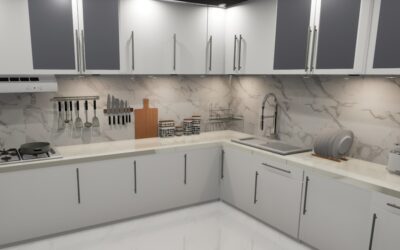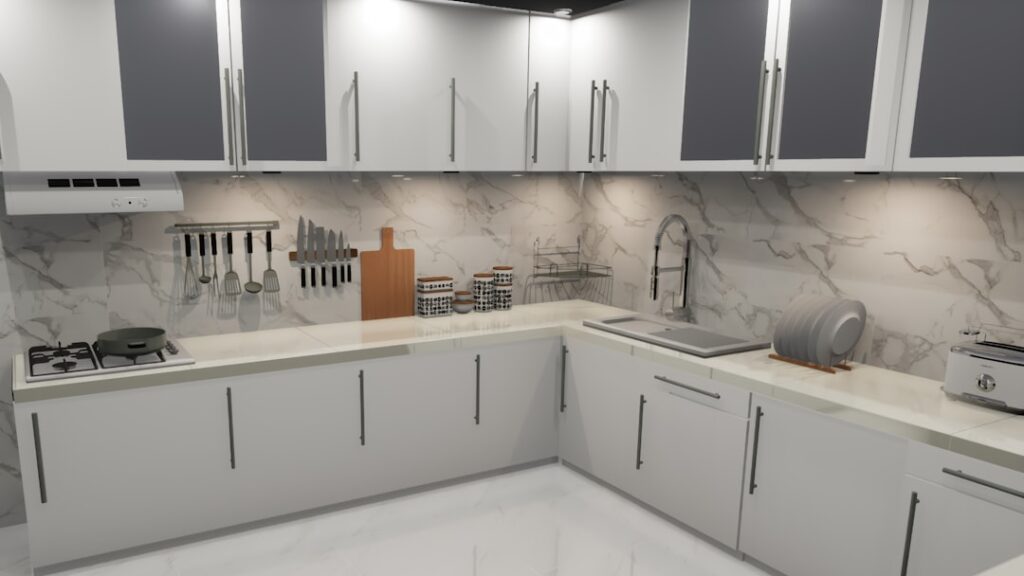
A kitchen with clean quartz countertops and nothing on them looks sterile. A kitchen buried under 14 small appliances looks chaotic. The difference between the two is intentional staging — three or four well-chosen items grouped at the right heights with breathing room around them. Smart kitchen countertop decor ideas balance the items you actually use (coffee maker, knife block, oil bottles) with curated pieces that add warmth — a wooden cutting board, a ceramic vase, a stack of cookbooks. The result is a working kitchen that photographs like a magazine spread.
Part of our Countertops guide — explore the full guide →
The Rule of Three
Designers cluster decorative items in odd numbers because the eye reads them as intentional groupings rather than random clutter. On a 10 ft counter run, plan two or three vignettes of three items each, with empty counter space between them. Each grouping should mix three heights: tall (12 to 18 inches), medium (6 to 10 inches), and short (under 6 inches).
Example grouping: a 14 inch ceramic pitcher (tall), a stacked pair of cutting boards (medium), and a small bowl of citrus (short). The eye moves naturally across the three heights and the cluster feels finished.
Color Palette Principles
Pick a palette and repeat it across the room. If your cabinets are warm white and your quartz has gray veining, decor in cream, oak, sage, and matte black ties everything together. Stainless and chrome appliances are the existing metal accent, so pulling in a few matte black items (a Williams Sonoma pepper mill, a black ceramic vase) adds depth without competing.
Avoid bringing in five different finishes. Stick to two or three: wood, ceramic, and one metal at most. Le Creuset enamelware in a single color (Marseille blue or Marine teal) repeated across two items reads as intentional. Five different Le Creuset colors looks like a closeout sale.
Working Items as Decor
- KitchenAid Artisan stand mixer in an accent color like Empire Red or Pistachio reads as both appliance and statement piece
- Wooden cutting boards in different sizes and species — walnut, maple, end-grain — leaned against the backsplash
- Glass canisters from Anchor Hocking or Le Parfait holding pasta, beans, and dried fruit
- A wooden knife block or magnetic strip with Wusthof Classic or Shun Premier knives
- Olive oil and vinegar bottles from a single-color set, refilled from larger containers
- A French press or Chemex pour-over next to the coffee station
The trick is owning items beautiful enough to leave out. A $40 Boos Block walnut cutting board earns its counter space; a thin plastic Ikea board does not.
Coffee Bar Zone
A dedicated coffee zone is one of the easiest staging wins. Cluster the espresso machine or drip brewer with a small wooden tray holding two mugs, a glass jar of beans, and a $30 wooden spoon. Add a small framed print or chalkboard sign behind. Brands like Breville Barista Express, Smeg, and the De’Longhi La Specialista double as appliances and design pieces.
Use a marble or wood tray to define the coffee zone visually — even a $40 IKEA Klotz tray makes the area feel intentional rather than scattered.
Open Shelving Spillover
If your kitchen has open shelving above the counter, treat the surface and shelf as one composition. The shelf displays glassware, bowls, and short stacks of dishes; the counter below holds working items at a contrasting height. Avoid the mistake of cluttering both shelf and counter — pick one as the visual anchor and let the other breathe.
For shelves above the counter, anchor with three solid items: a 2 inch tall stack of plates, a horizontal row of mugs hanging by handles, and one tall vase or ceramic piece. Repeat the wood, ceramic, and metal mix from the counter below.
Plants and Fresh Elements
Living elements break up the rigid lines of cabinets and countertops. Easy options that survive kitchen conditions include pothos in a 6 inch ceramic pot, a snake plant in a corner, fresh herbs (basil, rosemary, thyme) in matching terracotta pots, and a wooden bowl of citrus or pears.
For windowsills, IKEA’s KRYDDA hydroponic herb planters keep basil and parsley alive year-round even in cold climates. A $25 dedicated kitchen herb setup beats wilted grocery-store herbs for both decor and cooking.
The Negative Space Rule
For every styled vignette, leave at least 24 to 36 inches of empty counter between groupings. This negative space is what separates “designer kitchen” from “yard sale aesthetic.” A 14 ft counter run with cabinets above can comfortably hold three vignettes spaced 4 ft apart. Anything closer becomes visual noise.
The cleared area between vignettes is also your prep zone. Designing decor around actual cooking workflow keeps the kitchen functional. Daily-use items (cutting board, knives, salt and pepper, oil) live in working position. Decorative items occupy the corners and zones not used for prep.
Seasonal Refresh
Rotating one or two items four times a year keeps the kitchen feeling current without redecorating. Spring brings fresh tulips or peonies in a tall vase. Summer swaps in a wooden bowl of stone fruit and lemons. Fall introduces a small pumpkin and dried wheat sheaf. Winter shifts to evergreen sprigs and a bowl of pomegranates.
Avoid the over-themed Christmas-village kitchen unless you genuinely love it. One seasonal element layered into existing decor reads more sophisticated than a complete swap. Strong kitchen countertop decor ideas always come back to the same principle — fewer, better items grouped intentionally, with enough empty space to make each piece feel chosen.
Common Styling Mistakes
Lining items up in a straight row along the back wall is the most common mistake — it reads like a hardware store display rather than an intentional vignette. Pull items forward and cluster them at varying depths. Another frequent issue is symmetry on a counter that does not call for it; perfect mirror-image groupings feel stiff in a kitchen. Asymmetric balance, with one tall item offset from a low cluster, almost always reads better.
Buying matching decor sets from one big-box store tends to look catalog-flat. Build your kitchen vignettes from items collected over time — a hand-thrown pottery bowl from a local maker, a vintage cutting board from an estate sale, a Le Creuset Dutch oven you actually cook with. The patina of real use is what separates a styled kitchen from a staged one.