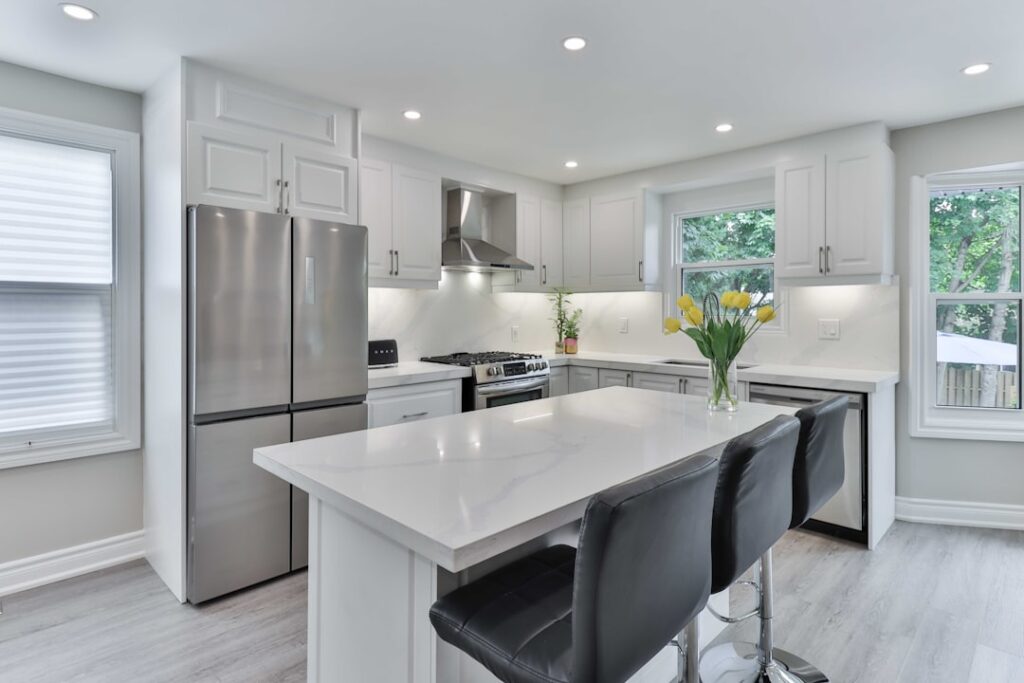
Bare kitchen walls are a missed opportunity. Most homeowners invest thousands in countertops and cabinetry but leave the walls completely blank, making the room feel unfinished. The right kitchen wall decor ideas can transform a purely functional cooking space into a room with real character and warmth. From open shelving that doubles as storage to gallery walls that spark conversation, here are proven approaches that work in kitchens of every size and style.
Open Shelving Displays
Floating shelves on kitchen walls serve double duty as both storage and decoration. They work especially well in smaller kitchens where closed upper cabinets can feel oppressive. Install two or three shelves of varying lengths above a counter or flanking a window, then arrange a curated mix of everyday dishes, cookbooks, small plants, and decorative objects.
Solid wood floating shelves in walnut or white oak run $20 to $60 per shelf depending on length and thickness. For a clean modern look, choose brackets that are hidden inside the shelf. Rustic and farmhouse kitchens look great with visible black iron brackets ($8 to $15 per pair). The key to making open shelves look intentional rather than cluttered is leaving 30% to 40% of the shelf space empty. Resist the urge to fill every inch.
Gallery Wall Arrangements
A gallery wall brings personality into the kitchen without taking up any counter or floor space. Mix framed prints, vintage kitchen signs, small mirrors, and decorative plates to create a collected-over-time look. The area above a breakfast nook, beside the refrigerator, or on the wall opposite the main cooking zone are all ideal locations.
Start by laying all pieces on the floor and arranging them until the composition feels balanced. Maintain consistent spacing of 2 to 3 inches between frames. Use paper templates taped to the wall before hammering any nails. For kitchen wall decor that resists moisture and grease splatter, choose frames with glass fronts and wipe them down monthly during routine kitchen cleaning.
Statement Tile Accent Walls
Tile is not just for backsplashes. Extending decorative tile to cover an entire accent wall creates a stunning focal point that is also completely waterproof and easy to clean. Subway tile in a herringbone or vertical stack pattern transforms a plain wall for $3 to $8 per square foot in materials. Handmade zellige tiles from Morocco ($15 to $25 per square foot) deliver Old World texture with natural color variations.
Peel-and-stick tile panels offer a renter-friendly alternative at $5 to $15 per square foot. Brands like Tic Tac Tiles and Smart Tiles make panels that look surprisingly realistic and can be removed without damaging drywall. A single accent wall in a typical kitchen measures 40 to 80 square feet, putting the total material cost at $200 to $600 for real tile or $200 to $400 for peel-and-stick.
Hanging Pot and Pan Racks
Wall-mounted pot racks turn your cookware into a design element while freeing up valuable cabinet space. A well-arranged collection of copper, cast iron, and stainless steel pots creates visual interest that no print or painting can match. Wrought iron wall racks with S-hooks cost $40 to $120 and mount directly to wall studs.
Ceiling-mounted pot racks from brands like Enclume and Old Dutch International range from $80 to $300 and make dramatic statements in kitchens with 9-foot or higher ceilings. For best visual impact, hang pots in descending size order. Polish copper pots occasionally with a vinegar and salt paste to maintain their warm glow. Even budget-friendly stainless pots look intentional when displayed as a coordinated set.
Chalkboard and Whiteboard Walls
Chalkboard paint ($10 to $15 per quart) transforms any smooth wall surface into a writable canvas for grocery lists, recipes, weekly menus, or artistic doodles. One quart covers about 40 square feet with two coats. Apply it to a single defined section (like a panel between cabinets) rather than an entire wall for the cleanest look.
Magnetic chalkboard panels ($20 to $40) combine writing surface with magnet functionality, so you can pin photos, recipes, and notes alongside hand-written content. This approach works brilliantly in the kitchen command center concept, where one wall serves as the household hub for schedules, lists, and reminders. Use liquid chalk markers instead of traditional chalk for crisper lines and less dust.
Botanical and Herb Wall Gardens
Living walls bring color, fragrance, and function into the kitchen simultaneously. Wall-mounted planters designed for herbs like basil, rosemary, mint, and thyme keep fresh ingredients within arm’s reach while serving as natural decor. Vertical planter systems range from simple terra cotta pocket planters ($15 to $30) to self-watering modular panels ($50 to $150).
Light is the critical factor. Herbs need 6 to 8 hours of direct or bright indirect light daily. If your kitchen wall does not receive adequate natural light, supplement with a small LED grow light bar ($20 to $40) mounted above the planters. The combination of a mounted grow light with a row of three to five herb pots creates a clean, modern look that functions as both a kitchen garden and a living artwork.
Mirrors and Metallic Accents
Strategically placed mirrors make kitchens feel significantly larger by bouncing light and creating visual depth. A large round mirror ($30 to $80) on the wall opposite a window doubles the perceived natural light. Decorative sunburst mirrors, vintage frameless mirrors, and mirrored trays mounted as wall art all contribute to an airy, expansive feel.
Metallic wall decor, including brass sconces, copper wall sculptures, and gold-toned trays, introduces warmth and visual weight that balances light-colored kitchens. Match your metallic accents to existing hardware finishes. If your cabinet pulls and faucet are brushed nickel, choose silver-toned wall decor. Mixed metals can work but require a more intentional design approach to avoid looking random.
Practical Tips for Kitchen Wall Decor
Kitchen environments present unique challenges for wall decor. Grease, steam, and temperature fluctuations affect materials differently than in a living room. Keep these practical considerations in mind:
- Avoid placing porous materials like unfinished wood or fabric directly above or beside the stove
- Frame prints behind glass to protect from grease film and moisture
- Use Command strips rated for humid environments when possible to avoid drywall damage
- Clean decorative items monthly during your regular kitchen deep clean
- Choose wipeable materials for walls near the sink and cooking areas
- Install LED puck lights ($15 to $25 for a set) above shelves to highlight displayed items
Start with one wall or one corner rather than trying to decorate the entire kitchen at once. Live with each addition for a week before adding more. This gradual approach prevents the cluttered, over-decorated look that makes kitchens feel smaller rather than more inviting.