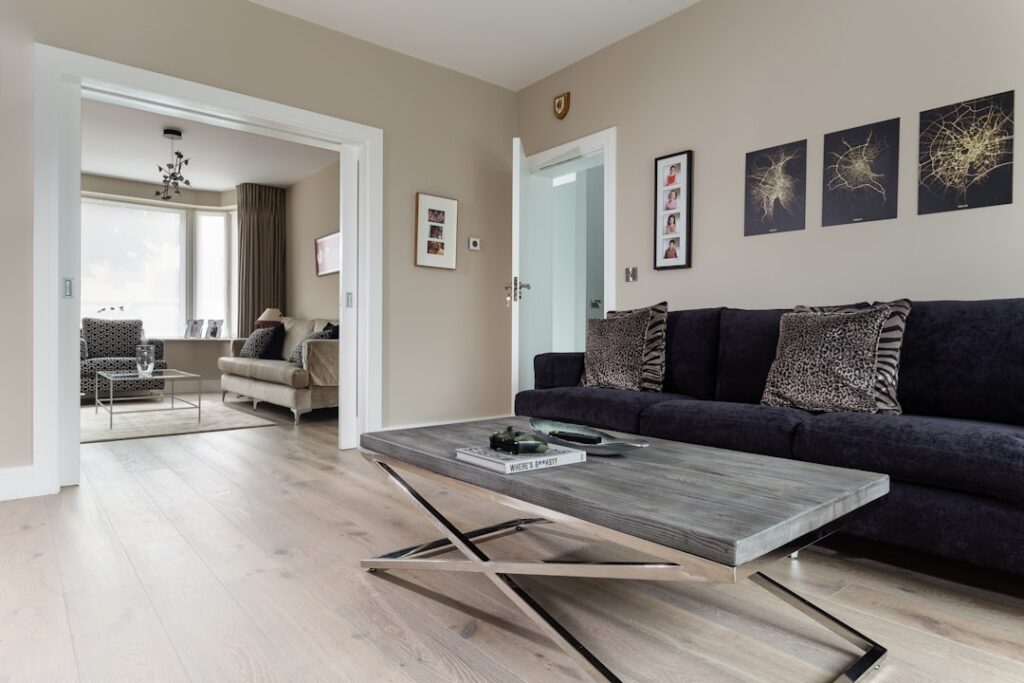
Laminate flooring failures are almost never the product; they are the install. A skilled laminate installer understands subfloor flatness, expansion gaps, transition strips, and moisture barriers in ways that the planks cannot forgive if neglected. After watching homeowners struggle with squeaks, gaps, and buckling within a year of botched installations, I can confidently say that hiring the right installer matters more than the brand of laminate. This guide covers what to ask, what to pay, and how to spot a contractor who actually knows the product.
What a Quality Installer Does Differently
A qualified installer checks subfloor flatness with a 10-foot straightedge before unpacking a single box. The tolerance is 3/16 inch over 10 feet for floating laminate; anything more requires self-leveling compound or sanding high spots. They also acclimate the planks for 48 to 72 hours in the room at the temperature and humidity the home will hold long-term.
The expansion gap (typically 1/4 to 3/8 inch) around every wall, pipe, and fixed object is non-negotiable. A pro uses spacers throughout the run and double-checks before the baseboard goes back. A bad installer skips the gap and your floor buckles in summer humidity.
Cost Breakdown in 2026
Labor for laminate installation runs $2 to $5 per square foot in most US markets. Add $1 to $2 per square foot for subfloor prep, transitions, and trim work. A 1,000-square-foot job ranges from $3,000 to $7,000 in labor alone before the flooring material.
Premium installers in high-cost regions (NYC, San Francisco, Boston) bill $6 to $9 per square foot and bring better prep, cleaner cuts, and proper transition handling. Always get an itemized bid that separates labor, prep, materials, and trim.
Questions to Ask Before Hiring
- How many laminate jobs have you done in the past 12 months?
- Do you check subfloor flatness with a straightedge?
- What expansion gap do you leave at walls and fixed objects?
- How do you handle transitions between rooms and to other flooring types?
- Can I see three local jobs from the past 6 months?
- What is your warranty on installation labor?
- Do you carry general liability insurance and workers’ comp?
Red Flags That Mean Walk Away
An installer who quotes by phone without seeing the room is gambling with your floor. The flatness, layout, and door clearances all affect the bid. A pro shows up, measures, and writes a detailed scope.
Watch for installers who refuse to remove and reinstall baseboards, who push their preferred underlayment without explaining why, or who cannot answer questions about manufacturer-required moisture barriers over concrete. These shortcuts surface as problems within 12 to 24 months.
Subfloor and Underlayment Decisions
Plywood subfloors typically need only a 2mm foam or felt underlayment for sound and minor leveling. Concrete subfloors require a vapor barrier underlayment (6 mil polyethylene attached to foam) to prevent moisture from migrating up and damaging the laminate core.
Premium underlayments like QuietWalk Plus and Roberts First Step combine moisture barrier, sound reduction, and thermal insulation in one product. Expect to pay $0.30 to $0.80 per square foot. Cheap foam without a moisture barrier over concrete is the most common cause of laminate cupping in basements.
What Day-of-Install Looks Like
A two-person crew can install 400 to 600 square feet of laminate per day in straight rooms with minimal cuts. Bathrooms, kitchens with cabinets, and stairs slow that to 200 to 350 square feet per day because of the cuts around fixtures and obstacles.
Furniture moving is sometimes included and sometimes extra. Confirm in writing. Most installers ask you to clear small items and move artwork; they handle large furniture with sliders. Plan to be without that floor for 1 to 3 days and to vacuum thoroughly after the crew leaves.
DIY vs. Hiring Out
Click-lock laminate is one of the more DIY-friendly flooring types. A homeowner with a $40 mitre saw or $80 oscillating tool, a tapping block, and a free weekend can install 400 to 600 square feet of straight-run laminate. The math gets harder when you add stairs, intricate cuts, or transitions to tile and hardwood.
Hire out if the room has more than 8 cuts around obstacles, if the subfloor needs leveling, or if you cannot afford the time it takes to learn. The labor saved on a 1,000-square-foot job is significant only if you do it well; redoing buckled flooring 18 months later costs more than hiring a pro the first time.
Warranty Coverage to Verify
Manufacturer warranties on laminate often require professional installation or specific underlayment products. Check the fine print before letting any installer use generic foam over a moisture-prone concrete slab; doing so can void the 25-year wear warranty.
Installer labor warranties range from 1 year to lifetime. A 1-year warranty is the floor; a strong installer offers 5-plus years on labor. Document the install in photos and keep the contract, the installer’s license number, and material receipts together for any future claims. Choosing the right laminate installer protects both warranties simultaneously.
Prefer to explore on your own?
See how new flooring looks in your actual room in seconds — free, no signup.
Try the free Floor Studio →