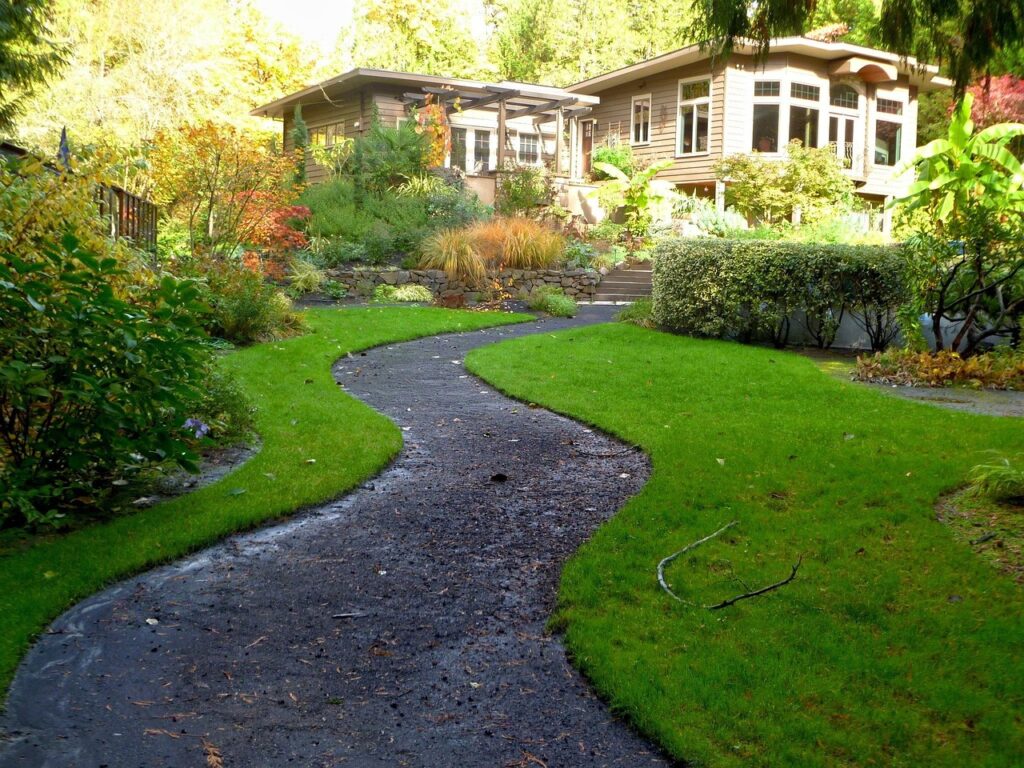
A well-designed path does more than connect point A to point B; it shapes how your whole yard feels and reads from the curb. The best landscape walkway ideas balance how the path looks against how it performs underfoot, how much it costs, and how much upkeep it demands down the road. Whether you want a formal brick approach to the front door or a casual gravel ramble through a garden, the right material and layout transform a yard. Here are the options worth considering and what each delivers.
Choosing the Right Material
Material is the biggest decision because it sets the cost, the maintenance, and the entire visual character of the path. Each option carries a distinct tradeoff.
- Concrete pavers: $8 to $20 per square foot installed; uniform, durable, easy to replace one unit.
- Natural flagstone: $15 to $30 per square foot; organic, irregular shapes for a rustic look.
- Brick: $10 to $20 per square foot; classic, formal, ages beautifully.
- Gravel or decomposed granite: $5 to $10 per square foot; budget-friendly and great for casual paths.
- Poured concrete: $6 to $15 per square foot; clean and modern, can be stamped or colored.
Match the material to your home’s style. Brick and flagstone suit traditional architecture, while large-format pavers and poured concrete lean modern. A path should look like it belongs to the house, not fight it.
Path Layout and Flow
How the walkway moves through the space matters as much as what it is made of. A straight, wide path signals a formal front entrance and should be at least 4 feet wide so two people can walk side by side. Garden and side-yard paths can narrow to 3 feet and curve gently to feel relaxed and inviting.
Curves slow the eye and create a sense of discovery, ideal for leading visitors past plantings. Straight lines read as purposeful and efficient. Use gentle arcs rather than sharp zigzags, which look forced, and let the path follow the natural contours and destinations of the yard.
Stepping Stones and Mixed Materials
For a softer, more affordable look, stepping stones set into a lawn or gravel bed create rhythm without paving the whole route. Space them about 24 inches center to center so they match a comfortable adult stride. Surround them with creeping ground cover like thyme or Irish moss, which spills between the stones and releases fragrance underfoot.
Mixing materials adds custom character. A flagstone field with brick edging, or pavers with gravel-filled joints, breaks up large expanses and ties the walkway to other hardscape in the yard. Just keep the palette to two or three materials so the design stays cohesive rather than busy.
Lighting and Edging
Lighting turns a walkway from a daytime feature into a nighttime focal point and a genuine safety upgrade. Low-voltage path lights spaced 6 to 8 feet apart cast pools of light without glare, and solar versions skip the wiring entirely for a quick weekend install. Aim for gentle, even illumination rather than a runway of bright spots.
Edging keeps the whole thing crisp and contained. Steel or aluminum edging gives a clean modern line, while brick or stone borders suit traditional designs. Edging also stops gravel from migrating into the lawn and keeps grass and mulch from creeping onto the path, cutting future maintenance.
Planting Along the Path
Plants are what make a walkway feel intentional rather than utilitarian. Frame the path with low, mounding plants near the edge and taller layers behind, so the planting steps up gracefully. Fragrant choices like lavender, catmint, or boxwood reward anyone walking by.
Leave a buffer of 12 to 18 inches between the path edge and aggressive growers so plants do not overwhelm the walking surface as they mature. Repeat a few key plants along the length to create rhythm and a unified, designed look rather than a random collection.
Matching the Path to Your Yard’s Style
A walkway should feel like part of a larger composition, not a stripe dropped onto the lawn. For a cottage or country garden, irregular flagstone or a meandering gravel path with plants spilling over the edges reinforces that relaxed, lived-in charm. A modern home calls for clean geometry: large rectangular pavers set with tight, uniform joints, or a poured concrete path with crisp edges.
Traditional and colonial homes pair naturally with brick laid in a herringbone or running-bond pattern, which echoes classic architecture. Pull a color cue from your home’s exterior, perhaps matching a brick path to the house trim or a flagstone tone to the roof, so the walkway reads as a deliberate extension of the home rather than an afterthought bolted on later.
Budgeting Your Walkway Project
Costs scale with material, length, and how much site prep your yard demands. A simple gravel or stepping-stone path is the most DIY-friendly and can be done for a few hundred dollars in materials for a short run. A professionally installed paver or flagstone walkway, with proper excavation and base, more often lands in the $2,000 to $6,000 range depending on length and complexity.
You can trim cost without cutting corners by handling demolition and digging yourself, then hiring out only the precise setting and joint work. Buying materials during off-season sales and choosing a regionally available stone over an exotic import also keeps the budget in check. Whatever you spend, investing in a solid base protects that money, since a path that heaves or sinks erases its value in a season or two.
Building for the Long Haul
The most beautiful path fails fast without a proper base. For pavers and flagstone, excavate 6 to 8 inches, lay and compact a gravel base, add a leveling layer of sand, then set the surface and lock the joints with polymeric sand. This prevents the heaving, sinking, and weed growth that ruin shortcut installs.
Slope the path slightly, about a quarter inch per foot, to shed water and prevent ice in winter. Done right, these landscape walkway ideas reward you with a path that looks sharp and stays solid for decades, adding real curb appeal and value to your home.