A well-built path does more than connect your driveway to the door. The right hardscape walkway ideas can boost curb appeal, add to a home’s resale appeal, and eliminate the muddy ruts that worn grass paths leave behind. The difference between a path that buckles in three winters and one that looks sharp for 25 years comes down to material choice, base prep, and a little design restraint.
Why Hardscape Beats a Plain Concrete Slab
Poured concrete is cheap, running about $6 to $10 per square foot installed, but it cracks along control joints, stains easily, and looks dated within a decade. Hardscape materials such as natural stone, brick, and concrete pavers offer texture, color, and the ability to lift and reset a single unit if a root pushes it up. They also drain better when laid over a proper aggregate base, which matters in regions that freeze.
Modular units flex with the ground instead of fighting it. When a section settles, you pull a few pavers, add bedding sand, and tap them back level in an afternoon. Try that with a 40-foot ribbon of poured concrete and you are renting a jackhammer.
Material Options and What They Cost
Your budget and your home’s architecture should drive the material. Here is how the most popular choices stack up on installed cost per square foot:
- Concrete pavers: $10 to $20. The workhorse. Huge range of shapes, easy to source, decades-long lifespans common.
- Clay brick: $14 to $25. Warm, traditional, ideal for colonial and craftsman homes. Resists fading because the color runs through the body.
- Natural flagstone: $18 to $35. Irregular slate, bluestone, or sandstone. Organic look, no two paths alike.
- Cut stone (dimensional): $22 to $40. Clean rectangular pieces of granite or limestone for formal, contemporary designs.
- Pea gravel or decomposed granite: $4 to $8. Budget-friendly and casual, but it migrates and needs edging plus periodic topping.
For a typical 4-foot-wide, 30-foot walkway, that means a paver path lands around $1,200 to $2,400 in materials and labor, while flagstone can climb past $4,000.
Layout Styles That Suit Different Homes
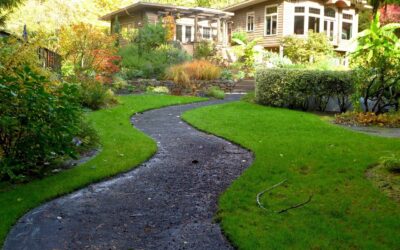
Geometry sets the mood. A dead-straight run from sidewalk to stoop reads formal and works beautifully with symmetrical facades and clipped boxwoods. Gentle curves feel relaxed and natural, perfect for cottage gardens or wooded lots where the path can weave around mature trees.
Consider a few proven approaches:
- Running bond brick: staggered rows that draw the eye forward and visually lengthen a short path.
- Herringbone pavers: a 45-degree interlock that resists shifting under foot traffic and looks intricate without extra cost.
- Stepping stones in gravel: large flagstones spaced a comfortable 24 inches center-to-center, set in a gravel field for a soft, modern look.
- Banded borders: a contrasting brick or cut-stone edge framing a field of pavers, which sharpens the lines and hides the cut units.
Keep the main walkway at least 48 inches wide so two people can pass shoulder to shoulder. Secondary garden paths can drop to 30 inches.
The Base Is Everything
Most failed walkways share one flaw: a skimpy base. For a path in a freeze-thaw climate, excavate 8 to 10 inches deep, then compact 6 inches of crushed angular gravel (often sold as 3/4-inch minus or Class 5) in two lifts. Top that with a 1-inch screeded layer of coarse bedding sand. Skip the round pea gravel for the base; angular stone locks together and resists movement.
Slope the finished surface away from the house at roughly 1/4 inch per foot so water sheds instead of pooling. Compact every lift with a plate compactor, not just a tamper, and you will avoid the dips that turn into ice patches.
Edging, Lighting, and Finishing Touches
Edge restraint keeps the whole system from spreading. Plastic paver edging staked with 10-inch spikes is the cheapest route at about $1.50 per linear foot, but a soldier course of brick set in concrete looks far more polished. Polymeric jointing sand swept into the gaps locks units together and discourages weeds and ants; budget one 50-pound bag per 60 square feet of pavers.
Low-voltage path lights spaced 6 to 8 feet apart make a walkway safe and inviting after dark. A basic 12-volt LED kit with a transformer and eight fixtures runs $150 to $300 and installs in a weekend. Solar lights are tempting but dim out in shaded yards, so wired systems are usually the better choice near the entry.
Pairing Plants With Your Path
Softening the hard edges turns a walkway into a garden feature. Low spreaders like creeping thyme or sedum tucked between stepping stones release fragrance underfoot and tolerate occasional traffic. Line the borders with mounding perennials such as catmint, lavender, or dwarf fountain grass, leaving a 12-inch buffer so foliage does not flop across the path after rain.
Avoid aggressive root systems near the base. Bamboo, willow, and certain maples can heave pavers within a few seasons, so keep them at least 10 feet back.
Mixing Materials for Visual Interest
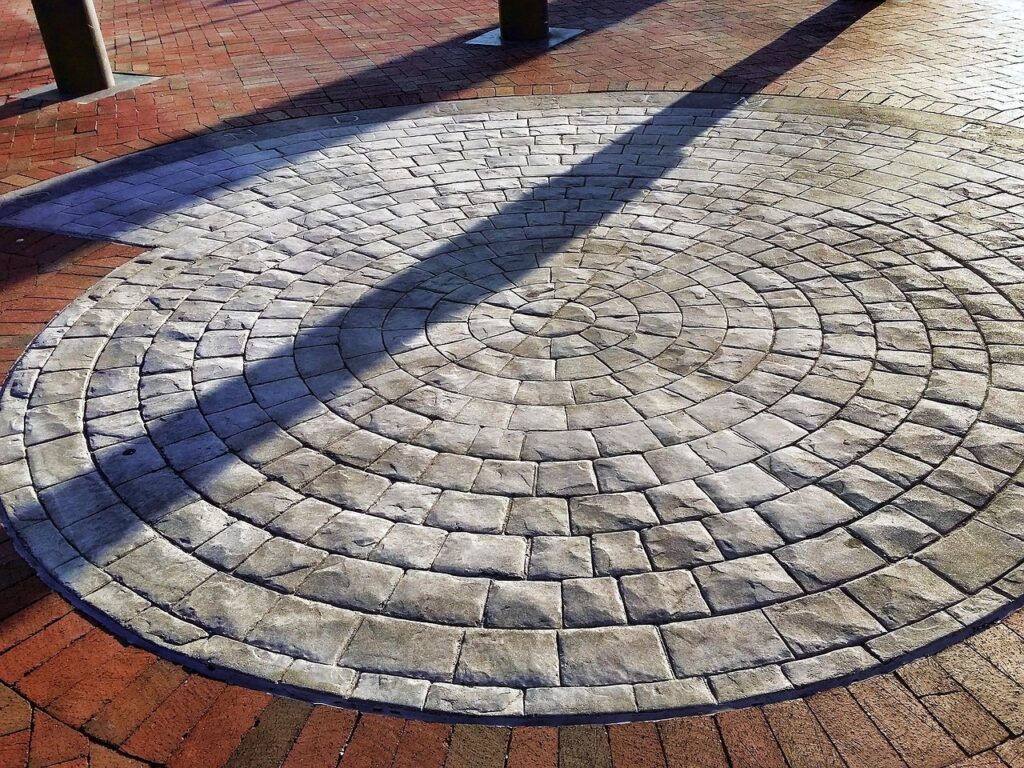
Some of the most striking walkways combine two materials rather than relying on one. A field of large bluestone slabs with brick set between them reads as both rustic and refined. Concrete pavers framed by a cobblestone border instantly look more custom than the pavers alone would. The contrast in color and texture draws the eye and disguises the seams where cuts meet edges.
Restraint matters, though. Two materials and two colors are plenty; pile on a third or fourth and the path starts to look busy and unplanned. Pick one as the dominant field, covering most of the surface, and let the second play a supporting role as accent or border. Pull a color cue from your home itself, matching the brick to your chimney or the stone to a foundation veneer, and the walkway will feel like it belongs rather than bolted on.
Avoiding the Most Common Mistakes
The same handful of errors come up again and again. Watch for these:
- Skipping the compaction: a base that is not compacted in lifts will settle unevenly within a year or two
- No slope: a dead-flat path holds puddles and turns to ice in winter
- Building too narrow: a 30-inch main walk feels cramped and forces single-file traffic
- Forgetting edge restraint: without it, pavers creep outward and the joints open up
- Using leftover topsoil as bedding: organic soil decomposes and settles, while angular sand and gravel stay put
Spend your effort below grade, where no one will ever see it, and the visible surface will reward you with decades of stable, level service.
DIY or Hire a Pro
A motivated homeowner can lay a 100-square-foot paver walkway over a long weekend, renting a plate compactor for about $90 a day. The physical work is real: a single pallet of pavers weighs over 3,000 pounds. If your site has poor drainage, a steep grade, or you want intricate cut patterns, a pro crew earns their fee. Expect labor to roughly double your material cost.
Whatever route you choose, these hardscape walkway ideas reward patience in the planning stage. Sketch the route, order 10 percent extra material for cuts and breakage, and resist the urge to rush the base. Do that, and your new path will greet visitors long after the trends that inspired it have come and gone.