LeafFilter has spent two decades and an enormous advertising budget convincing homeowners they will never climb a ladder again — and the pitch works, because the company is now the largest gutter-protection installer in North America. But do leaf filter gutters actually earn their price, which routinely lands between three and ten times the cost of hardware-store guards? This review breaks down how the LeafFilter system is built, what it genuinely does well, where it falls short, what you should expect to pay after the theatrical discounting, and how to decide whether it belongs on your house.
What the LeafFilter System Is
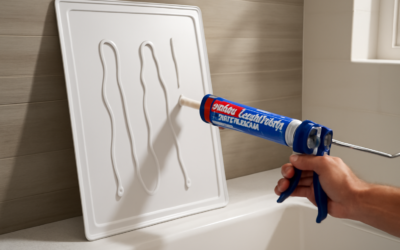
LeafFilter is a professionally installed micro-mesh gutter guard, not a gutter. The system has three parts: a woven 275-micron stainless-steel mesh fine enough to stop shingle grit and pine needles, a rigid uPVC frame that supports the mesh at a slight pitch, and structural hangers screwed into the fascia that reinforce the existing gutter as the guard goes on. Installers clean, re-slope, and re-seal your current gutters first, then fasten the guard over the top. Because it mounts to the gutter rather than under shingles, it does not disturb the roof edge or void shingle warranties — a real advantage over guards that slide beneath the first course.
That “installs on your existing gutters” model is the key distinction from its biggest rival: LeafGuard replaces your gutters entirely with a one-piece hooded trough, a fundamentally different product we review separately in our LeafGuard gutters guide.
How Well It Actually Works
Micro-mesh is the top-performing guard technology in independent testing, and LeafFilter’s implementation is legitimately good. Consumer testing organizations and long-term owner reviews consistently place fine stainless mesh at the top of the guard field, ahead of foam inserts, brush guards, perforated covers, and reverse-curve hoods, precisely because the weave is finer than anything a roof sheds. The 275-micron weave excludes essentially everything solid — leaves, maple helicopters, pine needles, roof grit — so the trough beneath stays clean. Water passes through the mesh by surface adhesion even at respectable flow rates, and the slight pitch of the panel encourages dry debris to slide or blow off rather than accumulate.
The honest caveats: nothing self-cleans forever. Pollen film, algae, and fine organic matter can eventually blind the mesh surface, especially under heavy tree cover or on shaded north faces, and the fix is brushing or rinsing the panels from a ladder — easier than scooping gutters, but not the “never touch it again” of the commercials. In extreme downpours on steep roofs, water can also sheet over any flush-mounted guard; oversized downspouts and correct slope matter just as much after the guard goes on as before.
What LeafFilter Costs
LeafFilter does not publish prices, and quotes are generated in-home by commissioned reps. Realistic installed pricing runs $15 to $45 per linear foot depending on region, home height, and gutter condition — meaning $3,000 to $8,000 for a typical 180-to-200-foot home, with complex two-story installs going higher. That figure usually includes the cleaning, re-sloping, resealing, and reinforcing of your existing gutters, which has real value; new gutters, if yours are shot, are quoted separately.
Expect the classic high-pressure structure: an inflated opening number, a “senior/military/this-week-only” discount cascade, and a dramatically lower price if you hesitate or begin to walk. Treat the first quote as an opening bid. Homeowners who negotiate patiently, get competing bids from local micro-mesh installers, and are willing to say no routinely land 30 to 50 percent below the initial figure. Never sign on the first visit.
The Warranty
LeafFilter’s headline offer is a lifetime transferable warranty against clogged gutters — if the protected gutters clog, the company returns and remedies it at no charge. That is a strong promise from a large, established company (LeafFilter is owned by publicly traded Leaf Home), and transferability adds modest resale value. Read the terms, though: the warranty covers clogging of the gutter, not overflow over the guard surface, not damage from ice, and not the performance of downspouts and drain lines beyond the system. Keep your installation paperwork; warranty service goes through the local branch, and responsiveness varies by market.
Strengths and Weaknesses
- Strengths: best-in-class debris exclusion including pine needles and grit; installs on existing gutters without touching shingles; gutters are cleaned, re-pitched, and reinforced as part of the job; lifetime transferable clog warranty; nationwide service network.
- Weaknesses: premium pricing with opaque, high-pressure sales; mesh surface still needs occasional brushing in heavy-debris or pollen-heavy settings; flush profile can ice over in northern winters (heat cable is the fix — see our heated gutter systems guide); quality of installation and service depends on the local branch.
The Installation Process
A LeafFilter install on an average home takes one crew a single day, and the sequence matters because half the value is in the prep. Installers first clean the troughs completely, then check and correct slope — re-pitching runs toward the outlets — and reseal seams and end caps. Next they reinforce the gutter with new hidden hangers, since the guard’s frame stiffens against them, and finally screw the mesh panels to the gutter lip at a pitch that follows the roofline. No fasteners touch the shingles. Walk the job afterward with a hose if you can: water from a full-flow garden hose on the roof above should pass through the mesh without overshooting, and every downspout should run strong. Ask for the service line number and your warranty registration before the crew leaves.
Questions to Ask the Rep
Five questions cut through the sales choreography quickly. What gauge and condition are my existing gutters, and are you warrantying them or just the guard? Is the quote itemized per linear foot, and what does it assume about second-story footage? What exactly triggers the lifetime warranty, and is labor included on service calls? Who services this area — a company branch or a subcontractor? And what is the price if I decide next week instead of tonight? That last one is diagnostic: a rep who says the discount dies at the door is telling you the first number was inflated, which is your cue to collect competing bids before signing anything.
LeafFilter vs DIY Micro-Mesh
Here is the comparison the sales rep will not volunteer: hardware-store micro-mesh guards from brands like Raptor, LockOn, or A-M Aluminum cost $2 to $4 per foot in materials and use similar stainless mesh. A capable DIYer with a stable ladder can guard a one-story ranch for $400 to $700 in a weekend. What LeafFilter adds is the gutter tune-up, professional fit around corners and valleys, the warranty, and zero ladder time — worth real money on tall, complex, or high-tree homes, and worth much less on a simple single-story roofline. If your gutters themselves are aging out, also price new gutters with integrated guards; our house gutters guide and gutter cost breakdown cover what replacement should run.
Who Should Buy It
LeafFilter earns its price for homeowners with two-story homes or steep, complicated rooflines where every cleaning means hiring someone anyway; for heavily treed lots — especially pine, which defeats most cheaper guards; and for older homeowners who simply should not be on ladders, where a one-time spend replaces a $150-to-$350 twice-yearly cleaning bill forever. The payback math is straightforward: at $300 a year in avoided cleanings, a $4,000 install breaks even in 12 to 14 years, faster if it prevents one fascia or foundation repair along the way.
Pass, or at least comparison-shop hard, if you have a one-story home you can maintain yourself, light tree cover, or a tight budget — a $500 DIY micro-mesh job captures most of the benefit. And whatever you choose, get three bids: the strongest negotiating tool in this market is a competing micro-mesh quote from a well-reviewed local installer sitting on the kitchen table when the national rep starts discounting.