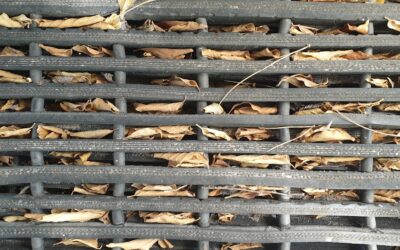
Cleaning gutters is the household chore most likely to end with a ladder accident, and it is exactly the job leaf screens for gutters are designed to eliminate. Good leaf screens for gutters keep leaves, pine needles, seed pods, and roof grit out of the channel so water flows freely and you stay off the ladder. But not all guards work equally well, and the wrong type on a needle-heavy roof can clog worse than bare gutters, so choosing correctly matters.
Part of our Roofing guide — explore the full guide →
Why Leaf Screens for Gutters Make Sense
Clogged gutters cause expensive damage that dwarfs the price of a guard. Water that overflows a blocked gutter runs down the fascia, rots the soffit, seeps behind siding, and pools at the foundation where it can crack the slab or flood a basement. In winter, trapped debris holds water that freezes into ice dams, prying up shingles and forcing melt under the roof deck.
Guards also discourage pests. Open gutters full of wet leaf mulch are prime nesting sites for mosquitoes, birds, squirrels, and even carpenter ants looking for damp wood. A screen keeps the channel clean and dry enough that critters look elsewhere. Add in the ladder safety factor, and the case for some form of protection is strong for most homes.
There is a fire-safety angle too, one that matters more every year in the West. In wildfire-prone regions, dry leaves and pine needles packed in a gutter are exactly the kind of fine fuel that catches windborne embers, and a roof edge is one of the most common ignition points for a home during a wildfire. A non-combustible metal guard, particularly a fine stainless micro-mesh, keeps that fuel out of the gutter and is recommended in many fire-hardening guidelines. If you live in a high-risk area, skip plastic guards entirely and choose metal.
The Main Types of Gutter Guards
“Leaf screen” is a broad term. Understanding the categories helps you match the guard to your trees and budget.
- Screen (perforated) guards: aluminum or plastic panels with holes or slots that snap or slide under the shingles. Cheap and easy, they block big leaves but let in shingle grit and small debris.
- Micro-mesh guards: a fine stainless-steel mesh over a support frame. The best all-around performer, blocking even pine needles and roof grit while passing water.
- Foam inserts: wedge-shaped foam that sits inside the gutter. Very cheap and DIY-friendly, but foam degrades, holds seeds that sprout, and needs periodic cleaning.
- Brush guards: a bottlebrush that fills the channel. Simple to drop in, but debris tangles in the bristles.
- Reverse-curve (surface-tension) guards: a solid cover that curls water around a nose into a slot while leaves fall off. Effective but visible and pricier, and heavy rain can overshoot.
Matching the Guard to Your Trees
The debris around your house should drive the choice more than the price tag. If you have large deciduous trees dropping broad maple or oak leaves, a basic perforated screen or micro-mesh both work well. If you are surrounded by pine, spruce, or cedar, only micro-mesh reliably blocks needles; standard screens let them slip through, and reverse-curve guards can let needles ride the water into the channel.
Roofs shedding a lot of granule grit (common on older asphalt shingles) also argue for micro-mesh, since coarse screens pass the sand-like grit that then builds sediment. Consider your rain intensity too: in heavy-downpour regions, avoid reverse-curve designs prone to overshooting, and favor a mesh with ample open area so it can pass a cloudburst without sheeting over the front.
The number and pitch of your roof valleys matter as well. Valleys concentrate both water and debris into a narrow stream, so a guard that handles gentle roof planes may overshoot or clog where two roof sections meet. On steep roofs, water moves fast and can skip over a low-open-area guard, while on shallow roofs debris tends to sit rather than blow off. Walk your roofline before buying, note where the trouble spots are, and pick a guard rated for your pitch and rainfall rather than a one-size-fits-all product.
What Leaf Screens for Gutters Cost
Costs span a wide range depending on material and whether you install them yourself. Typical figures per linear foot:
- Foam inserts: $1–$3 (DIY)
- Brush guards: $2–$4 (DIY)
- Perforated aluminum/plastic screens: $1–$5 DIY, $3–$8 installed
- Micro-mesh (DIY panels): $2–$6 DIY; $6–$12 for better panels
- Professional micro-mesh systems: $15–$40+ installed
An average single-story home has around 150 to 200 feet of gutter, so a DIY perforated-screen project might run $200 to $700, while a premium professionally installed micro-mesh system can reach $2,000 to $6,000. The branded, high-pressure “one and done” systems sit at the top of that range; weigh their warranties against DIY micro-mesh that performs nearly as well for a fraction of the cost.
DIY Installation Basics
Most DIY guards are within reach of a handy homeowner with a stable ladder and a helper. The critical first step is cleaning: install guards over a clean, flushed gutter, because sealing debris underneath just creates a hidden clog. Confirm the gutters are pitched correctly toward the downspouts (about 1/4 inch of fall per 10 feet) and re-secure any loose hangers first.
Installation methods vary by type. Snap-in and drop-in screens require no fasteners. Panels that tuck under the first course of shingles should be slid in gently, no more than an inch or two, so you do not lift and crack shingles or void a roof warranty. Screw-down guards attach to the front lip; use only the guard’s own screws so you do not distort the gutter. Work in sections, overlap panels slightly, and keep the mesh flat so leaves can slide off.
Realistic Expectations and Maintenance
Here is the honest truth every installer knows: no guard is truly “maintenance-free.” Even the best micro-mesh needs an occasional rinse, because fine pollen, roof grit, and shingle sand can build a film on top that sheds water over the front in a hard rain. The difference is that maintenance drops from a filthy twice-a-year scoop to a quick rinse with a hose once a year, often from the ground.
Plan a yearly look after leaf-fall to brush off any leaf mat sitting on top, and check the downspouts still run clear. In pine country, a light rinse each spring keeps the mesh open. Guards greatly reduce the work; they do not delete it, and any salesperson promising you will “never touch your gutters again” is overselling.
Are Leaf Screens for Gutters Worth It
For most homes with mature trees nearby, yes. The math is straightforward: quality guards cut cleaning frequency dramatically, keep water flowing to protect your fascia, foundation, and roof edge, and remove the biggest reason homeowners climb ladders. Even a modest DIY micro-mesh install pays for itself the first time it prevents an ice dam or a basement seep.
Choose micro-mesh if you have pines, heavy grit, or want the closest thing to hands-off; save money with perforated screens if your only enemy is large leaves and a tight budget. Install them over clean, properly pitched gutters, keep up the light annual rinse, and leaf screens for gutters will spare you the worst chore on the home-maintenance list for many seasons to come.
Cold-Climate and Ice-Dam Considerations
Homeowners in snow country need to think about winter before choosing a guard. Solid reverse-curve covers can trap snow and give ice a surface to build on, and any guard can contribute to an ice dam if the underlying cause, heat escaping into the attic and melting snow on the roof, is not addressed. The guard is not the fix for ice dams; attic insulation and ventilation are. That said, a low-profile micro-mesh guard sheds snow reasonably and keeps the gutter itself clear so meltwater has a path once temperatures rise.
If ice is a chronic problem, look at guards compatible with heated cable systems. Some micro-mesh and screen products are designed to run a self-regulating heat cable along the gutter and downspout beneath or beside the guard, keeping a channel open through freeze-thaw cycles. Aluminum guards handle cold better than plastic ones, which grow brittle and can crack under ice load. Whatever you choose, make sure downspouts drain well away from walkways so refreeze does not create a slip hazard at the ground.
Match the guard’s fastening to winter loads, too. Snap-in screens can pop loose under the weight of sliding snow, so in heavy-snow regions favor guards that screw to the gutter’s front lip or clip securely under the shingles. Inspect after the first hard freeze and again in spring to reseat anything that shifted and to clear the fine grit that accumulated over winter. A guard chosen and secured with the local climate in mind will keep working season after season instead of becoming one more thing to repair.