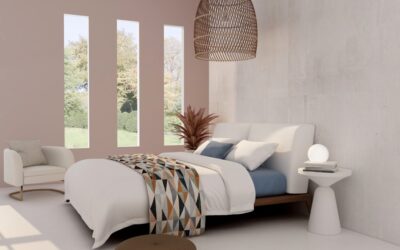
Light blue ranks third behind off-white and warm gray in Sherwin-Williams national sales data, but most homeowners struggle to pair it with anything more interesting than another white. The right light blue color combinations can warm up a north-facing room, ground a beachy aesthetic, or sharpen a transitional kitchen without turning the space into a baby nursery. The trick is choosing complementary tones with the correct undertone, then balancing 60 percent main, 30 percent secondary, and 10 percent accent.
Understand Your Blue Before Pairing
Light blues split into three undertone families. Cool blues like Benjamin Moore Beach Glass (1564) and Sherwin-Williams Sleepy Blue (6225) lean green or gray and play well with crisp whites and natural wood. Warm blues like Behr Magnetic Gray (N520-2) and Sherwin-Williams Rainwashed (6211) carry a hint of violet and pair with creams and brass. True powder blues like Farrow and Ball Borrowed Light (235) sit between the two and accept most accents.
Hold the paint chip against a piece of plain white printer paper in north light. If the blue looks green, it is cool. If it shifts toward purple, it is warm. The undertone determines every other color in the palette.
Classic Pairings That Always Work
A short list of combinations decorators rely on:
- Light blue and warm white: Pair Sherwin-Williams Sea Salt (6204) with Alabaster (7008) trim for a Cape Cod kitchen.
- Light blue and navy: Layer Benjamin Moore Palladian Blue (HC-144) with Hale Navy (HC-154) for a high-contrast study.
- Light blue and natural wood: Cool blues pop against white oak floors at 5/8 inch with a clear matte finish.
- Light blue and brass: Brushed brass hardware from Top Knobs or Emtek warms a powder blue bath.
- Light blue and terracotta: Sun-bleached terracotta accents from Hawkins New York or Pottery Barn add Southwestern depth.
Light Blue in the Kitchen
Kitchens absorb the most light traffic in a home, so blue cabinets need durable finishes. Sherwin-Williams Emerald Urethane Trim Enamel ($95 a gallon) holds up to 10 years on cabinet doors. Pair Behr Light Drizzle (S470-1) lowers with Sherwin-Williams Pure White (7005) uppers and a Carrara quartz countertop from Cambria or Caesarstone. Add brushed gold knobs from Schaub or unlacquered brass pulls from Rejuvenation ($14 to $35 each) for warmth.
For a bolder kitchen, deeper light blues like Benjamin Moore Hudson Bay (1680) on a peninsula with off-white perimeter cabinetry creates a focal point without overwhelming the room.
Bedroom Schemes That Promote Sleep
The University of Edinburgh sleep study from 2018 reported that bedrooms painted in soft blues correlated with the longest average sleep duration. Use Farrow and Ball Skylight (205) or Behr Crystalline (PPU13-13) on walls. Pair with linen drapes in oatmeal from West Elm or Restoration Hardware ($120 to $300 per panel) and a natural jute rug 8×10 feet for $200 to $450.
Add a single deep navy accent wall behind the headboard for visual weight. Sherwin-Williams Naval (6244) anchors the room without making it feel small. Avoid red or hot orange accents which clash with cool blue undertones and disrupt the calming effect.
Bath Spaces and Tile Pairings
Bathrooms tolerate more saturation because the rooms are smaller. Behr Mediterranean Sky (S490-2) walls with a 3×12 inch white subway tile in vertical stack pattern from Lowe’s or Floor and Decor ($2.50 to $4 per square foot) creates a coastal vibe. Grout choice matters. Use Mapei Frost (#38) or Laticrete Bright White grout for crisp lines.
For luxury upgrades, hexagonal Carrara marble mosaic floor tile ($12 to $22 per square foot) under a light blue vanity from Wayfair or Kohler reads spa-grade. Polished chrome fixtures from Kohler Purist line or Delta Trinsic match the cool palette better than oil-rubbed bronze.
Exterior Light Blue
Coastal homes have painted shutters and front doors light blue since the 1700s, a tradition called haint blue in the American South originally meant to ward off spirits. Modern equivalents include Sherwin-Williams Atmospheric (6505) and Benjamin Moore Iceberg (2122-50). Pair with crisp Pure White siding and natural cedar shake accents for a classic look. Add black metal lanterns from Kichler or Hinkley ($120 to $300) for definition.
For inland homes, light blue siding works on cottages but rarely on traditional Colonials. Test a 4×4 foot patch in three lighting conditions over a full day before committing to a whole exterior.
Furniture and Soft Goods That Sell Light Blue
A blue room without textile reinforcement falls flat. Choose two of these in a single space:
- Slipcovered linen sofa in mushroom or oatmeal from Pottery Barn, Crate and Barrel, or Article ($1,400 to $2,800)
- Performance velvet armchair in navy from West Elm or CB2 ($600 to $1,100)
- Striped wool rug from Dash and Albert or Annie Selke ($400 to $1,800 for 8×10)
- White oak side tables with brass legs from McGee and Co or Rejuvenation ($400 to $900)
- Wool throw pillows in mustard or rust from Loloi or Pine Cone Hill ($60 to $140 each)
Sample Boards Before You Commit
Buy three Samplize peel-and-stick samples ($6 each) of your shortlist blues. Tape them to walls in three locations in the room you plan to paint. Watch them across morning, noon, and evening light for at least 48 hours. North-facing rooms can shift a light blue from airy to muddy gray between 7 AM and 7 PM. A $20 investment in samples prevents a $400 mistake on a finished paint job.
Pair the chosen wall color against actual fabric swatches and flooring samples on the floor, not the wall. Most palette mistakes happen when designers approve combinations vertically that fall apart once seen from a normal seated viewing angle.
Trim, Ceilings, and Door Coordination
White trim against light blue walls is the safe default, but the right white matters as much as the blue. Pair cool blues with crisp whites like Sherwin-Williams High Reflective White (7757) or Benjamin Moore Chantilly Lace (OC-65). Pair warm blues with creamier whites like Benjamin Moore White Dove (OC-17) or Sherwin-Williams Alabaster (7008). Mixing a warm white trim against a cool blue wall reads as dingy under most lighting conditions.
Ceilings can stay white in most rooms, but consider painting them the same blue at 75 percent strength for a soft monochromatic effect. Doors painted in a slightly darker shade of the wall blue add depth without disruption. Skip stark contrast color choices on trim unless you are intentionally going for a modern graphic look with high-saturation pairings.