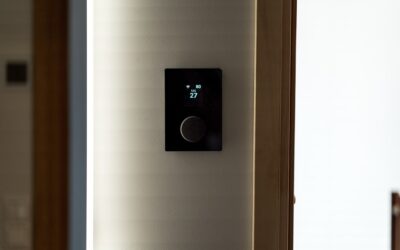
Swapping a basic toggle for a light switch with dimmer is the cheapest way to make a room feel custom-designed. Drop the brightness 30 percent and you cut watt-hours, extend bulb life, and eliminate the harsh first-thing-in-the-morning glare that makes a kitchen feel like an operating room. The catch is matching the dimmer to your bulbs and your wiring box, and that is where most homeowners run into flicker, buzz, or a blown LED.
Types of Dimmer Switches You Can Buy
Walk into Home Depot or Lowe’s and you will see four common formats. Rotary dimmers (think old-school knob) are cheapest at $10 to $15 but offer the least range. Slide dimmers with a separate on-off rocker, like the Lutron Diva DVCL-153P at around $24, are the workhorse for most homes. Toggle dimmers hide the slide behind a familiar lever, which sells well in traditional interiors. Smart dimmers, including the Lutron Caseta PD-6WCL ($60) and Leviton Decora Smart D215S ($45), add Wi-Fi or hub control plus voice integration with Alexa and Google Home.
Single-Pole vs Three-Way Wiring
Before you buy anything, count the switches that control the fixture. One switch on the wall means single-pole, and almost any dimmer will work. Two or three switches controlling the same light means you need a three-way (or four-way) compatible dimmer plus standard companion switches. Mixing a non-compatible dimmer into a three-way circuit is the number-one cause of returns. Lutron’s Maestro MA-600 and Leviton’s SureSlide 6674 series both ship in three-way versions clearly marked on the box.
LED Compatibility and the Flicker Problem
Old incandescent dimmers worked by chopping the AC waveform with a TRIAC. Drop a 9-watt LED on that circuit and the load is too small to register, so the bulb flickers, hums, or refuses to dim below 50 percent. The fix is a CL-rated (compact fluorescent and LED) dimmer with a low minimum load, usually 5 watts. Lutron publishes a free compatibility chart at lutron.com/ledtool listing every name-brand bulb tested. Cross-check your Philips, Cree, or Feit bulbs there before you head to the store.
Wattage Limits You Cannot Ignore
Every dimmer prints a maximum load on the yoke. A standard 600-watt incandescent dimmer drops to roughly 150 watts when running LEDs because of how the electronics handle reactive load. If you have a chandelier with twelve 9-watt LED candelabra bulbs (108 watts), a 150-watt CL dimmer is plenty. Run a 24-bulb fixture and you need the 250-watt or 600-watt LED-rated model like the Lutron Diva DVELV-300P. Exceed the rating and the dimmer will overheat, then fail in 6 to 18 months.
Step-by-Step Installation
- Kill power at the breaker, then test with a non-contact voltage tester such as the Klein NCVT-2.
- Unscrew the existing switch and pull it forward to expose the wires.
- Photograph the wiring with your phone before you disconnect anything.
- Match wires by function: line (hot) to the black screw, load (to the fixture) to the brass screw, ground to green, traveler wires to the marked terminals on three-ways.
- Tuck the wires neatly into the box, secure the dimmer with the included screws, attach the wall plate, and restore power.
Total time is 15 to 25 minutes per switch once you have done one. If your box lacks a neutral wire and you bought a smart dimmer that needs neutral, stop and order a no-neutral model like the Lutron Caseta PD-6WCL instead of fishing new cable.
Smart Dimmers Worth the Premium
The Lutron Caseta lineup remains the gold standard because it uses Lutron’s proprietary Clear Connect radio, which never drops the way Wi-Fi mesh sometimes does. Pair it with the Caseta Smart Bridge ($80) and you get Apple HomeKit, Alexa, Google, and SmartThings in one shot. Leviton Decora Smart with Wi-Fi (no hub) is a strong second pick at $45 per dimmer if you only need a few. For Matter-over-Thread support in newer homes, look at the Eve Dimmer Switch or the Aqara H1.
Common Pitfalls That Cost Real Money
Buying a dimmer that does not list your specific LED bulb on the compatibility chart leads to flicker that no amount of fiddling fixes. Installing a single-pole dimmer in a three-way circuit will work on one switch and dead-short on the other. Forgetting to set the trim adjustment (the small dial or app slider that defines minimum brightness) leaves bulbs flickering at the bottom of the range. Finally, stuffing a smart dimmer into a shallow 2.5-inch deep wall box can crack the unit; verify box depth before you order the Caseta or Leviton smart models, which need at least 2.75 inches.
What a Dimmer Actually Saves You
Dimming an LED to 50 percent brightness uses roughly 40 percent of full power, not 50, because of driver inefficiency. Across a 12-bulb chandelier running four hours a night, that is about 90 kWh saved per year, or $13 at the US average rate of 14 cents per kWh. Bulb life roughly doubles, since the filament or LED driver runs cooler at reduced output. The dimmer pays for itself inside 18 months, and the room finally has the mood lighting your contractor promised. Add scene presets through a smart dimmer and you can hit 30 percent brightness for movie night and 80 percent for cleanup with a single tap from the couch.